

Eumastacoid Stick Grasshoppers (Superfamily Eumastacoidea)
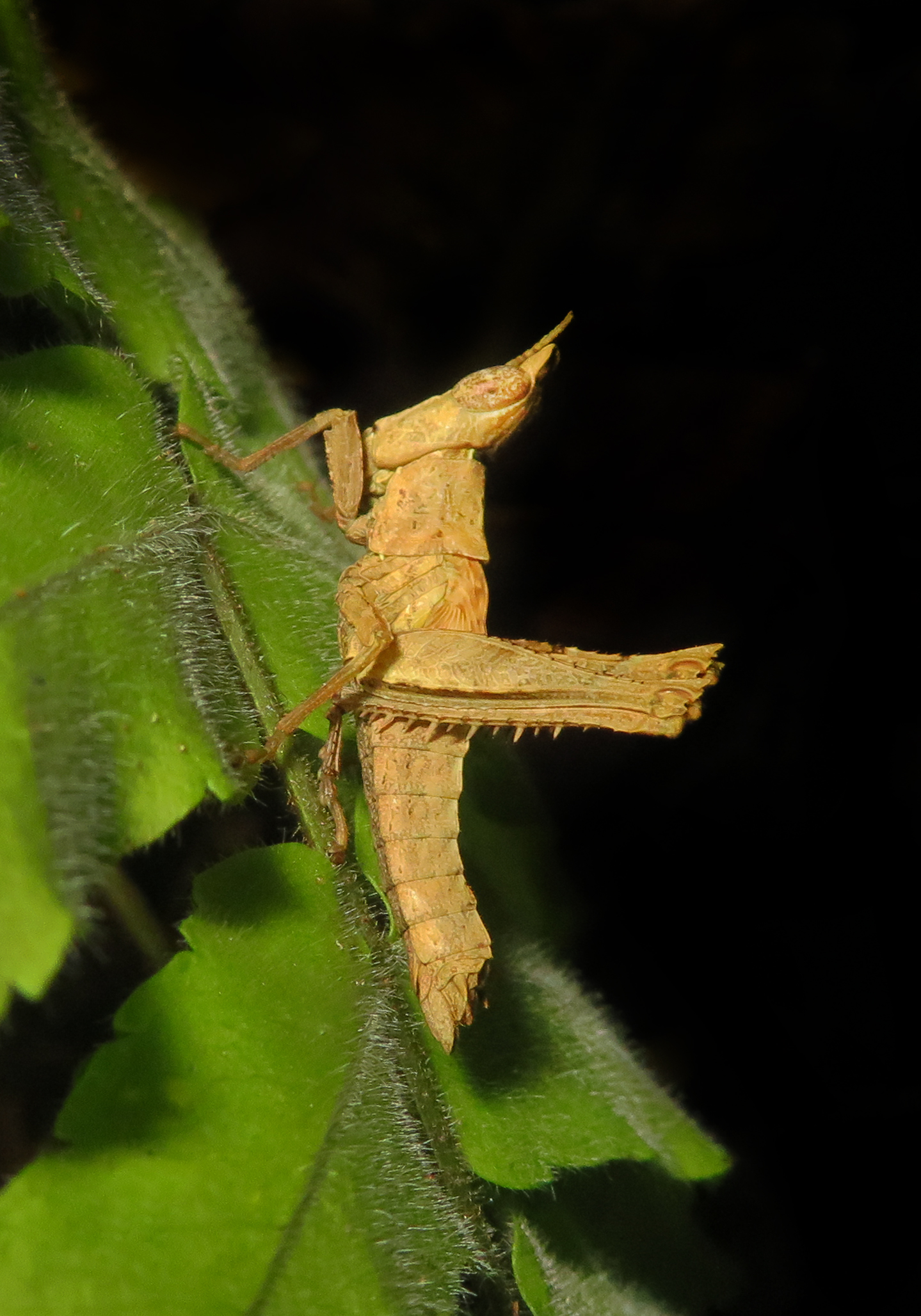
Eumastacoidea is a superfamily of grasshoppers within the suborder Caelifera (Order Orthoptera), commonly known as monkey grasshoppers or monkey locusts. The superfamily comprises several hundred described species distributed primarily throughout tropical and subtropical regions of Africa, Asia, Australia, and the Americas. Members are most abundant in tropical rainforests, montane forests, woodland edges, shrublands, and humid grasslands, where they live among shrubs, herbs, and low vegetation.
Grasshoppers of the superfamily Eumastacoidea are generally small to medium-sized and are distinguished by their slender body, elongated legs, and relatively short antennae. Unlike many other grasshoppers, they usually lack well-developed auditory organs (tympana) and stridulatory structures used for sound production. Their coloration is highly variable, ranging from green, brown, and gray to brilliant shades of yellow, orange, red, blue, or black, often with intricate patterns that provide camouflage among leaves, mosses, or bark.
Most species are diurnal and are active on foliage during the day. They are agile climbers and capable jumpers, relying on their powerful hind legs to escape predators. Although many species can fly, the wings are often shortened or reduced, and flight capability varies considerably among different groups.
Members of Eumastacoidea are herbivorous, feeding mainly on the leaves of shrubs, herbs, ferns, and other understory plants. Many species exhibit preferences for particular host plants and spend most of their lives within dense vegetation, where their cryptic coloration provides effective concealment.
The life cycle involves incomplete metamorphosis, consisting of egg, nymph, and adult stages. Females deposit eggs in soil, leaf litter, or decaying vegetation. The wingless nymphs resemble miniature adults and pass through several molts before reaching maturity. Throughout development they occupy habitats similar to those of the adults and feed on the same types of vegetation.
The superfamily includes several families, such as Eumastacidae, Chorotypidae, Episactidae, Morabidae, and related groups. These families exhibit considerable diversity in body shape, coloration, and ecological adaptations, particularly within tropical forest ecosystems.
Ecologically, Eumastacoidea grasshoppers are important herbivores that influence plant growth and contribute to nutrient cycling through the consumption of vegetation. They also serve as prey for birds, reptiles, amphibians, spiders, and predatory insects, making them integral components of terrestrial food webs. Their close association with undisturbed forests and specialized habitats makes many species valuable indicators of habitat quality, forest integrity, and biodiversity.