

Yellows and Sulphurs (Subfamily Coliadinae)
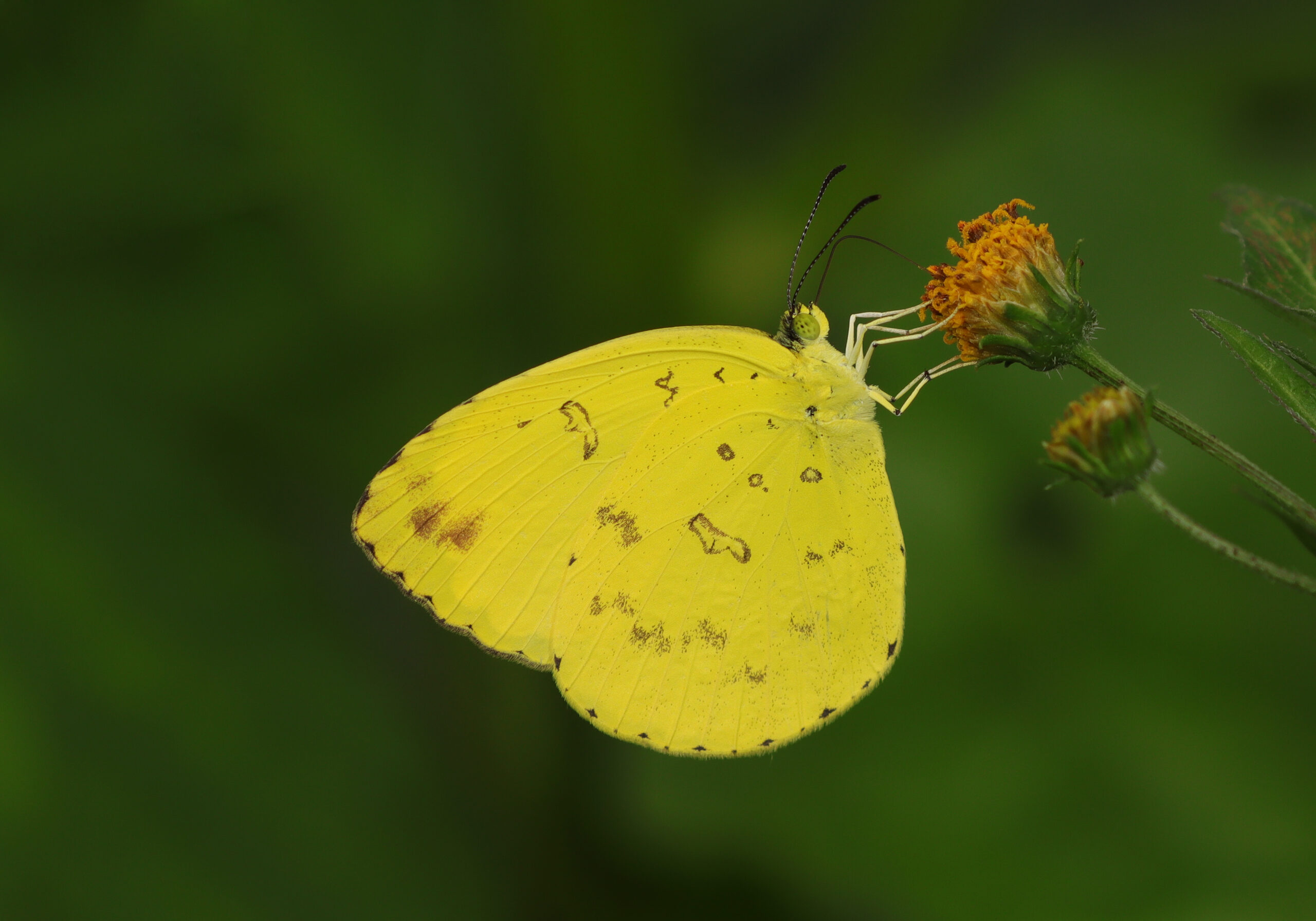
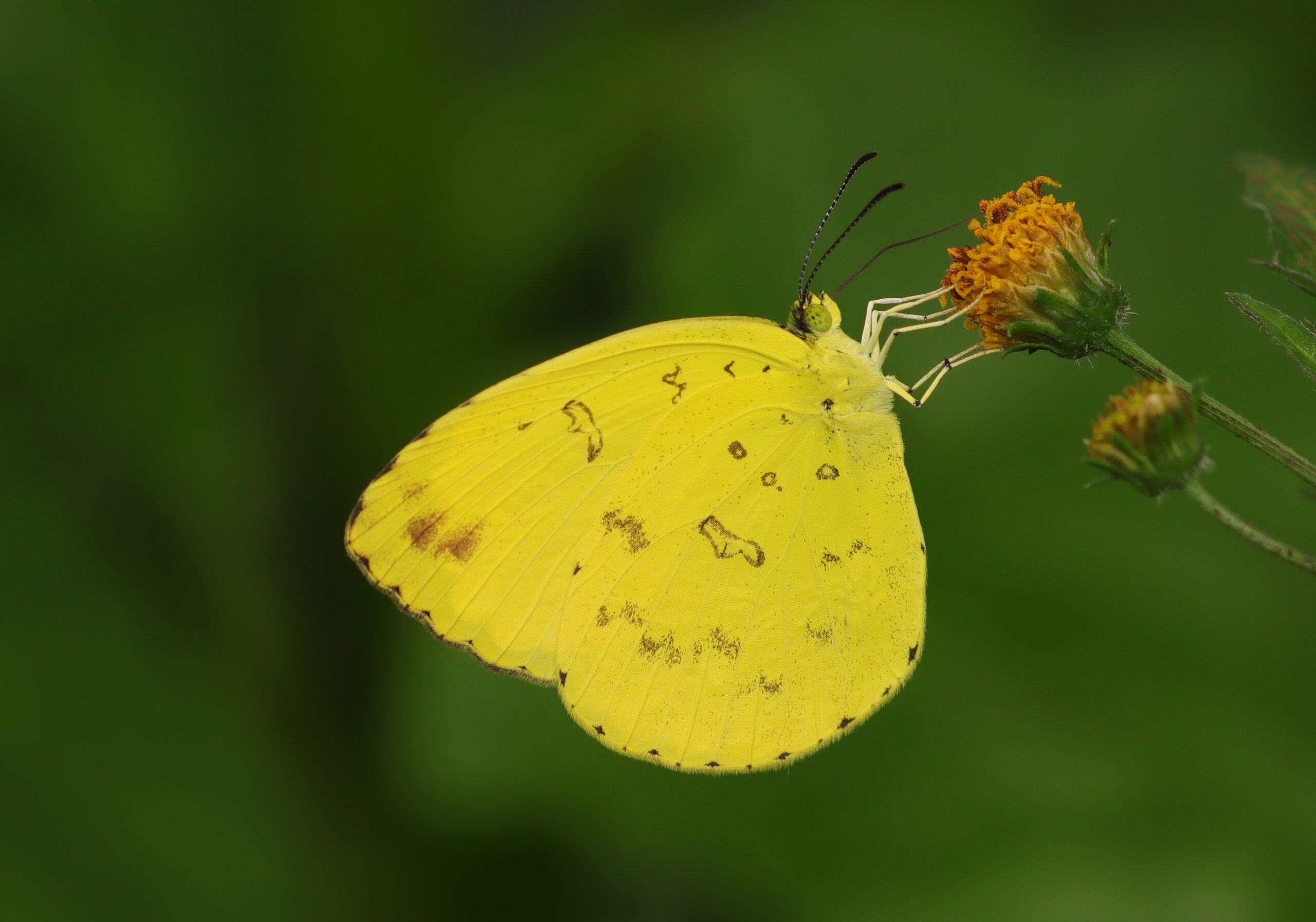
Coliadinae is a subfamily of butterflies within the family Pieridae (Superfamily Papilionoidea, Order Lepidoptera), commonly known as the yellows and sulphurs. The subfamily comprises more than 300 described species distributed throughout tropical, subtropical, and temperate regions of the world. Members are especially diverse in Africa, Asia, Australia, and the Americas, where they inhabit grasslands, savannas, tropical forests, woodland edges, wetlands, scrublands, agricultural fields, parks, and gardens.
Butterflies of the subfamily Coliadinae are generally small to medium-sized and are characterized by a slender body and relatively broad, rounded wings. Their coloration is predominantly bright yellow, lemon-yellow, orange, white, or cream, often bordered or marked with black, brown, or reddish patterns. The underside of the wings is frequently greenish-yellow or mottled with fine markings, providing effective camouflage when the butterflies rest with their wings closed among vegetation.
Adults are diurnal, active fliers that frequently visit flowering plants to feed on nectar using their long, coiled proboscis. Many species are strong dispersers, and several undertake seasonal migrations or mass movements in response to rainfall and the availability of host plants. Males commonly engage in mud-puddling, gathering on damp soil, stream banks, or animal droppings to obtain sodium and other minerals important for successful reproduction.
The life cycle involves complete metamorphosis, consisting of egg, larva (caterpillar), pupa (chrysalis), and adult stages. Females usually lay eggs singly on the leaves or flower buds of host plants. Caterpillars are smooth, cylindrical, and typically green with pale longitudinal stripes, allowing them to blend with foliage. Most species feed on plants in the family Fabaceae, while others utilize Caesalpiniaceae, Capparaceae, or related families, depending on the genus. Pupation occurs on stems or leaves, where the chrysalis is secured by a silken girdle.
The subfamily includes several familiar genera, such as Eurema, Catopsilia, Colias, Gonepteryx, Phoebis, and Aphrissa. Species such as the Common Grass Yellow (Eurema hecabe) and the Mottled Emigrant (Catopsilia pyranthe) are among the most widespread and frequently encountered butterflies in tropical and subtropical regions.
Ecologically, Coliadinae butterflies are important pollinators that contribute to the reproduction of numerous flowering plants. Their caterpillars play significant roles as herbivores within grassland, forest, and agricultural ecosystems, while both larvae and adults serve as prey for birds, reptiles, spiders, predatory insects, and parasitoids. Their abundance, seasonal movements, and sensitivity to habitat change make Coliadinae butterflies valuable indicators of ecosystem health, habitat quality, and biodiversity.