

Peacock Pansy (Junonia almana)
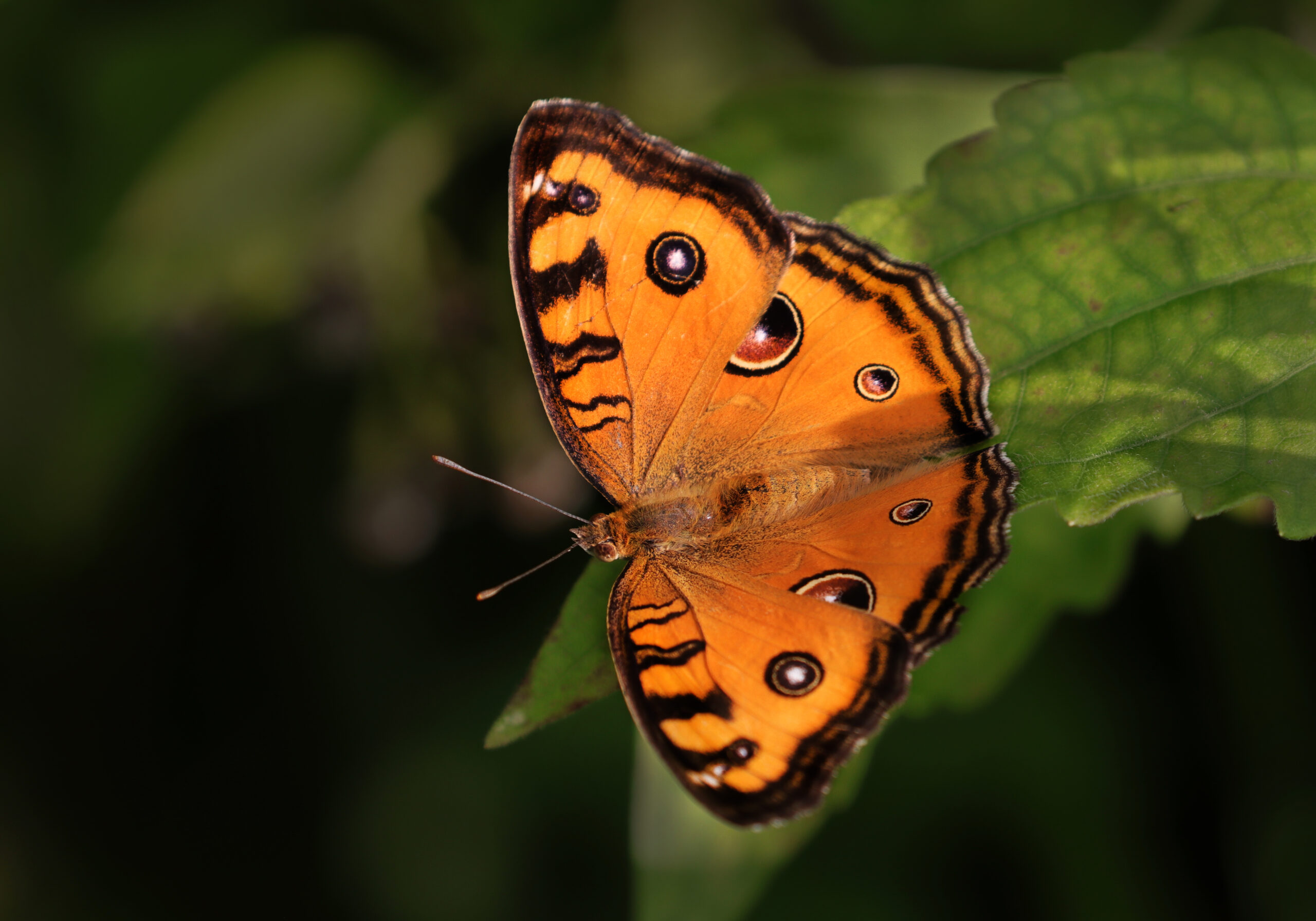
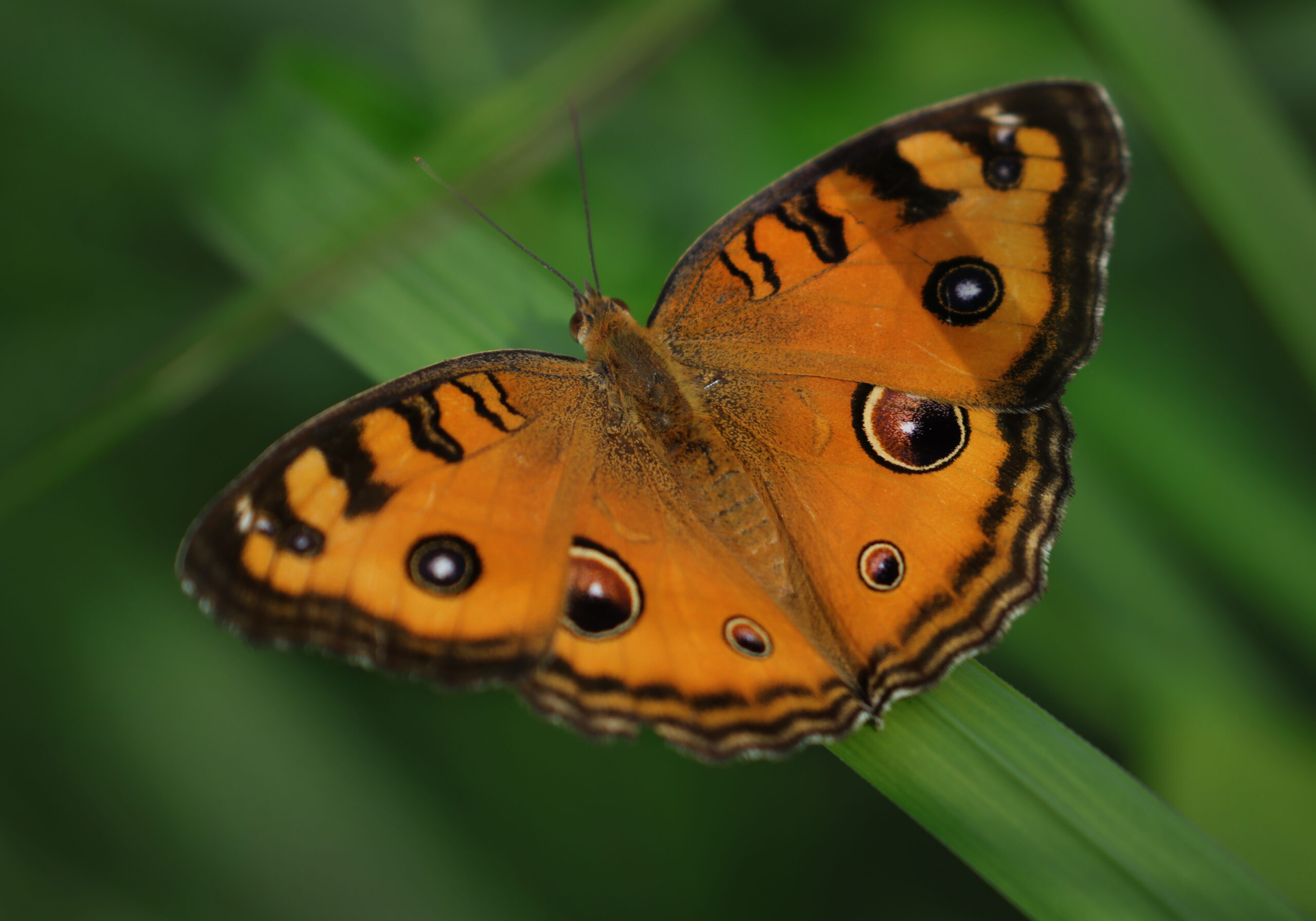
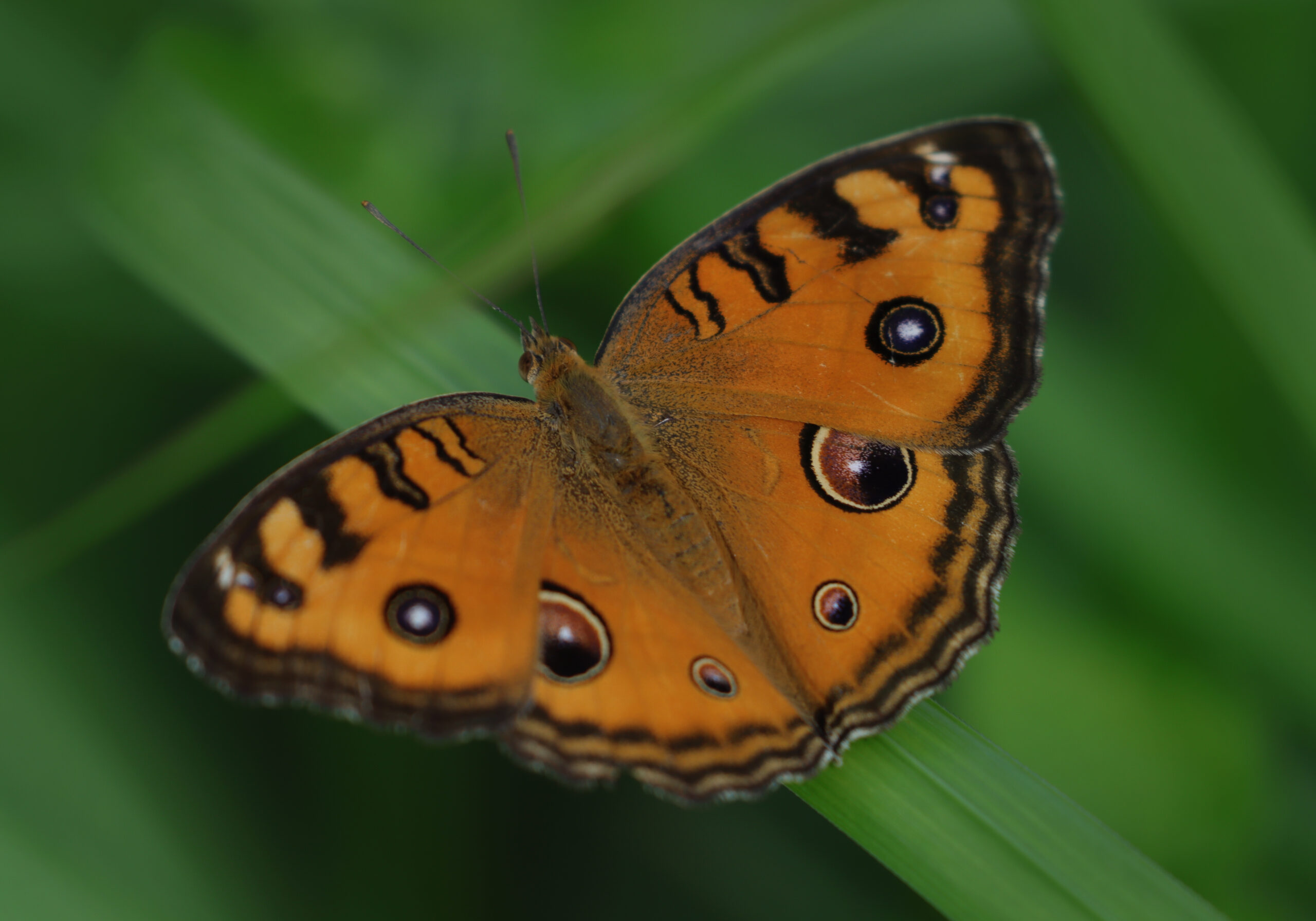
Junonia almana is a species of brush-footed butterfly belonging to the genus Junonia (Tribe Junoniini, Subfamily Nymphalinae, Family Nymphalidae, Superfamily Papilionoidea, Order Lepidoptera). Commonly known as the Peacock Pansy, it is widely distributed across South Asia, Southeast Asia, southern China, Taiwan, and parts of the Indo-Australian region. The species inhabits grasslands, scrublands, forest edges, wetlands, riverbanks, agricultural fields, parks, gardens, and other open sunny habitats with abundant low vegetation.
Junonia almana is a medium-sized butterfly with a wingspan of approximately 55–65 mm. It is easily recognized by its brilliant orange upper wings, each bearing large, conspicuous eyespots. The forewings usually have a single prominent eyespot near the apex, while the hindwings each display a large rounded eyespot surrounded by concentric rings of black, blue, yellow, and orange. These eyespots function as an effective defense by startling predators or diverting attacks away from the butterfly’s body. The species exhibits marked seasonal polyphenism. During the wet season, individuals display bright orange wings with large eyespots, whereas the dry-season form has duller brown coloration and a strongly leaf-like underside, providing excellent camouflage among dead leaves.
Adults are diurnal and are active, agile fliers that frequently bask with their wings fully spread in sunny locations to regulate body temperature. They are commonly seen along paths, roadsides, and open grassy areas, often returning to favored perches after short flights. Adults feed primarily on nectar from a wide variety of flowering plants using their long, coiled proboscis. They also obtain nutrients from fermenting fruits, tree sap, animal dung, and mineral-rich moisture, with males frequently engaging in mud-puddling.
The life cycle involves complete metamorphosis, consisting of egg, larva (caterpillar), pupa (chrysalis), and adult stages. Females lay eggs singly on the leaves and young shoots of host plants. Caterpillars are dark brown to black with numerous branched spines and fine pale markings that provide protection from predators. They feed mainly on herbaceous plants in the family Acanthaceae, particularly species of Ruellia, Hygrophila, Barleria, and related genera. Pupation occurs on stems or leaves, where the angular chrysalis hangs suspended head downward by its cremaster.
Junonia almana is among the most common and widespread butterflies in tropical Asia. It readily adapts to disturbed habitats and is frequently encountered in gardens, agricultural landscapes, and urban green spaces. Its striking appearance, seasonal forms, and conspicuous basking behavior make it one of the most recognizable butterflies in its range.
Ecologically, the Peacock Pansy is an important pollinator of flowering plants and contributes to maintaining plant diversity in open habitats. Its caterpillars participate in plant–herbivore interactions, while both larvae and adults serve as prey for birds, reptiles, spiders, predatory insects, and parasitoids. Because of its wide distribution, abundance, and sensitivity to habitat changes, Junonia almana is considered a valuable indicator of ecosystem health, habitat quality, and regional biodiversity.