

Long-lined Viscount (Tanaecia palguna)
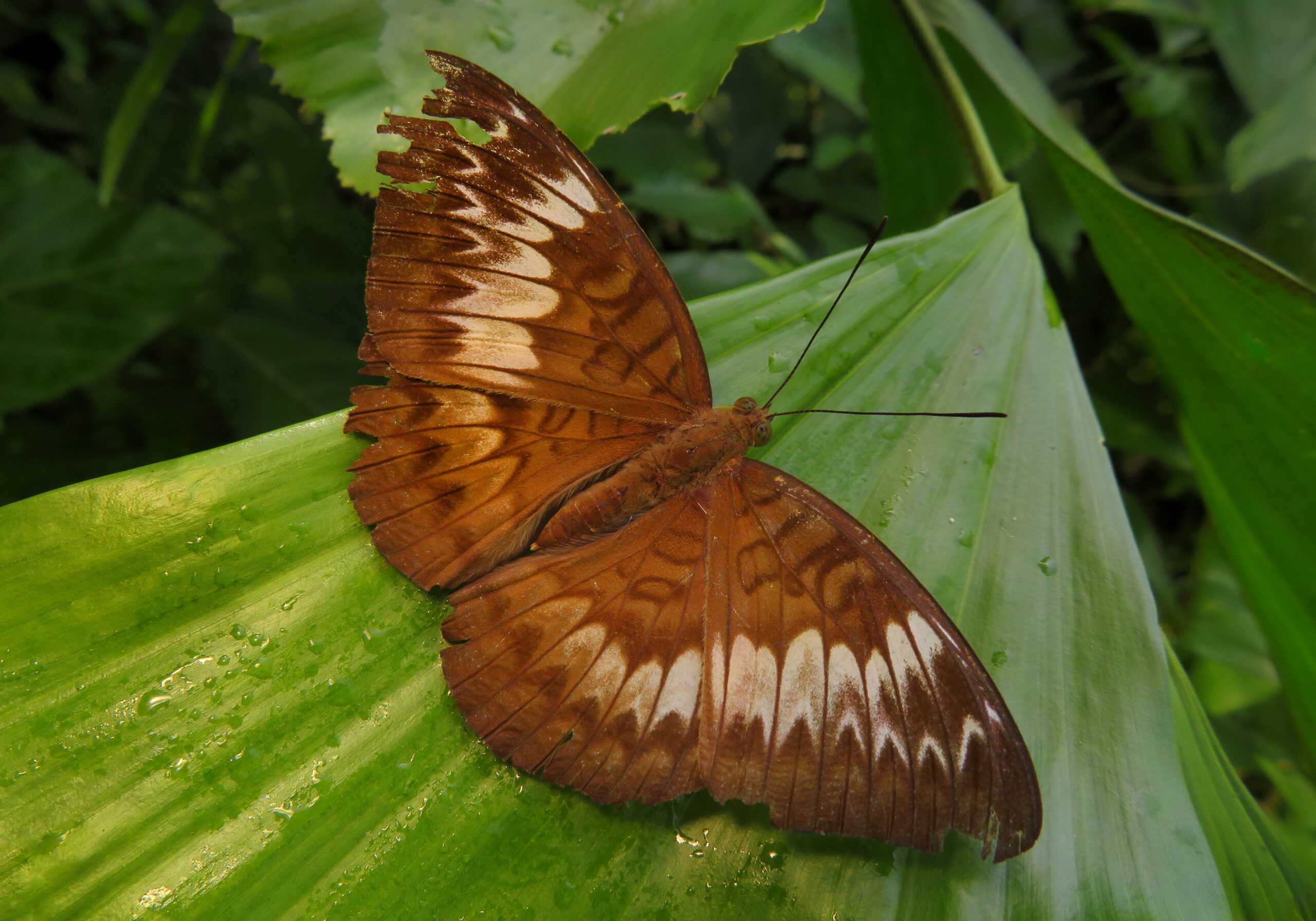
Tanaecia palguna is a species of brush-footed butterfly belonging to the genus Tanaecia (Tribe Adoliadini, Subfamily Limenitidinae, Family Nymphalidae, Superfamily Papilionoidea, Order Lepidoptera). Commonly known as the Blue Prince, it is distributed across South and Southeast Asia, including northeastern India, Myanmar, Thailand, Laos, Cambodia, Vietnam, Peninsular Malaysia, Singapore, and parts of Indonesia. The species inhabits tropical rainforests, secondary forests, woodland edges, riverine forests, plantations, and shaded forest trails, where it is closely associated with mature forest habitats.
Tanaecia palguna is a medium-sized butterfly with a wingspan of approximately 60–80 mm. It has a robust body and broad wings typical of forest-dwelling brush-footed butterflies. Males are distinguished by their rich dark brown to black upper wings overlaid with an iridescent bluish sheen that is especially conspicuous in sunlight, while females are generally browner and lack the extensive blue iridescence. The undersides of both sexes are intricately patterned with shades of brown, gray, cream, and fine wavy lines that closely resemble dead leaves or tree bark, providing excellent camouflage when the butterfly rests with its wings closed.
Adults are diurnal and are most active during the morning and late afternoon. Their flight is swift, powerful, and often interrupted by short gliding movements through the forest understory. They frequently rest on tree trunks, rocks, or foliage and are highly territorial, particularly males. Adults commonly feed on tree sap, fermenting fruits, animal dung, carrion, and mineral-rich moisture, while visits to flowers for nectar are relatively infrequent. Males regularly engage in mud-puddling to obtain sodium and other minerals essential for reproduction.
The life cycle involves complete metamorphosis, consisting of egg, larva (caterpillar), pupa (chrysalis), and adult stages. Females lay eggs singly on the leaves of suitable host plants. The caterpillars are elongated, green to brown, and bear small branched spines or fleshy projections that provide camouflage and protection from predators. Larvae feed primarily on plants of the family Euphorbiaceae, particularly species of Mallotus and related genera. Pupation takes place on leaves or stems, where the chrysalis hangs suspended head downward from a silken pad.
Tanaecia palguna is one of the characteristic forest butterflies of tropical Asia and is most frequently encountered in shaded woodland habitats. Its brilliant blue reflections in males, combined with its cryptic underside, make it one of the more distinctive members of the genus Tanaecia.
Ecologically, the Blue Prince contributes to forest ecosystems as a herbivore during its larval stage and as a participant in nutrient recycling during adulthood through feeding on fermenting organic matter. Both larvae and adults serve as prey for birds, reptiles, spiders, predatory insects, and parasitoids. Because the species is closely associated with well-preserved forest habitats and native host plants, Tanaecia palguna is considered a valuable indicator of forest health, habitat quality, and regional biodiversity.