Bali Wildlife
Every Spices Matter


Sagrinae is a distinctive subfamily of leaf beetles within the family Chrysomelidae (Order Coleoptera). Members of this group are primarily distributed throughout tropical and subtropical regions of Asia, Australia, New Guinea, and nearby islands. They are typically associated with forests, woodland edges, and areas containing abundant vegetation where their host plants occur.
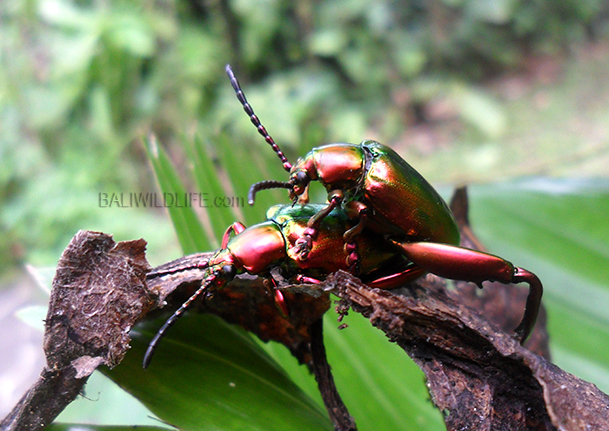
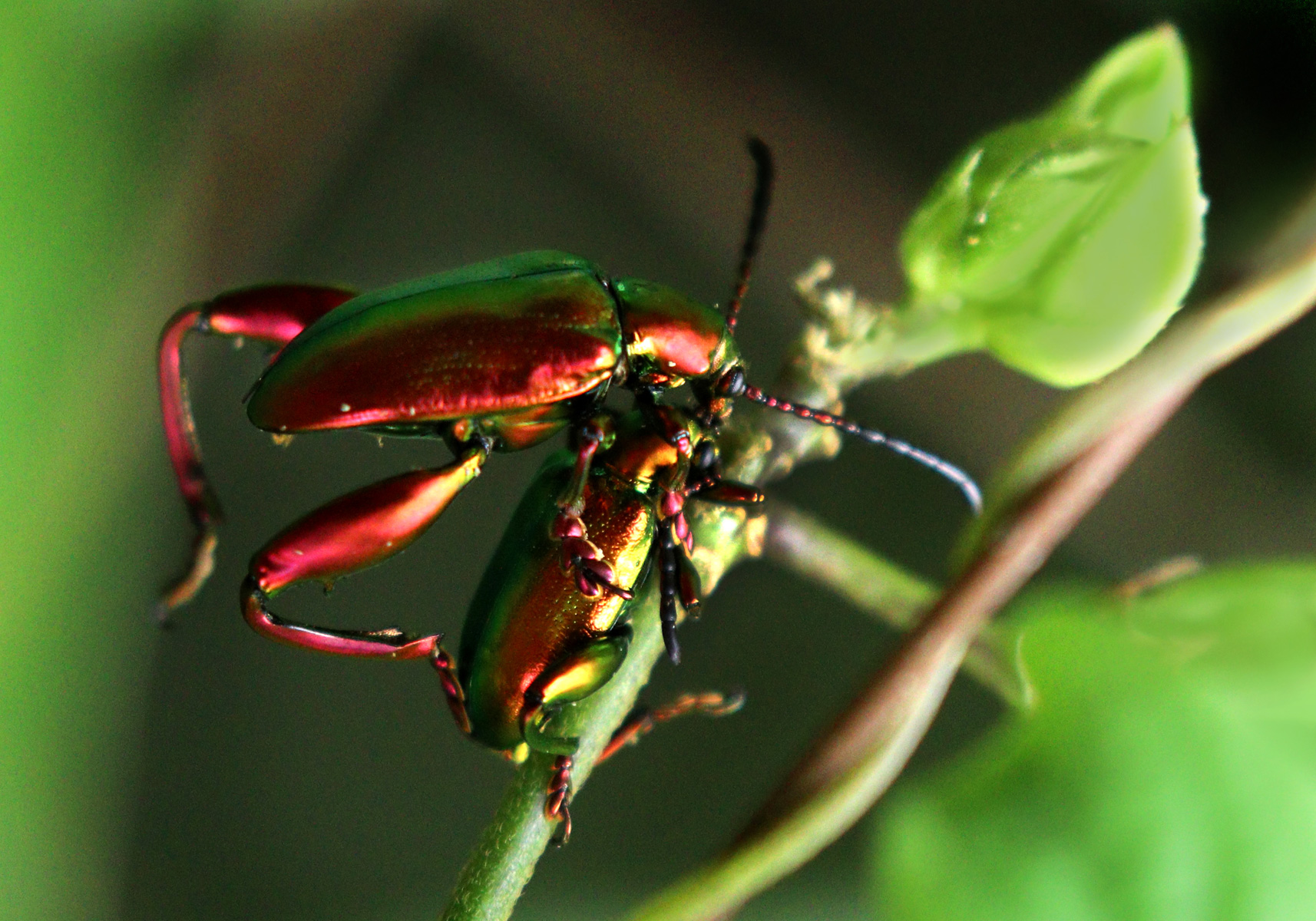
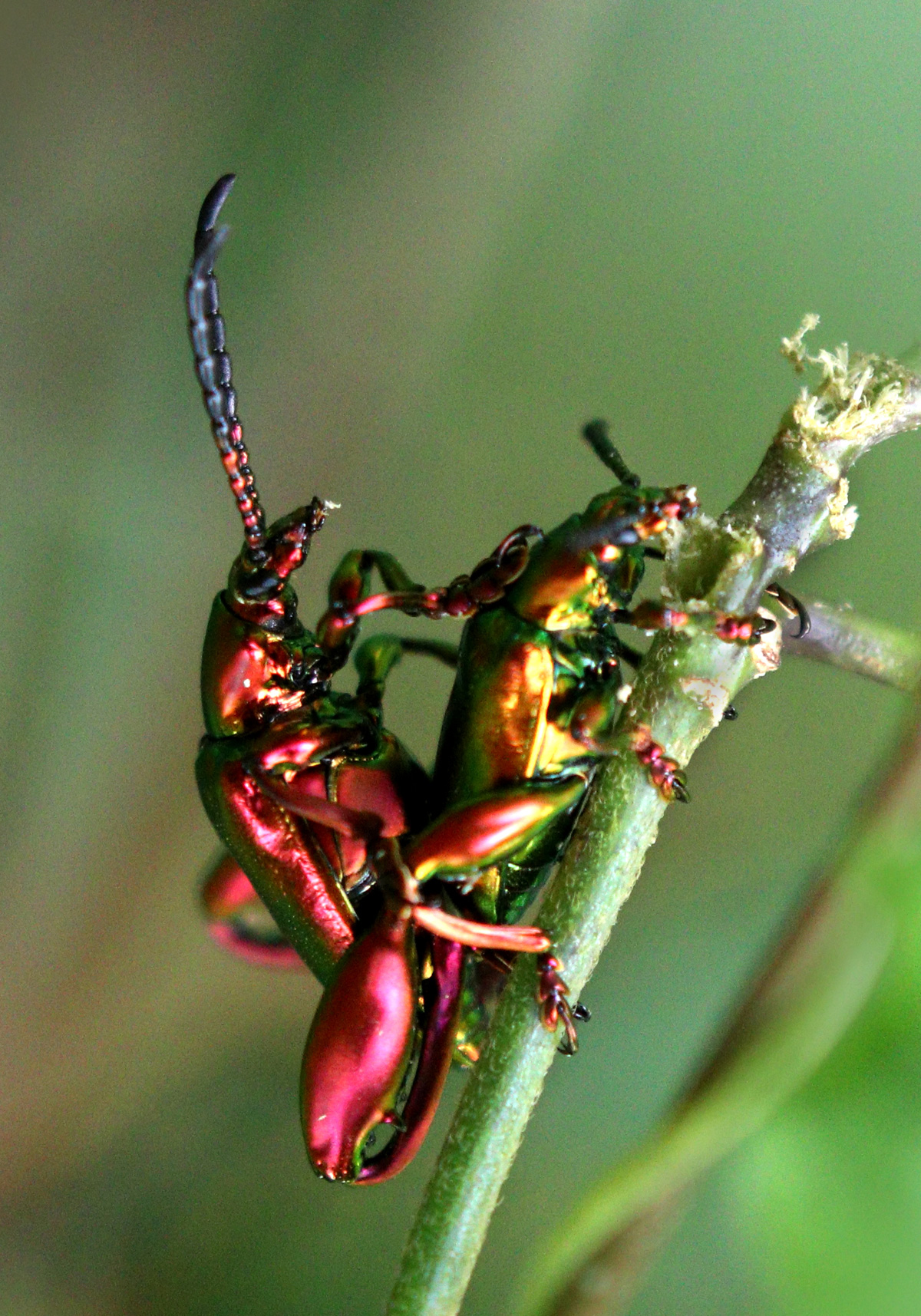
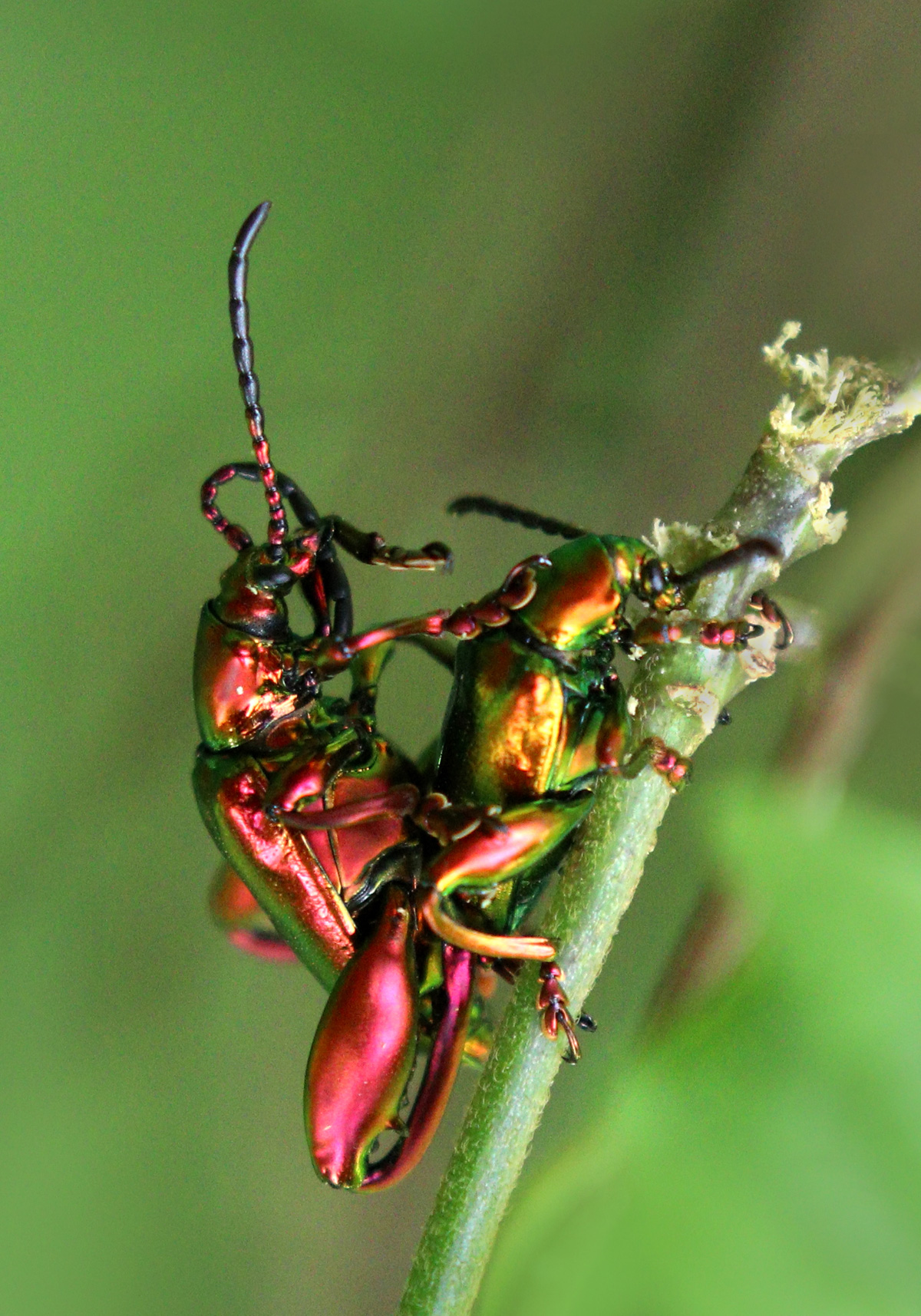
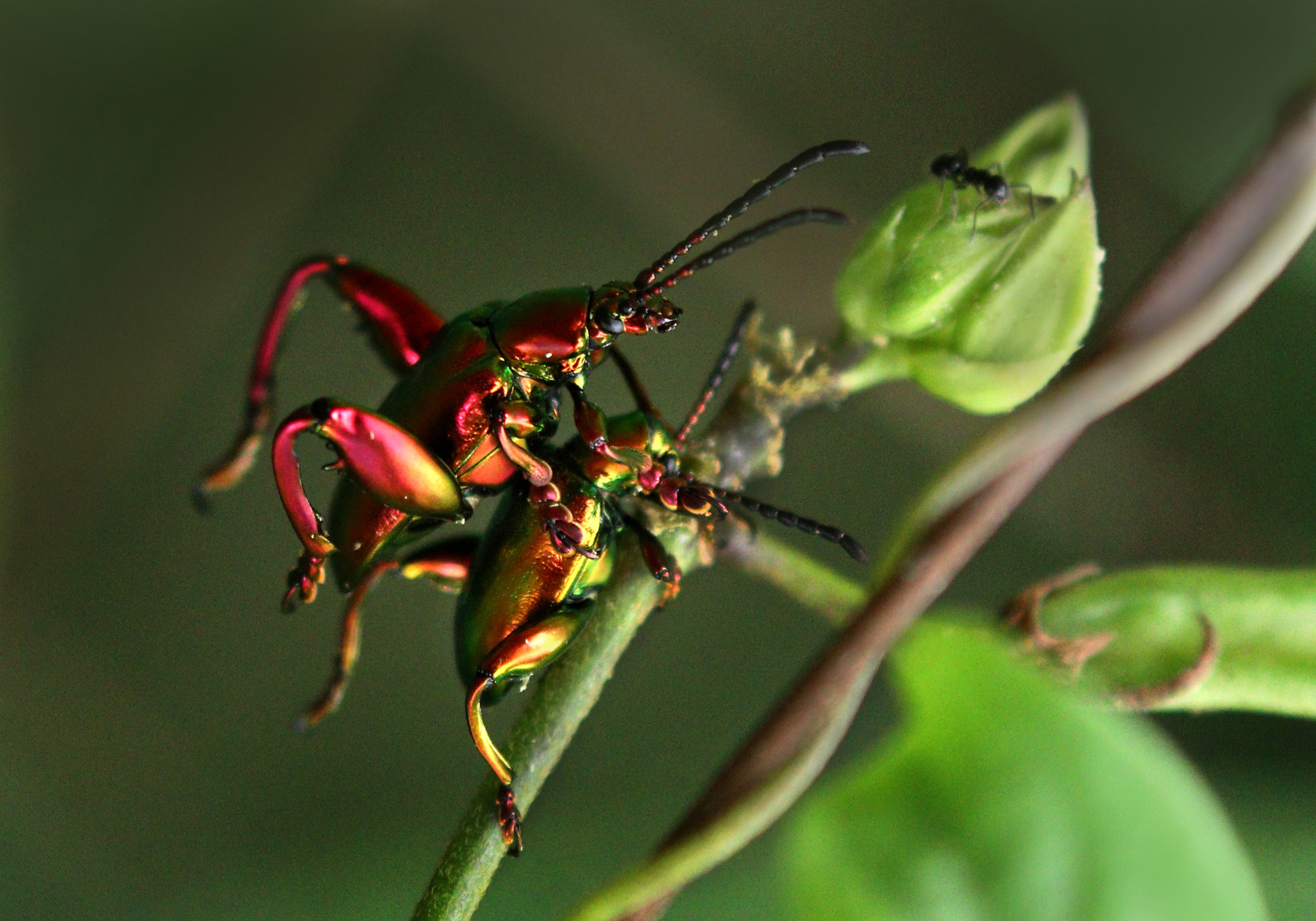
Beetles of the subfamily Sagrinae are generally medium to large in size and are among the most striking members of the leaf beetle family. Many species display brilliant metallic coloration, including shades of green, blue, purple, copper, and gold. A notable characteristic of several species, especially males, is the presence of greatly enlarged hind femora, which are often thickened and powerful in appearance.
The body is typically elongated and robust, with smooth, shiny wing covers (elytra). Sexual dimorphism is common, with males often possessing larger bodies, brighter coloration, and more exaggerated hind legs than females.
Both adults and larvae are herbivorous. They feed primarily on leaves, stems, and other plant tissues, often showing preferences for particular host plants. Larvae usually develop on or within vegetation associated with their food sources.
The life cycle follows complete metamorphosis, consisting of egg, larva, pupa, and adult stages. Females deposit eggs on suitable host plants, and the developing larvae pass through several growth stages before pupating and emerging as adults.
The subfamily includes genera such as Sagra, which contains some of the largest and most colorful leaf beetles known. Species within this group are especially noted for their metallic appearance and remarkable hind-leg development.
Ecologically, Sagrinae beetles play an important role as herbivores within tropical ecosystems, contributing to plant–insect interactions and nutrient cycling. They also serve as prey for birds, reptiles, spiders, and other predators. Their vivid coloration, impressive morphology, and ecological significance make them among the most recognizable and fascinating members of the leaf beetle family.