Bali Wildlife
Every Spices Matter


Thelyphonidae is the principal family within the order Uropygi, commonly known as whip scorpions or vinegaroons. Members of this family are widely distributed in tropical and subtropical regions, particularly in the Americas and Southeast Asia, where they inhabit forests, grasslands, caves, and other humid environments.
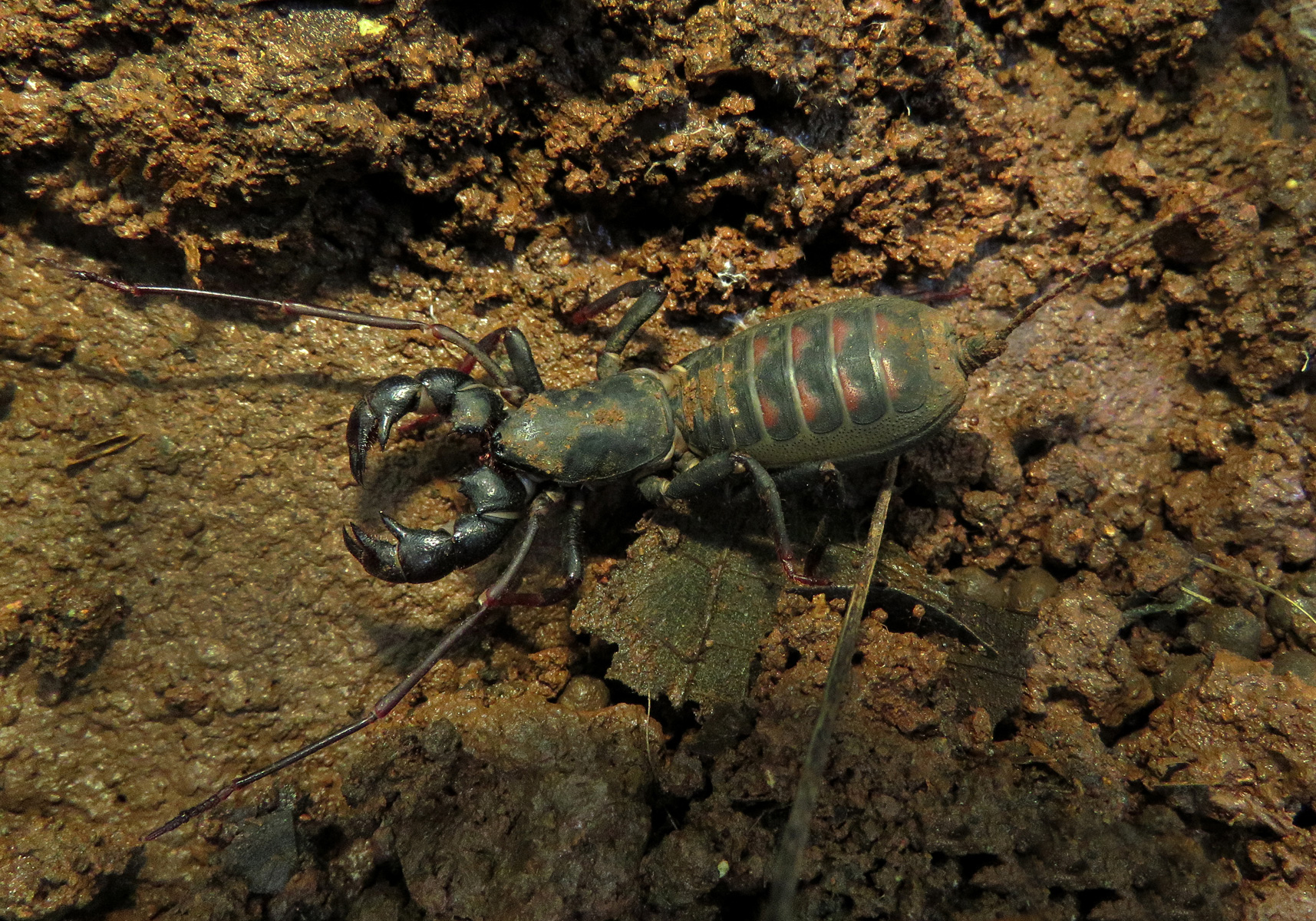
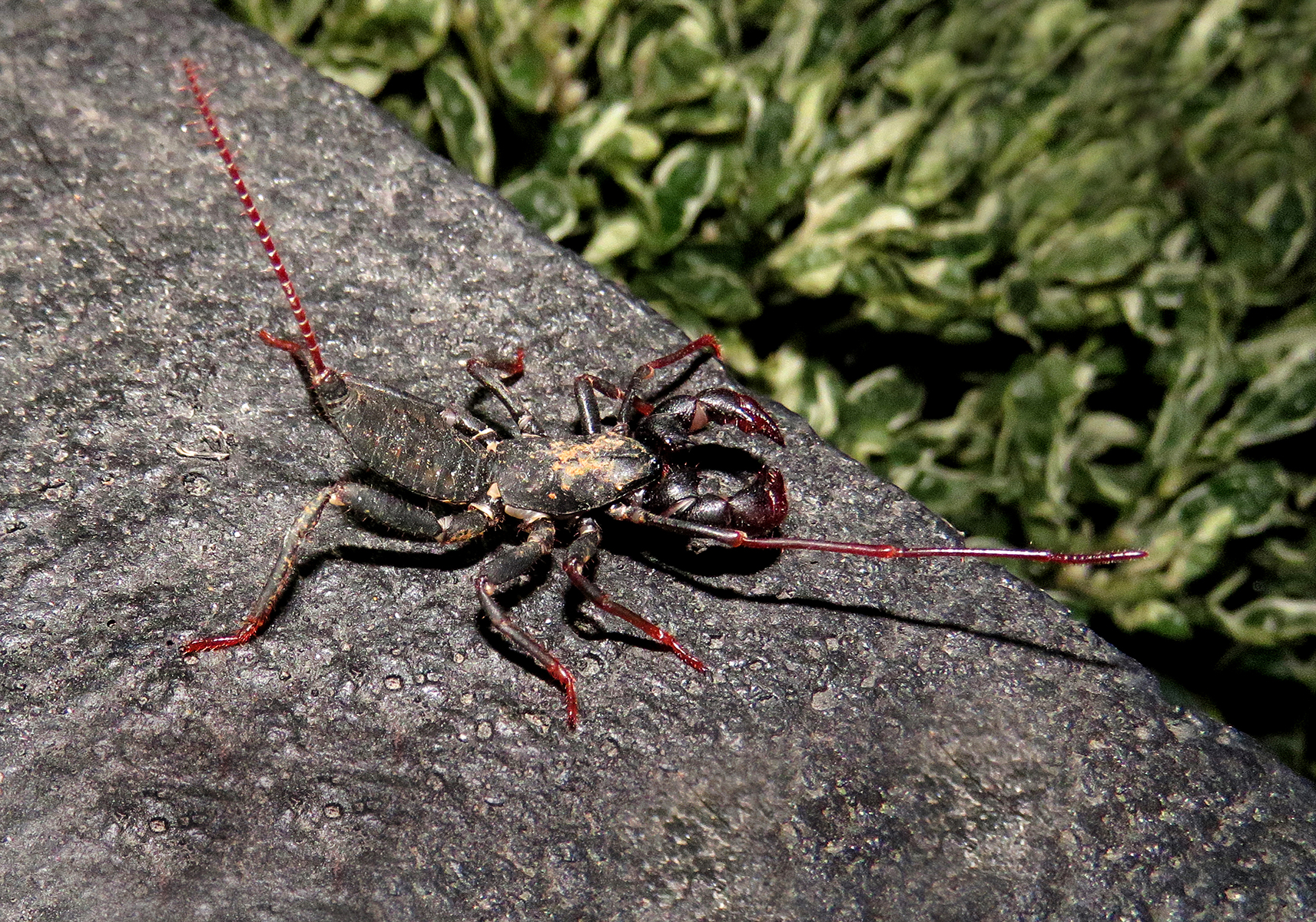
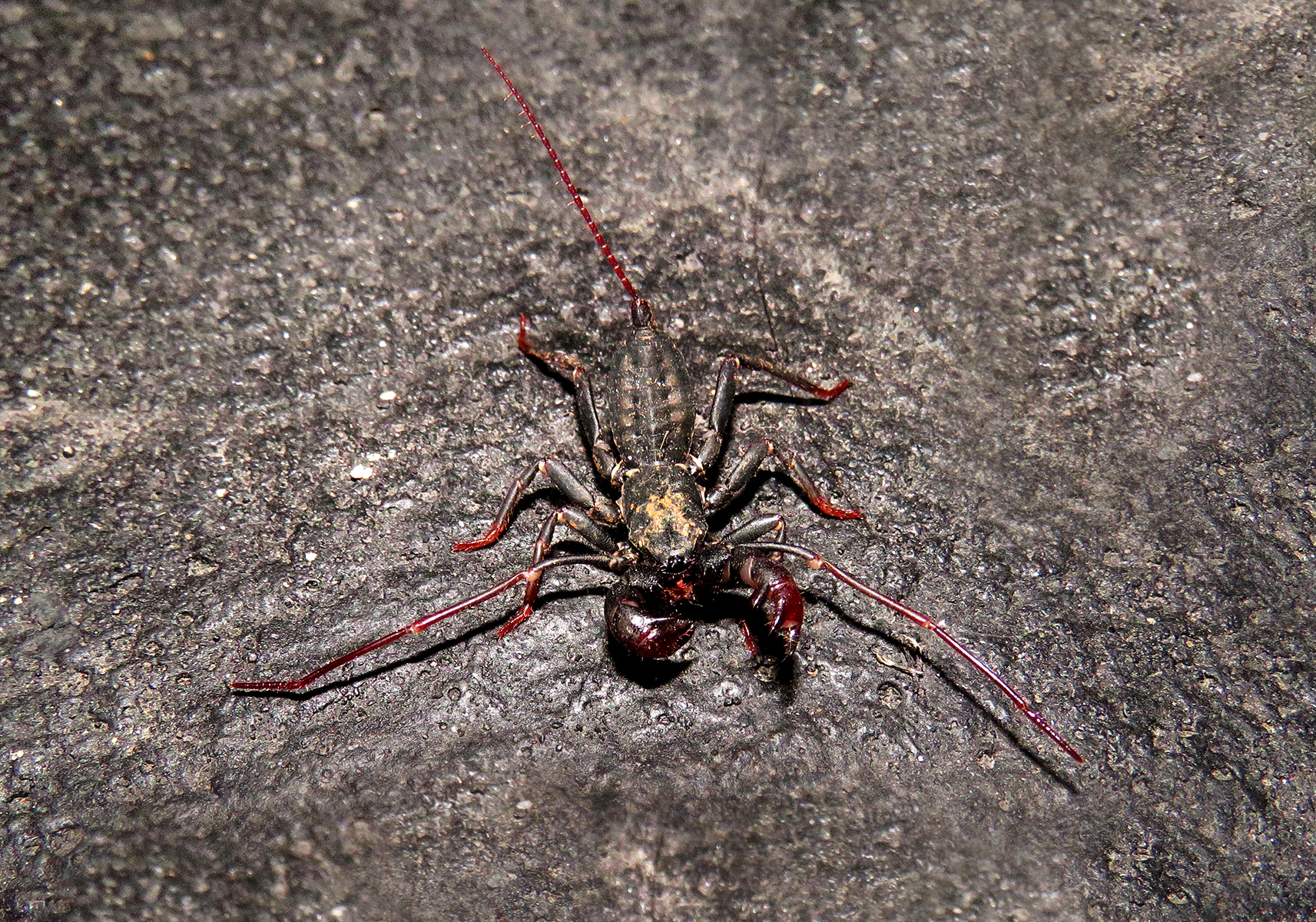
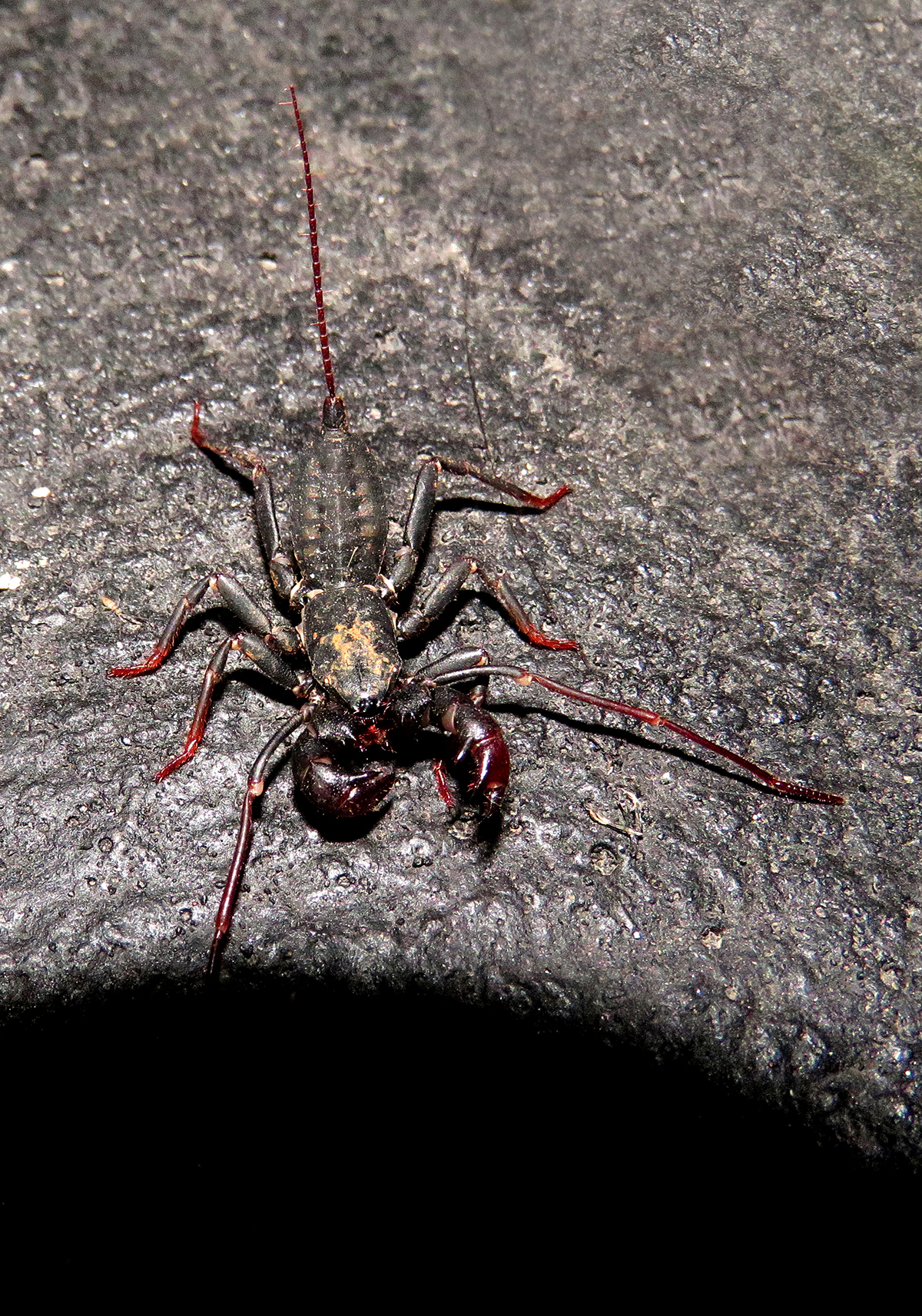
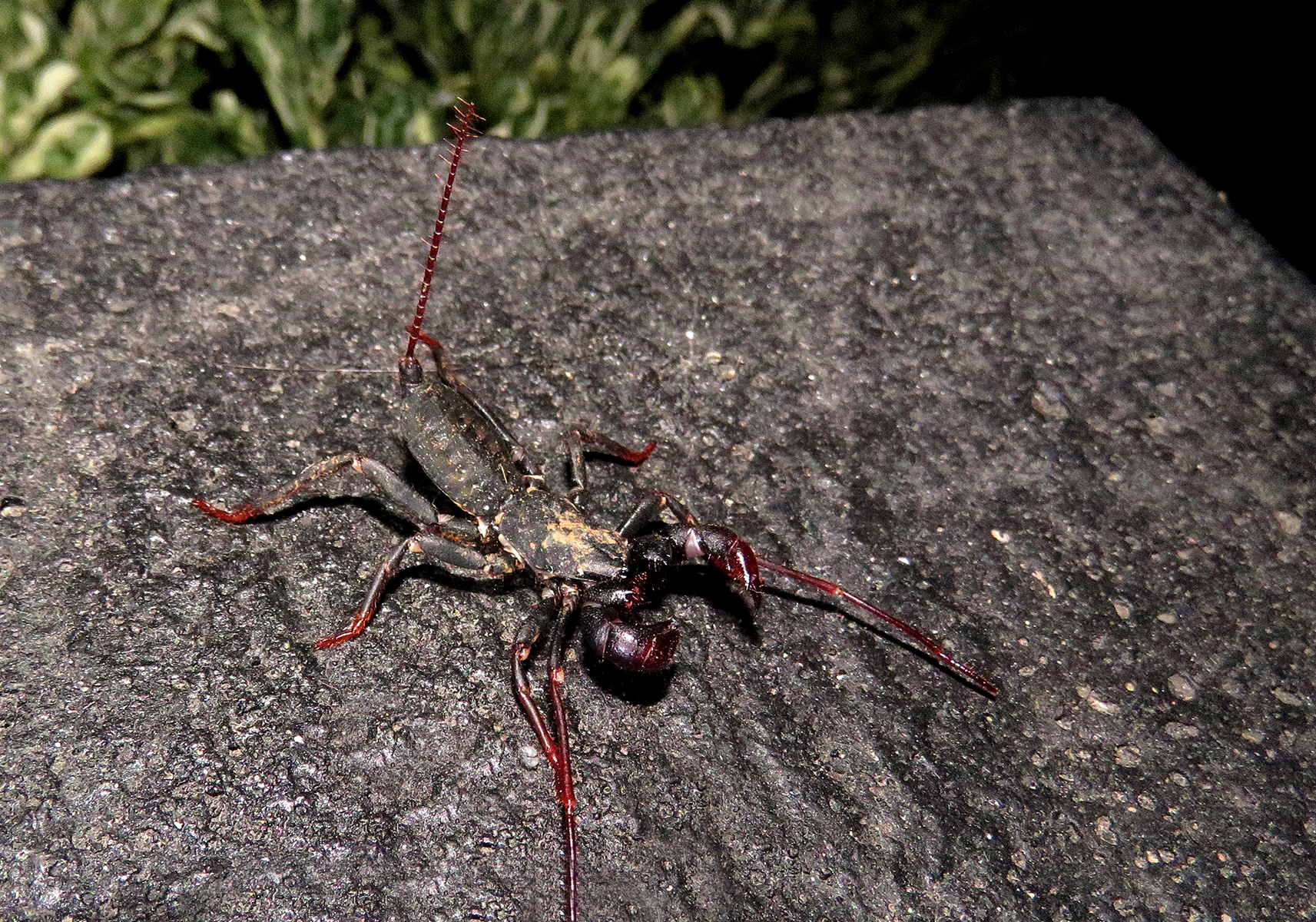
Thelyphonids are characterized by a robust, flattened body, large raptorial pedipalps, and a long, slender whip-like flagellum at the end of the abdomen. Unlike true scorpions, they do not possess a venomous stinger. Instead, they rely on mechanical capture of prey and chemical defense.
The pedipalps are strong and spined, functioning like pincers to seize and subdue prey. The first pair of legs is elongated and modified into sensory appendages, used to detect vibrations and environmental cues in darkness. The remaining legs are adapted for walking and digging.
A distinctive feature of Thelyphonidae is their defensive capability: when threatened, they can spray a fine mist of acetic acid and other organic compounds from glands near the base of the tail. This defensive secretion smells like vinegar and can deter predators.
Members of this family are nocturnal predators, feeding on insects, spiders, and other small invertebrates. During the day, they hide under rocks, logs, leaf litter, or within burrows to avoid light and desiccation.
Reproduction involves indirect sperm transfer via a spermatophore deposited by the male. Females display maternal care by carrying eggs in a brood sac beneath the abdomen. After hatching, the young climb onto the mother’s back and remain there until after their first molt.
Family Thelyphonidae represents a distinctive lineage of arachnids recognized for their whip-like tail, vinegar-like defensive spray, strong pedipalps, and adaptation to nocturnal life in warm, humid habitats.