Bali Wildlife
Every Spices Matter


Tessaratominae is the principal and most diverse subfamily within the family Tessaratomidae, comprising the majority of species commonly referred to as giant shield bugs. Members of this subfamily are predominantly distributed in tropical and subtropical regions, especially in Southeast Asia, South Asia, Africa, and Australasia, where they are commonly associated with trees and large shrubs.
Tessaratominae are characterized by their large body size, robust and strongly sclerotized, shield-shaped form, and well-developed scutellum. The head bears compound eyes, segmented antennae, and a piercing–sucking rostrum adapted for feeding on plant sap, fruits, and seeds. As in other tessaratomids, scent glands are well developed and produce strong defensive odors when the insects are disturbed.
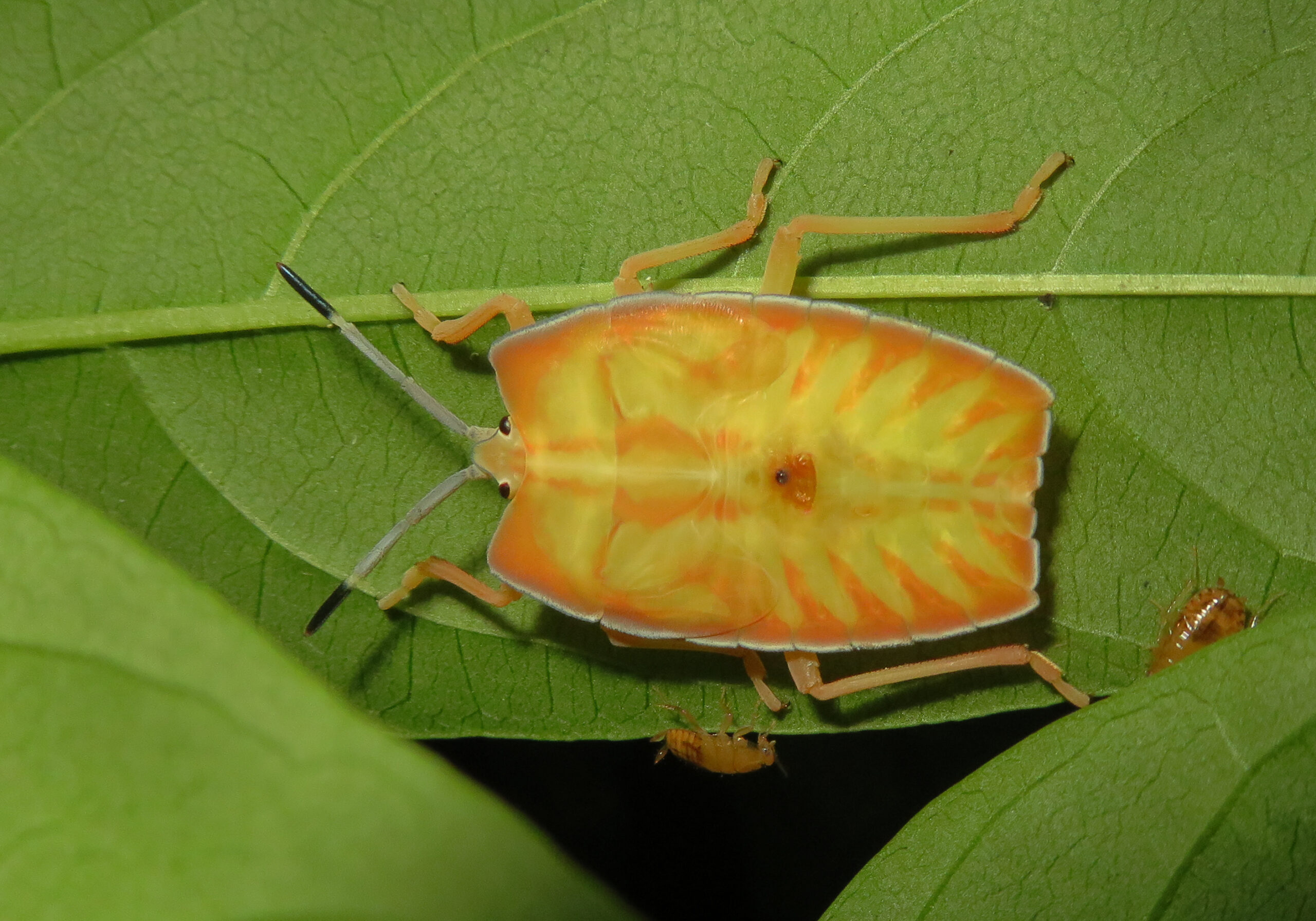
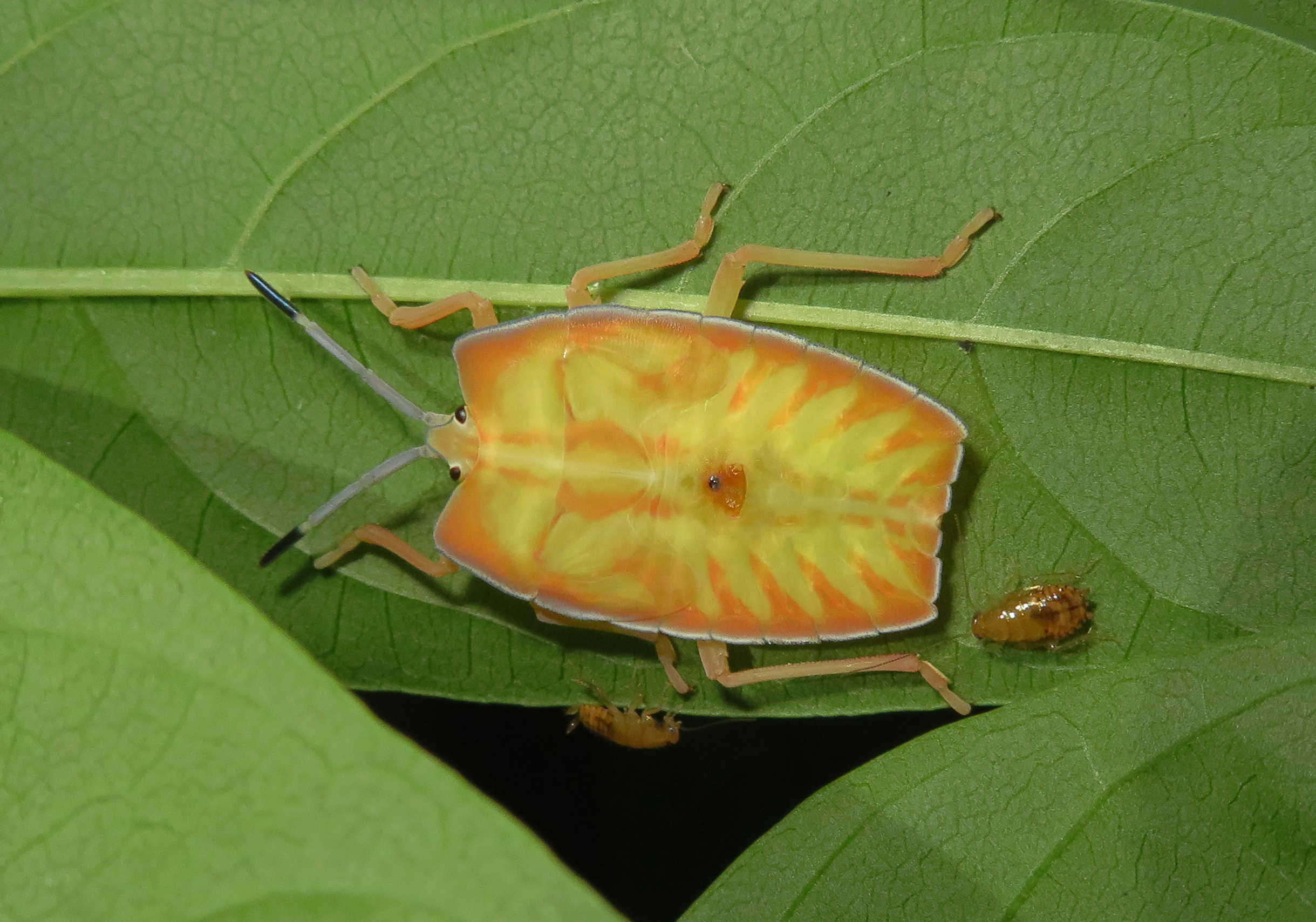
Development is hemimetabolous, with egg, nymph, and adult stages. Eggs are typically laid in clusters on host plants, and nymphs resemble adults in general body shape but lack fully developed wings. In several species within Tessaratominae, females exhibit maternal care by guarding egg masses and early instar nymphs, increasing offspring survival and representing a notable behavioral adaptation among true bugs.
Ecologically, members of Tessaratominae function primarily as herbivores and are often associated with woody plants, including economically important fruit trees. Some species are significant agricultural pests due to their feeding damage, which can lead to fruit deformation, premature fruit drop, or reduced yield. At the same time, they play a role in food webs as prey for predators. Tessaratominae is distinguished by its large size, defensive chemistry, and, in some taxa, advanced parental behavior within the Pentatomoidea.