Bali Wildlife
Every Spices Matter


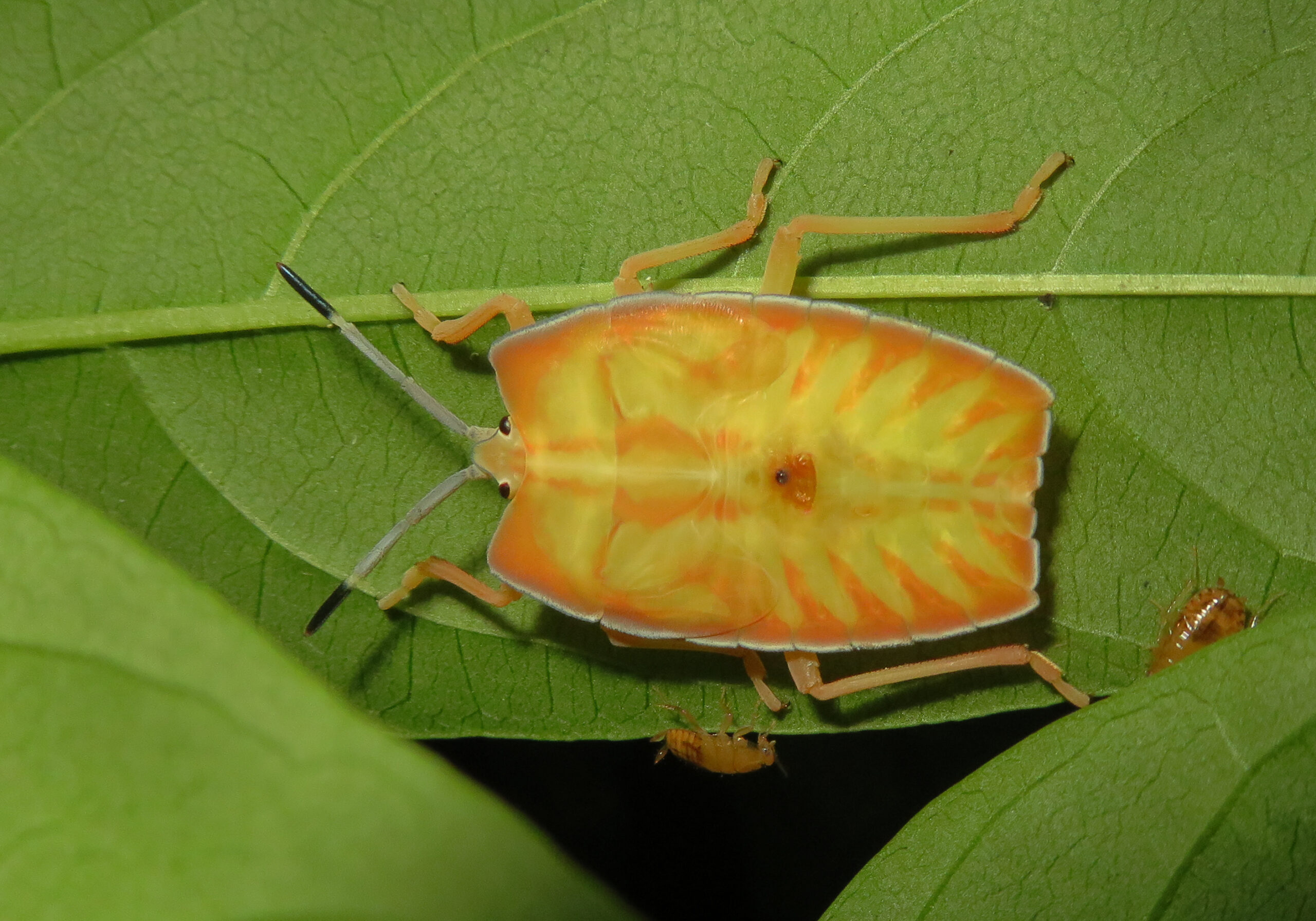
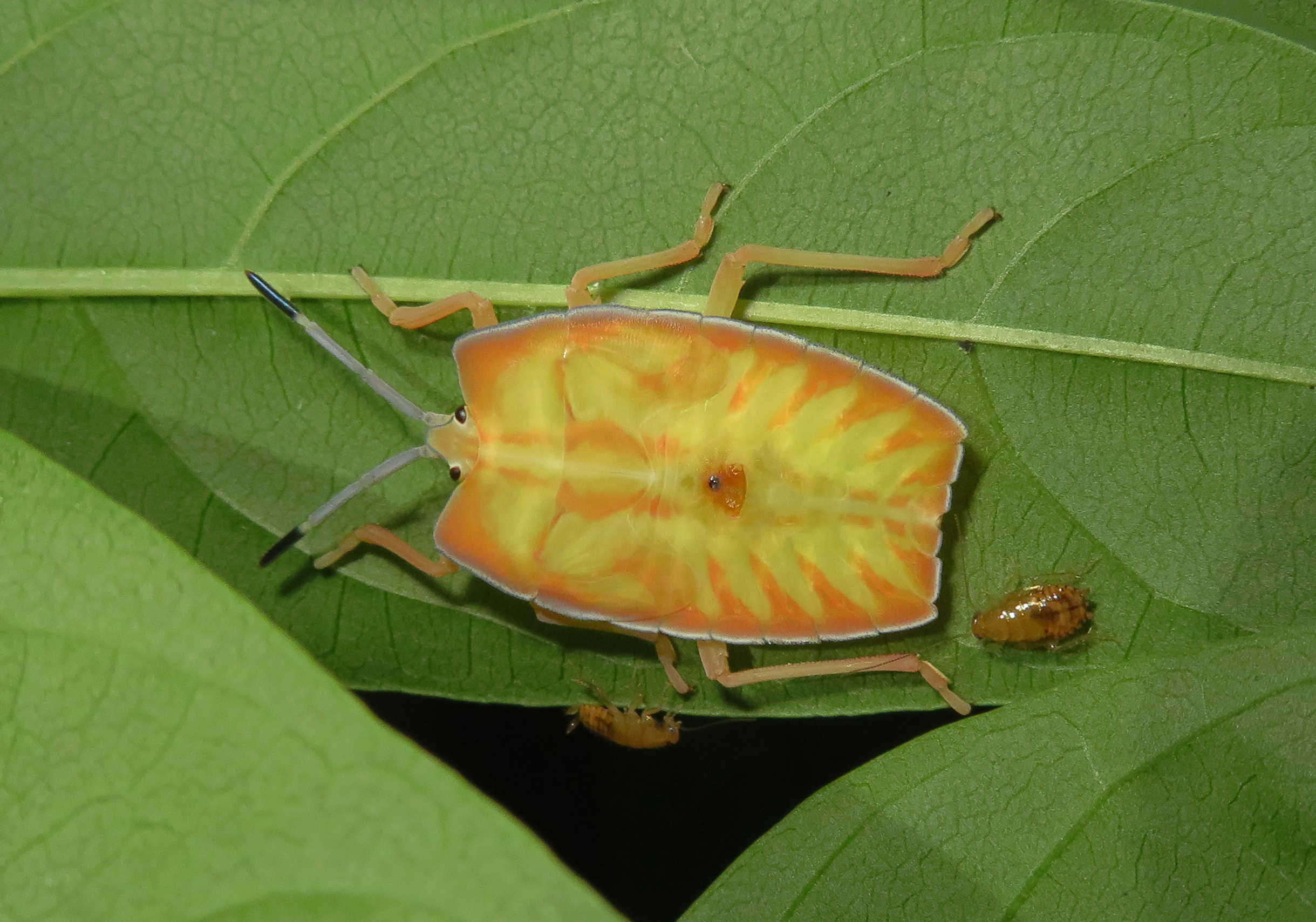
Tessaratomidae, commonly known as giant shield bugs, is a family of true bugs within the superfamily Pentatomoidea. Members of this family are notable for their relatively large body size and robust, shield-shaped form, making them among the largest representatives of pentatomoid bugs. The family is primarily distributed in tropical and subtropical regions, with the greatest diversity in Southeast Asia, Africa, and Australasia.
Tessaratomid bugs typically have a broad, strongly sclerotized body with a large scutellum and well-developed hemelytra. The head bears compound eyes, segmented antennae, and a piercing–sucking rostrum adapted mainly for feeding on plant sap, fruits, and seeds. Like other pentatomoid bugs, they possess well-developed scent glands capable of producing strong defensive odors when disturbed.
Development in Tessaratomidae is hemimetabolous, with egg, nymph, and adult stages. Eggs are often laid in clusters on host plants, and nymphs resemble adults in general shape but lack fully developed wings. Some species exhibit maternal care, with females guarding egg masses or early instar nymphs, a behavior that is relatively uncommon among true bugs.
Ecologically, Tessaratomidae function primarily as herbivores and are often associated with trees and large shrubs. Several species are of economic importance, as their feeding can cause significant damage to fruit trees and other cultivated plants. At the same time, they serve as prey for predators and contribute to the complexity of tropical ecosystems. The family Tessaratomidae is distinguished by its large size, robust morphology, and notable behavioral traits within Pentatomoidea.