Bali Wildlife
Every Spices Matter


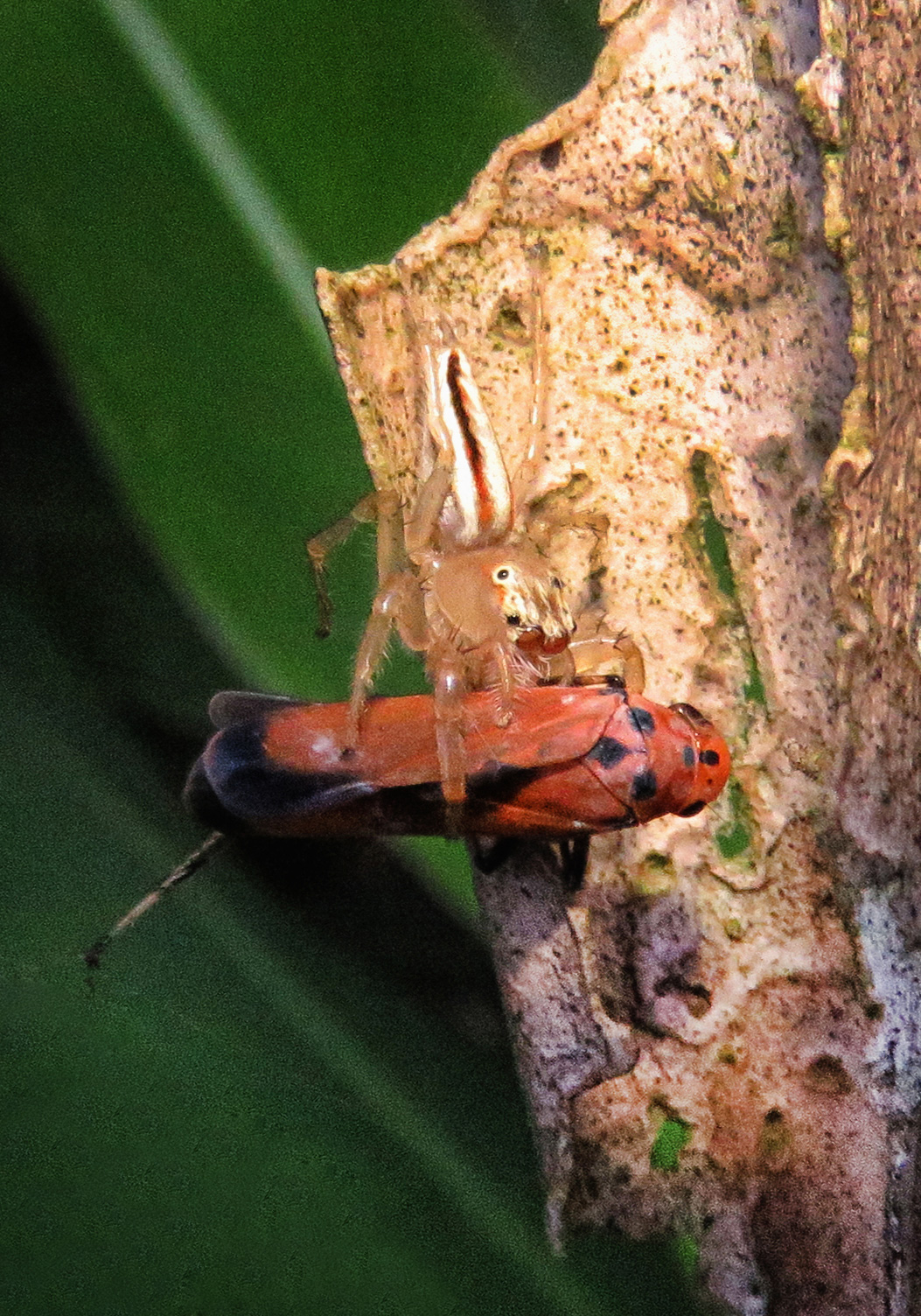
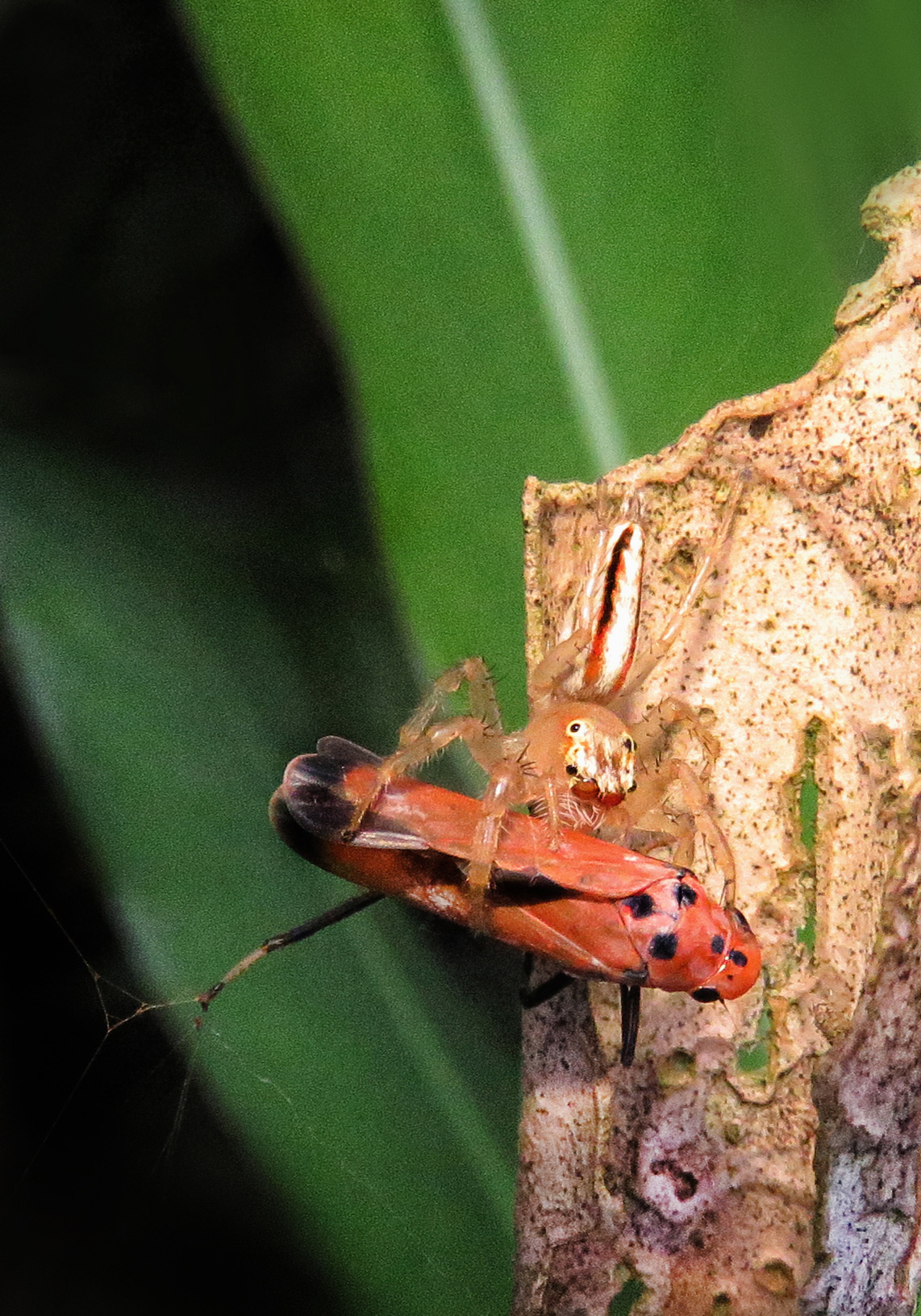
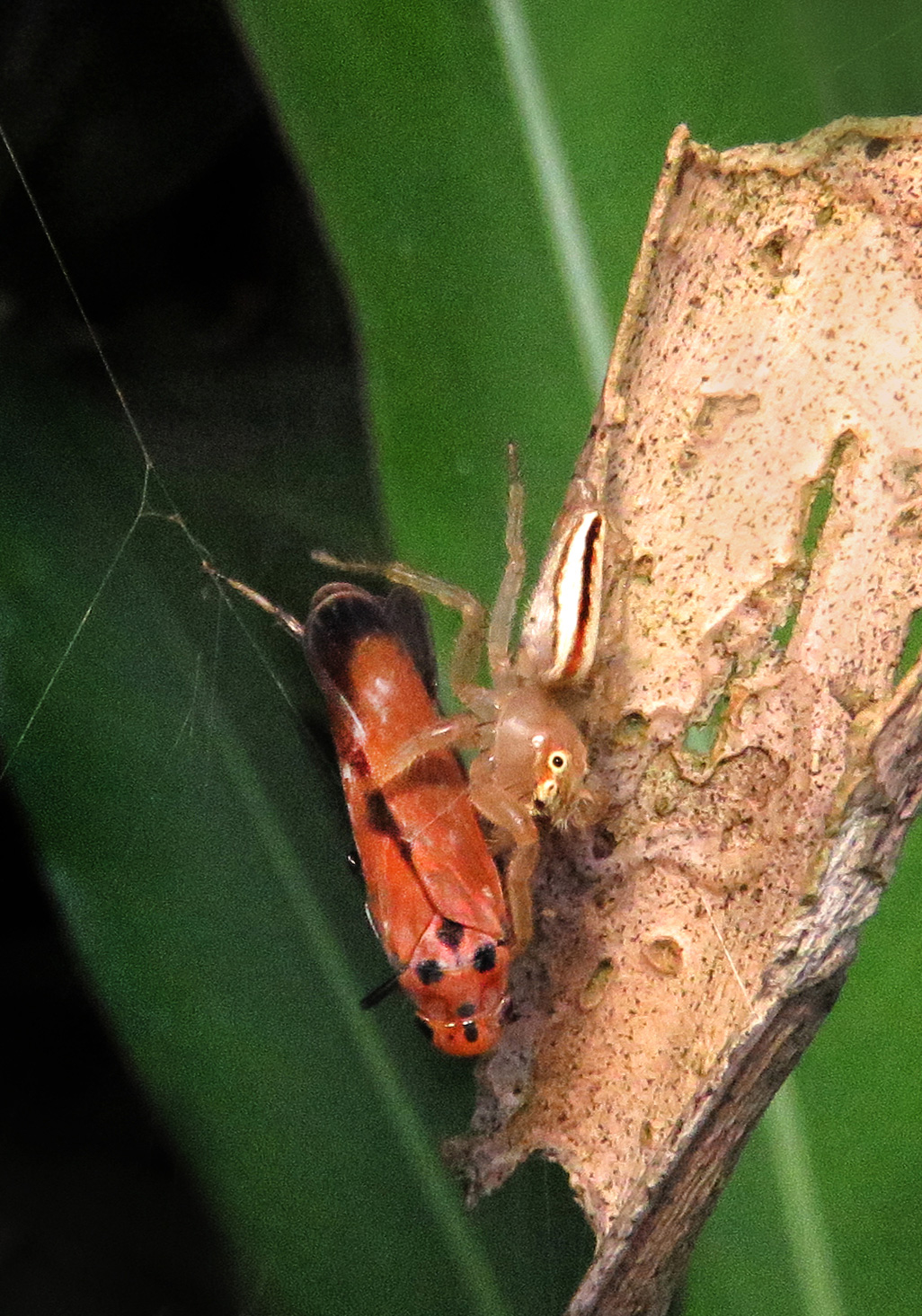
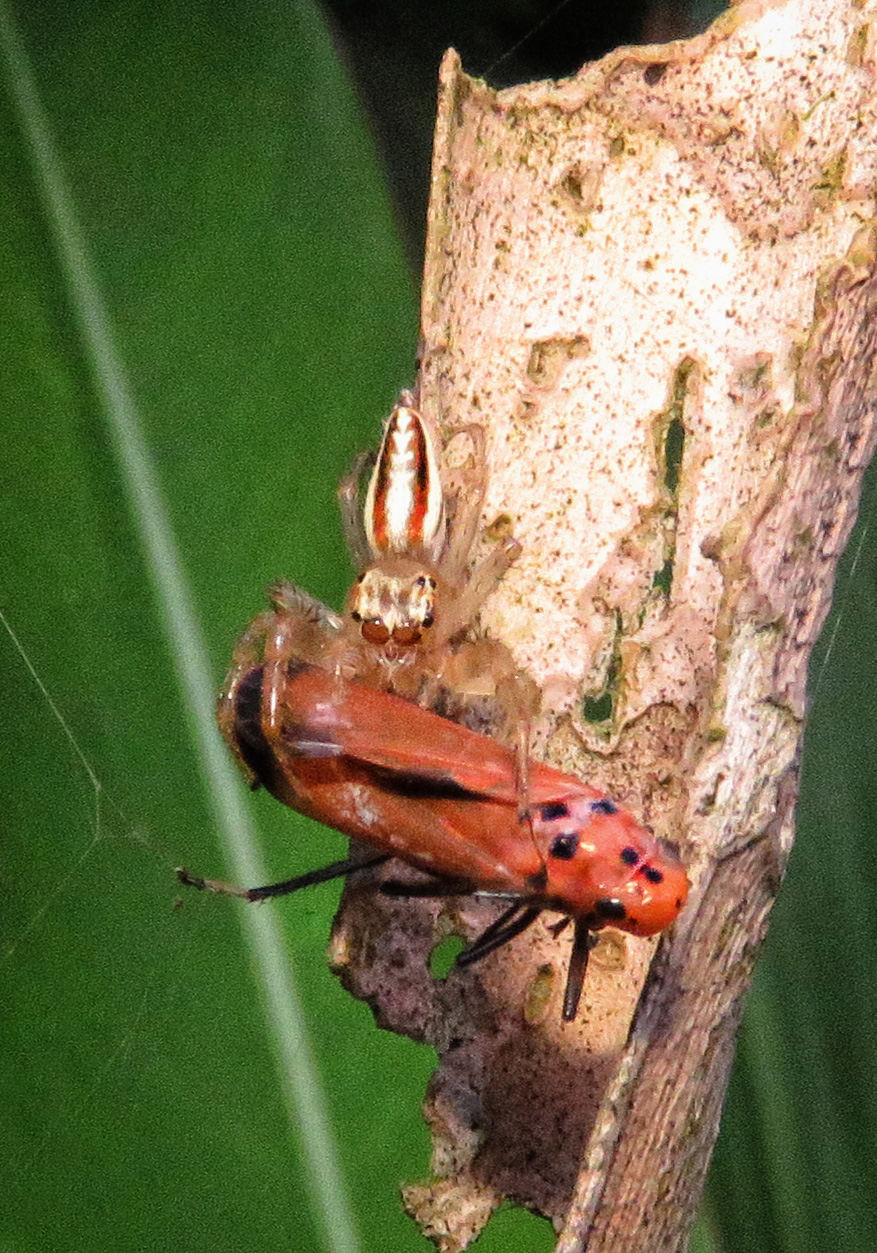
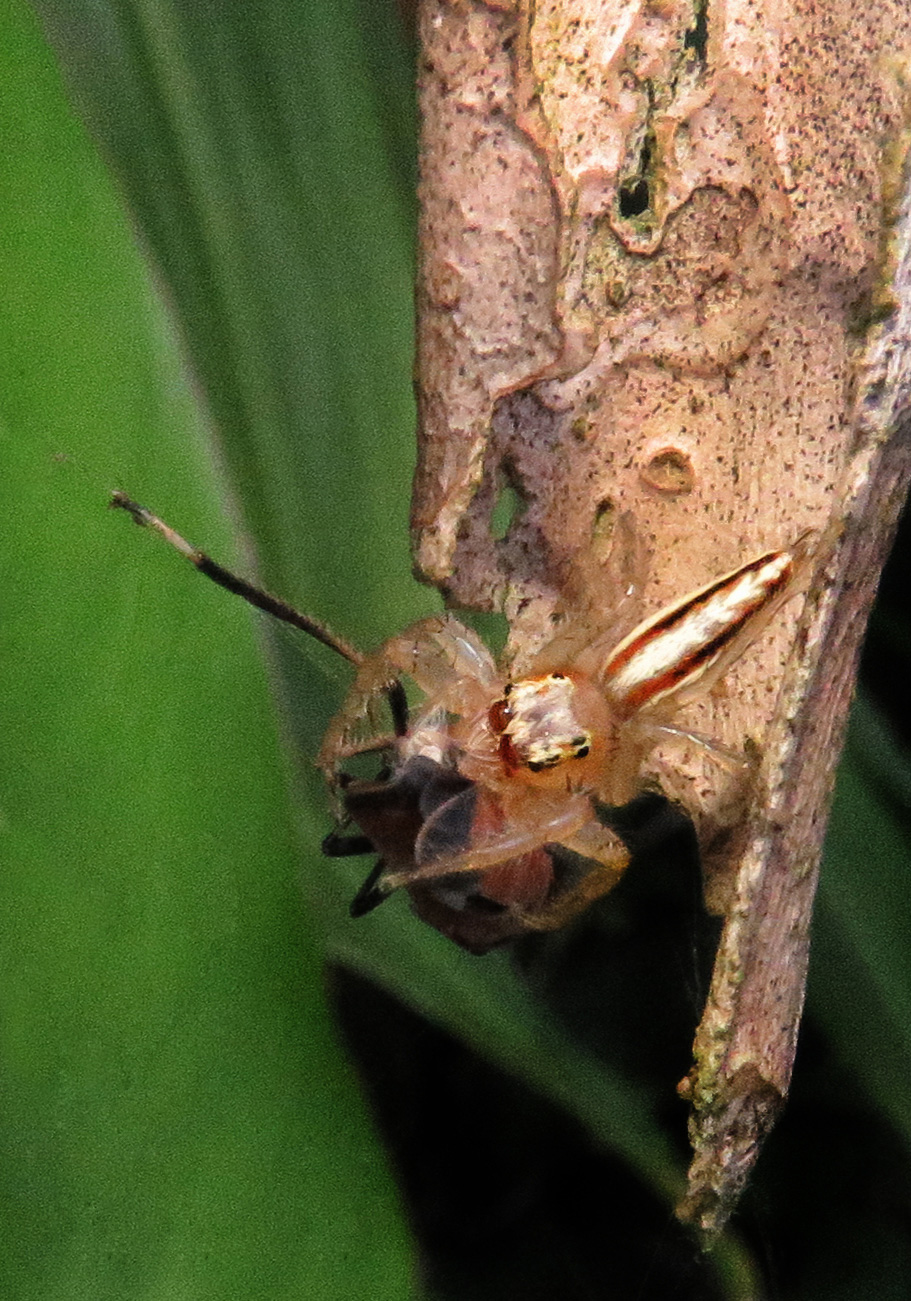
Telamonia is a genus of jumping spiders belonging to the family Salticidae, subfamily Salticinae, subtribe Plexippina, and tribe Plexippini. The genus is widely distributed across South and Southeast Asia, extending into East Asia and parts of Australasia. Species of Telamonia are typically found on foliage, shrubs, tree branches, and low vegetation in forests, forest edges, plantations, and gardens.
Members of the genus Telamonia are medium-sized jumping spiders characterized by a slender and elongated body form compared to many other plexippine genera. Coloration often includes combinations of green, brown, yellow, or gray, frequently with longitudinal stripes or subtle patterning that provide effective camouflage among leaves and stems. The cephalothorax is moderately high and somewhat elongated, and the abdomen is long and narrow.
Morphologically, Telamonia species are distinguished by characteristic structures of the male palpal organs and the female epigyne, which are essential for species-level identification. Legs are relatively long and agile, aiding movement through vegetation. Sexual dimorphism is present, with males often exhibiting brighter colors or more contrasting patterns than females.
Behaviorally, Telamonia spiders are active, diurnal visual hunters. They do not build capture webs but hunt by stalking prey along plant surfaces and capturing it with precise, short jumps. When disturbed, individuals may move rapidly to the opposite side of a leaf or stem to avoid detection. Courtship behavior involves visual signals such as leg movements and body postures.
Ecologically, species of Telamonia play an important role as predators of small insects and other arthropods in forest and garden ecosystems. Their leaf-dwelling habits, elongated body shape, and subtle coloration make them well adapted to life among vegetation and a distinctive genus within the subtribe Plexippina.