

Monkeys and Apes (Infraorder Simiiformes)
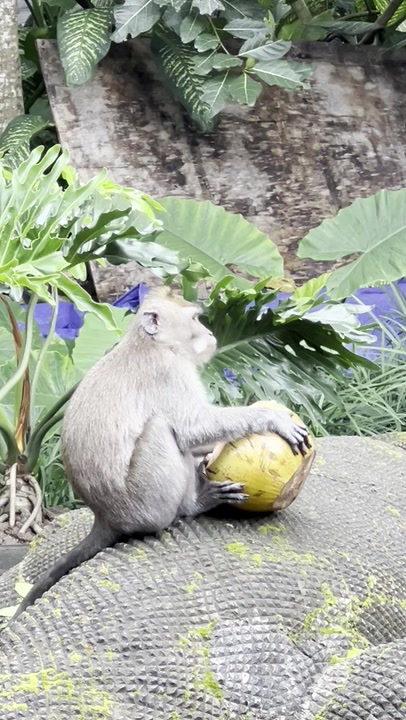
Simiiformes, commonly known as the simians or anthropoids, is the major primate lineage comprising New World monkeys, Old World monkeys, apes, and humans. It is an infraorder within the suborder Haplorhini and is generally divided into two principal evolutionary groups: Platyrrhini, the New World monkeys, and Catarrhini, the Old World monkeys and apes. Simians are characterized by highly developed visual systems, relatively large brains, dexterous hands, complex social behavior, and remarkable ecological diversity.
Simians occur naturally across much of the tropical and subtropical world. New World monkeys are distributed throughout Central and South America, while Old World monkeys and apes are native primarily to Africa and Asia. Humans have expanded far beyond the historical range of other simians and now occur on every inhabited continent. Most nonhuman simians are associated with forests, although several species occupy savannas, mountains, wetlands, dry woodland, and highly modified landscapes.
One of the defining features of Simiiformes is their highly developed visual and neurological systems. The eyes are positioned toward the front of the head, providing overlapping fields of view and accurate depth perception. Most simians have relatively large brains compared with many other mammals, supporting sophisticated learning, memory, spatial awareness, social cognition, and behavioral flexibility.
Simians generally possess flattened nails rather than claws on their digits, although individual lineages exhibit specialized structures. Their hands and feet are adapted for grasping and manipulating objects, with opposable digits particularly well developed in many species. These adaptations are closely associated with climbing, branch use, food handling, grooming, and other complex behaviors.
Locomotion varies dramatically across the infraorder. Many monkeys are arboreal quadrupeds, moving along branches with considerable agility. Spider monkeys and some other New World monkeys use prehensile tails as additional grasping organs. Gibbons are specialized for brachiation, swinging beneath branches with their long arms, while orangutans are adapted for careful climbing through the canopy. Baboons and several other Old World monkeys are highly terrestrial, and humans are specialized for habitual bipedal locomotion.
The tail is an important source of diversity. Many New World monkeys possess tails that may be long, balancing, or prehensile, whereas Old World monkeys generally have non-prehensile tails. Apes and humans lack external tails. These differences reflect divergent evolutionary histories and adaptations to different locomotor environments.
Simians exhibit a broad range of feeding strategies. Diets may include fruits, leaves, flowers, seeds, nectar, fungi, insects, eggs, small vertebrates, and other animal foods. Some species are highly specialized, while many are flexible omnivores. Fruit-eating simians can be important seed dispersers, transporting seeds through their digestive systems and depositing them away from parent plants.
The group is also notable for its complex social organization. Many species live in stable groups containing multiple adults and juveniles, while others form pairs, small family groups, or fission–fusion societies. Social relationships can involve grooming, dominance interactions, cooperation, territoriality, alliances, play, and long-term affiliative bonds.
Communication is highly developed and includes vocalizations, facial expressions, body postures, gestures, scent cues, and physical contact. Different calls may communicate alarm, territorial information, food discoveries, or social status. Some species show impressive capacities for social learning and cultural transmission, with behavioral traditions varying between populations.
Reproduction is generally characterized by relatively long gestation, small numbers of offspring, and prolonged juvenile development. Most species usually give birth to a single infant, although twins occur in some lineages. Young remain dependent on their mothers for extended periods and acquire important ecological and social skills through observation, play, and interaction with other members of the group.
The two major simian lineages differ in several anatomical and geographic characteristics. Platyrrhini, the New World monkeys, generally have laterally directed nostrils and are restricted to the Americas. Catarrhini, comprising Old World monkeys and apes, generally have downward-directed nostrils and are native to Africa and Asia. These distinctions reflect deep evolutionary divergence within Simiiformes.
New World monkeys include marmosets, tamarins, capuchins, squirrel monkeys, howler monkeys, spider monkeys, woolly monkeys, and many others. Their habitats range from Amazonian rainforest and cloud forest to dry tropical woodland. Several lineages have evolved prehensile tails and specialized adaptations for moving through the canopy.
Old World monkeys include macaques, baboons, guenons, colobines, mangabeys, and several other groups. They occupy an exceptionally broad range of habitats, from tropical forests to open savannas and high-altitude environments. Some, such as macaques, are particularly adaptable and can persist in agricultural, urban, and other human-modified landscapes.
The apes comprise gibbons and siamangs, orangutans, gorillas, chimpanzees, bonobos, and humans. They are generally characterized by the absence of an external tail, highly mobile shoulder joints, relatively large brains, and complex social and cognitive abilities. Their locomotor diversity includes brachiation, climbing, knuckle-supported terrestrial movement, and habitual bipedalism.
Simiiformes has considerable ecological importance. Fruit-eating monkeys and apes act as seed dispersers, while folivores influence vegetation and nutrient cycling. Insectivorous and omnivorous species regulate populations of smaller organisms. Simians themselves provide prey for large cats, raptors, snakes, crocodilians, and other predators, particularly during juvenile stages.
Several simian lineages are threatened by habitat loss, fragmentation, hunting, wildlife trafficking, disease, human–wildlife conflict, and climate change. Forest-dependent species are particularly vulnerable to deforestation and conversion of habitat to agriculture. Island-restricted primates may face additional risks because their distributions are naturally limited.
Simians are also central to the study of primate evolution and human origins. Comparative investigations of their anatomy, genetics, cognition, communication, development, and social behavior have helped clarify evolutionary relationships within Primates. Humans share a common evolutionary history with other simians, particularly the African apes, although humans possess a distinctive combination of anatomical, behavioral, technological, and cultural characteristics.
Overall, Simiiformes is a highly diverse infraorder of primates encompassing New World monkeys, Old World monkeys, apes, and humans. Their forward-facing eyes, dexterous extremities, large and complex brains, varied locomotor adaptations, flexible diets, and sophisticated social systems have enabled them to occupy an extraordinary range of ecological niches across the tropical and subtropical world.