

Ghost, Fiddler, Sand Bubbler Crabs and Allies (Superfamily Ocypodoidea)
-
Animals(Kingdom Animalia)
- Arthropods(Phylum Arthropoda)
The superfamily Ocypodoidea comprises a diverse group of true crabs within the infraorder Brachyura and the broader thoracotreme lineage. Its members are especially associated with shorelines, tidal flats, estuaries, mangrove forests, sandy beaches, and other coastal habitats. Familiar examples include fiddler crabs, ghost crabs, and several groups of mudflat-dwelling crabs. Many ocypodoid crabs are adapted to life between land and water, displaying specialized behaviors such as burrowing, rapid running, sediment feeding, and tolerance of changing tidal conditions.
Ocypodoid crabs generally possess a compact body protected by a hard carapace, which varies in shape from rounded and oval to square or somewhat rectangular. The carapace surface may be smooth, granular, or marked by ridges and grooves. Its shape and proportions often reflect the crab’s lifestyle and habitat. Species living on exposed sandy beaches may have streamlined bodies and long legs suited to rapid movement, while those inhabiting muddy tidal flats often have robust limbs and body forms adapted to burrowing or moving across soft sediment.
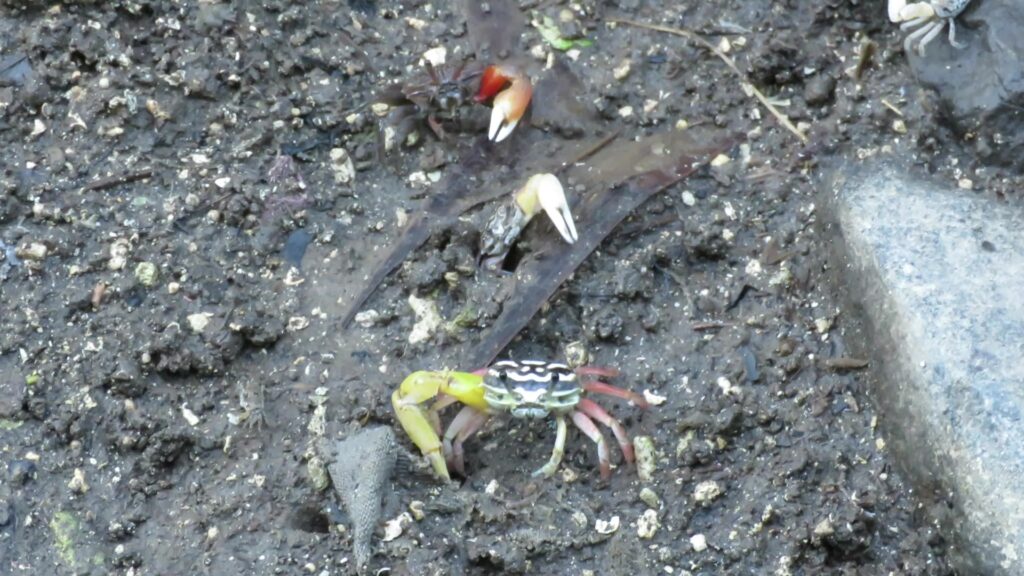
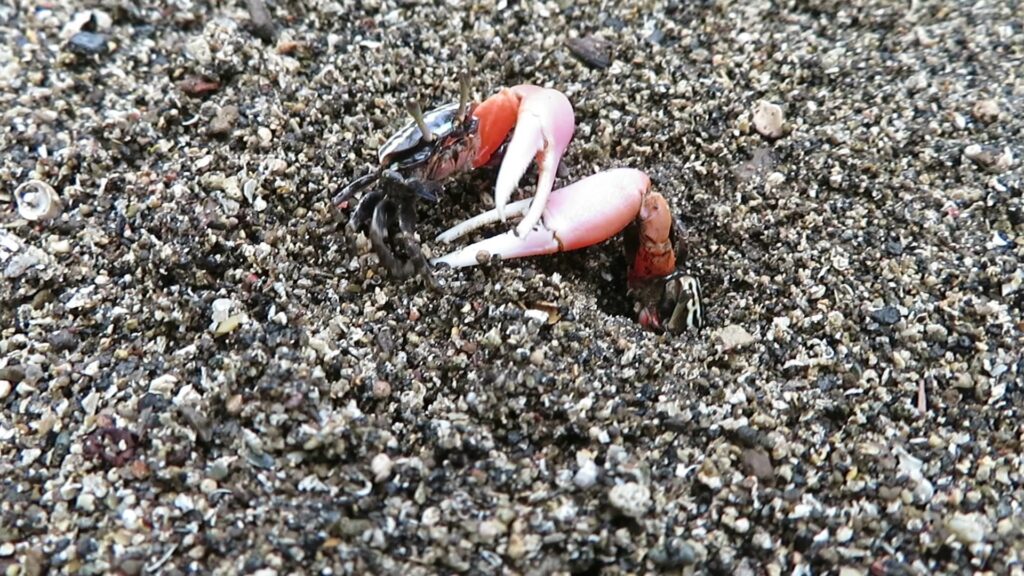
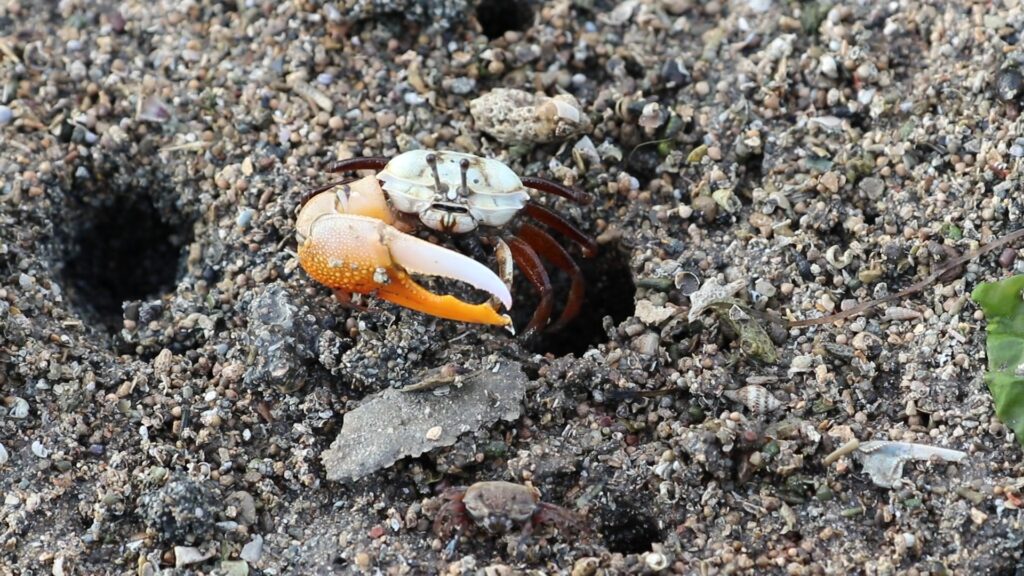
Like other true crabs, ocypodoids possess five pairs of thoracic appendages. The first pair forms claws, or chelae, which are used for feeding, defense, courtship, and communication. The remaining four pairs are primarily walking legs. In fiddler crabs, males typically have one greatly enlarged claw, which they use in courtship displays and territorial contests, while the smaller claw assists with feeding. In ghost crabs, the legs are long and strong, allowing rapid movement across beaches and the ability to escape into burrows when threatened.
One of the most characteristic features of many ocypodoid crabs is their dependence on burrows. Burrows provide shelter from predators, high temperatures, desiccation, and tidal fluctuations. They can also serve as resting sites and, in some species, as places for mating or egg incubation. Burrow depth and structure vary with species, substrate, groundwater level, and local climate. In muddy mangroves and tidal flats, dense burrow networks can substantially alter the sediment, influencing aeration, drainage, and the distribution of organic material.
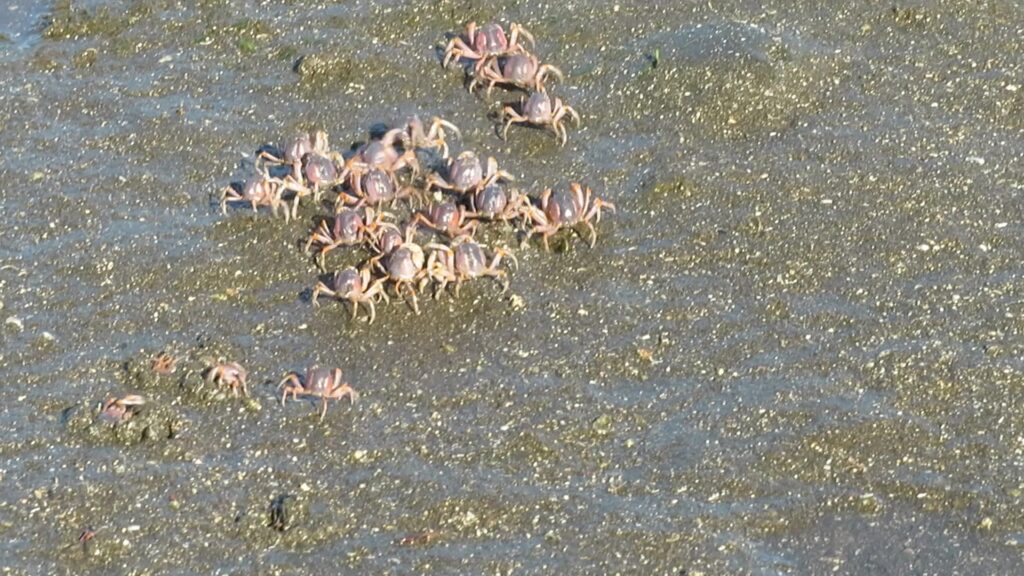
Ocypodoidea is particularly associated with intertidal and supratidal environments. Fiddler crabs often inhabit sheltered mudflats, mangroves, and salt marshes, while ghost crabs commonly occupy sandy beaches above the waterline. Other members live along estuaries and sheltered coastlines where salinity changes with tides and freshwater inflow. Many species are adapted to spending considerable time out of water, although their tolerance of drying and their dependence on moist conditions differ. Access to suitable sediment and shelter is often essential for survival.
Feeding strategies vary among ocypodoid crabs, but many are deposit feeders or omnivores. Fiddler crabs commonly collect sediment with their small claws and sort it for algae, bacteria, fungi, and decomposing organic matter. After extracting edible material, they leave behind small sediment pellets. Ghost crabs are often opportunistic omnivores and scavengers, consuming beach wrack, carrion, small invertebrates, and occasionally eggs or hatchlings of other animals. These feeding habits contribute to nutrient cycling and can influence the distribution of organic matter along shorelines.
Ocypodoid crabs have sensory adaptations suited to open, exposed habitats. Their compound eyes are usually positioned on movable stalks, providing a broad field of vision for detecting predators, competitors, and potential mates. Their antennae and other sensory structures help them assess their surroundings. In fiddler crabs, visual communication is particularly important: males often wave their enlarged claws in species-specific patterns during courtship or territorial interactions. Such displays can help individuals recognize potential mates and assess rivals.
Reproduction typically involves separate male and female individuals, with courtship behaviors varying among species. Males may defend burrows or display their claws to attract females. After mating, females carry fertilized eggs beneath the abdomen on specialized appendages. In many species, females release larvae into coastal water, where the larvae develop through planktonic stages before returning to suitable shoreline habitats. Timing of larval release may be synchronized with tides, lunar cycles, or other environmental cues that improve dispersal and survival.
Ocypodoid crabs play important ecological roles in coastal ecosystems. Their burrowing and sediment-feeding activities can increase sediment aeration, redistribute nutrients, and affect microbial communities. Fiddler crabs can influence decomposition in mangroves and salt marshes by processing organic matter, while ghost crabs act as scavengers and predators on sandy beaches. These crabs also serve as prey for shorebirds, fish, reptiles, and mammals. Their abundance and behavior can therefore influence food webs and the physical functioning of coastal habitats.
Many ocypodoid species face growing pressure from coastal development, beach erosion, pollution, disturbance from recreation, and the loss of mangroves and salt marshes. Artificial lighting and human activity on beaches can disrupt the behavior of some species, while shoreline modification may destroy burrowing habitat. Protecting natural beaches, tidal flats, mangrove forests, and estuarine systems is important for maintaining healthy populations and the ecological functions they provide.
Overall, Ocypodoidea is an important superfamily of predominantly coastal crabs distinguished by their adaptations to intertidal and land-adjacent habitats. Their burrowing behavior, specialized feeding strategies, visual communication, and tolerance of changing environmental conditions enable them to thrive in some of the most dynamic coastal environments. Through sediment modification, nutrient cycling, and their roles in food webs, ocypodoid crabs are significant components of shoreline biodiversity.