

Ghost and Fiddler Crabs (Family Ocypodidae)
-
Animals(Kingdom Animalia)
- Arthropods(Phylum Arthropoda)
- Crustaceans(Subphylum Crustacea)
- Arthropods(Phylum Arthropoda)
The family Ocypodidae is a group of true crabs within the infraorder Brachyura and superfamily Ocypodoidea. Its members are commonly associated with intertidal and coastal habitats, including sandy beaches, muddy tidal flats, estuaries, mangrove forests, and salt marshes. The family includes well-known crabs such as ghost crabs (Ocypode) and fiddler crabs, which are famous for the males’ disproportionately enlarged claws. Ocypodids are particularly notable for their adaptations to life in environments that alternate between exposure to air and submersion by tides.
Ocypodids generally have a compact body covered by a hard, calcified carapace. The carapace varies in shape among genera, ranging from relatively square or rectangular forms to more rounded outlines. Ghost crabs typically have a sturdy body, long walking legs, and a relatively robust carapace, while fiddler crabs often have a more compact appearance and conspicuous differences between the claws of males and females. The exoskeleton protects the internal organs and provides attachment points for muscles involved in walking, burrowing, and feeding.
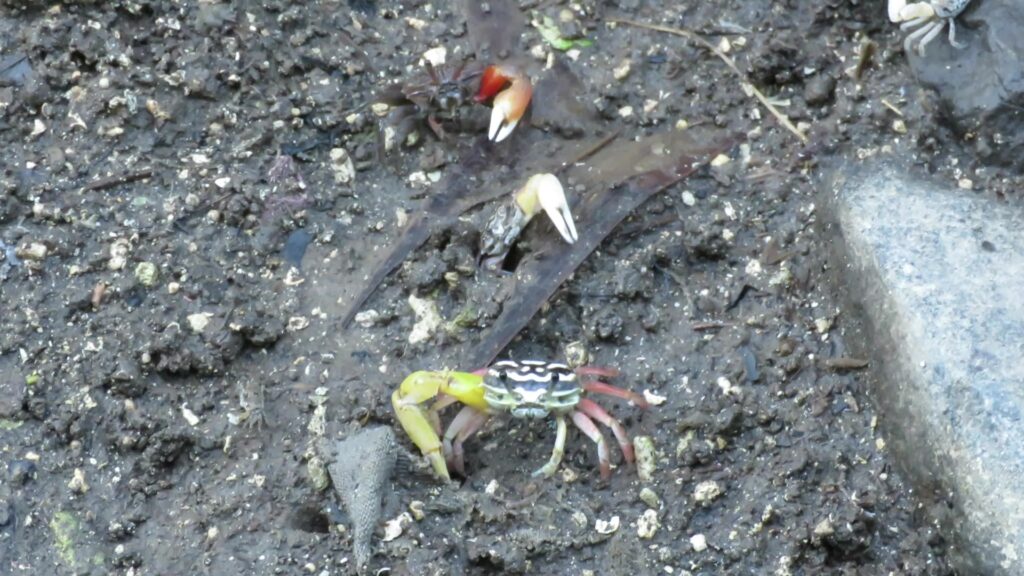
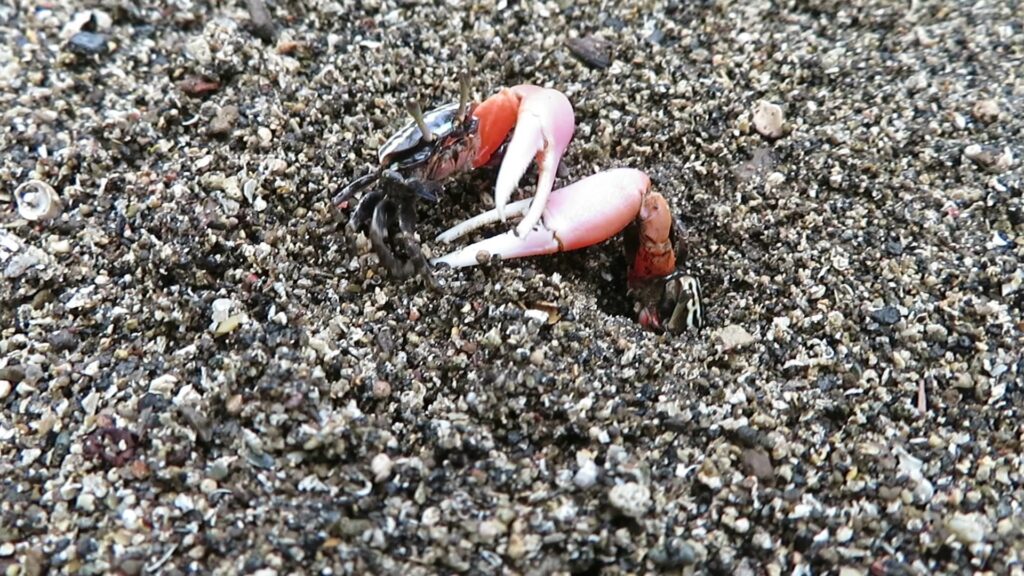
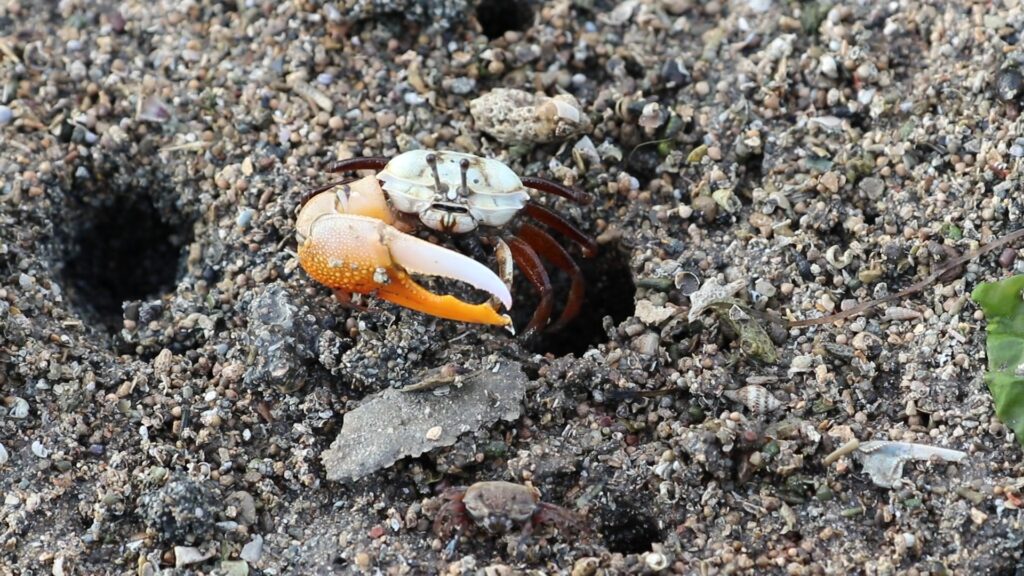
One of the family’s most recognizable features is its specialized appendages. Ocypodids possess five pairs of thoracic appendages, with the first pair forming claws, or chelae, and the remaining four pairs primarily used for locomotion. In male fiddler crabs, one claw is greatly enlarged and used for courtship displays, territorial defense, and contests with rival males. The smaller claw is used to collect and handle food. Ghost crabs, in contrast, generally have claws that are more similar in size and possess long, powerful walking legs that allow them to move rapidly across sandy beaches.
Ocypodidae is especially associated with the intertidal zone, where water levels change with the tides. Ghost crabs commonly inhabit sandy beaches and dig burrows above or near the high-tide line. Fiddler crabs often live on muddy or sandy tidal flats, particularly in mangrove forests and salt marshes. Burrows provide shelter from predators, heat, and dehydration, and they may also serve as sites for mating or resting. The depth and structure of these burrows depend on the species, sediment type, groundwater level, and local environmental conditions.
Many ocypodids are adapted to spend considerable time out of water. Their gills remain important for respiration, but the branchial chambers can retain moisture and support gas exchange while the animals are exposed to air. This adaptation allows them to forage on shorelines during low tide. However, their tolerance of desiccation varies among species, and many must retreat into their burrows or return to moist environments when conditions become too hot or dry. Temperature, humidity, and tidal cycles strongly influence their activity.
Feeding behavior differs between the major groups within the family. Fiddler crabs are primarily deposit feeders, collecting sediment with their small claws and extracting algae, bacteria, fungi, and decomposing organic particles. After processing the sediment, they discard relatively depleted material in small pellets. Ghost crabs are generally opportunistic omnivores and scavengers, feeding on beach wrack, carrion, small invertebrates, and other available food. Some may also prey on small animals found along the shoreline. These feeding habits help recycle nutrients and influence the distribution of organic material in coastal ecosystems.
Ocypodids possess well-developed sensory systems suited to open, exposed habitats. Their eyes are generally positioned on movable stalks, allowing them to scan their surroundings for predators, competitors, and potential mates. Chemical and tactile sensory structures help them assess food and environmental conditions. In fiddler crabs, visual communication is especially important: males perform characteristic claw-waving displays that can attract females and signal to rival males. The timing, movement, and size of these displays may influence reproductive and territorial interactions.
Reproduction typically involves separate male and female individuals. Courtship may occur near burrows and can include claw waving, movement patterns, and competition for suitable shelter. After mating, females carry fertilized eggs beneath the abdomen, attached to specialized appendages. When the eggs hatch, many species release larvae into coastal water, where the larvae pass through planktonic developmental stages before returning to suitable habitats. Tidal conditions and other environmental cues can influence the timing of larval release and dispersal.
The family plays important ecological roles in coastal environments. Burrowing and sediment-feeding activities can improve sediment aeration, redistribute nutrients, and influence microbial processes. In mangroves and salt marshes, fiddler crabs help process organic matter and may affect plant growth and sediment dynamics. Ghost crabs act as scavengers and predators on sandy beaches and can influence the abundance of smaller invertebrates. Ocypodids are also prey for shorebirds, fish, reptiles, and mammals, making them important links in coastal food webs.
Despite their adaptability, ocypodids can be affected by coastal development, beach erosion, pollution, mangrove destruction, and disturbance from human recreation. Construction and beach modification may remove burrowing habitat, while heavy foot traffic and artificial lighting can interfere with normal activity and reproduction. Conservation of natural beaches, tidal flats, mangrove forests, and salt marshes is important for maintaining their populations and the ecological functions they perform.
Overall, Ocypodidae is a distinctive family of coastal crabs characterized by burrowing behavior, strong locomotor adaptations, and specialized feeding and communication strategies. Its members are well suited to the changing conditions of intertidal habitats, where they contribute to nutrient cycling, sediment processes, and coastal food webs. Ghost crabs and fiddler crabs are among its most recognizable representatives, illustrating the remarkable adaptations that allow crabs to thrive at the boundary between land and sea.