Bali Wildlife
Every Spices Matter


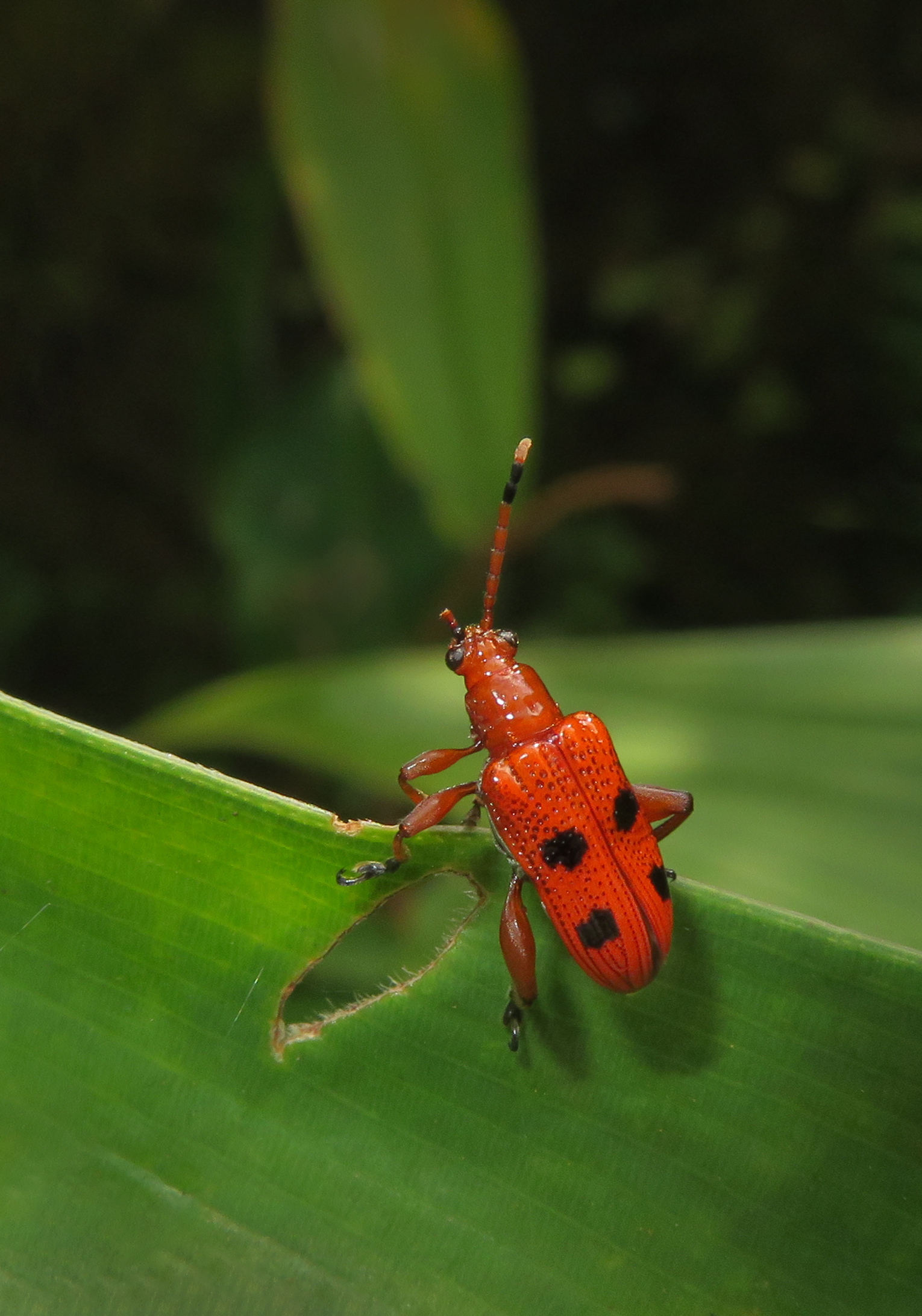
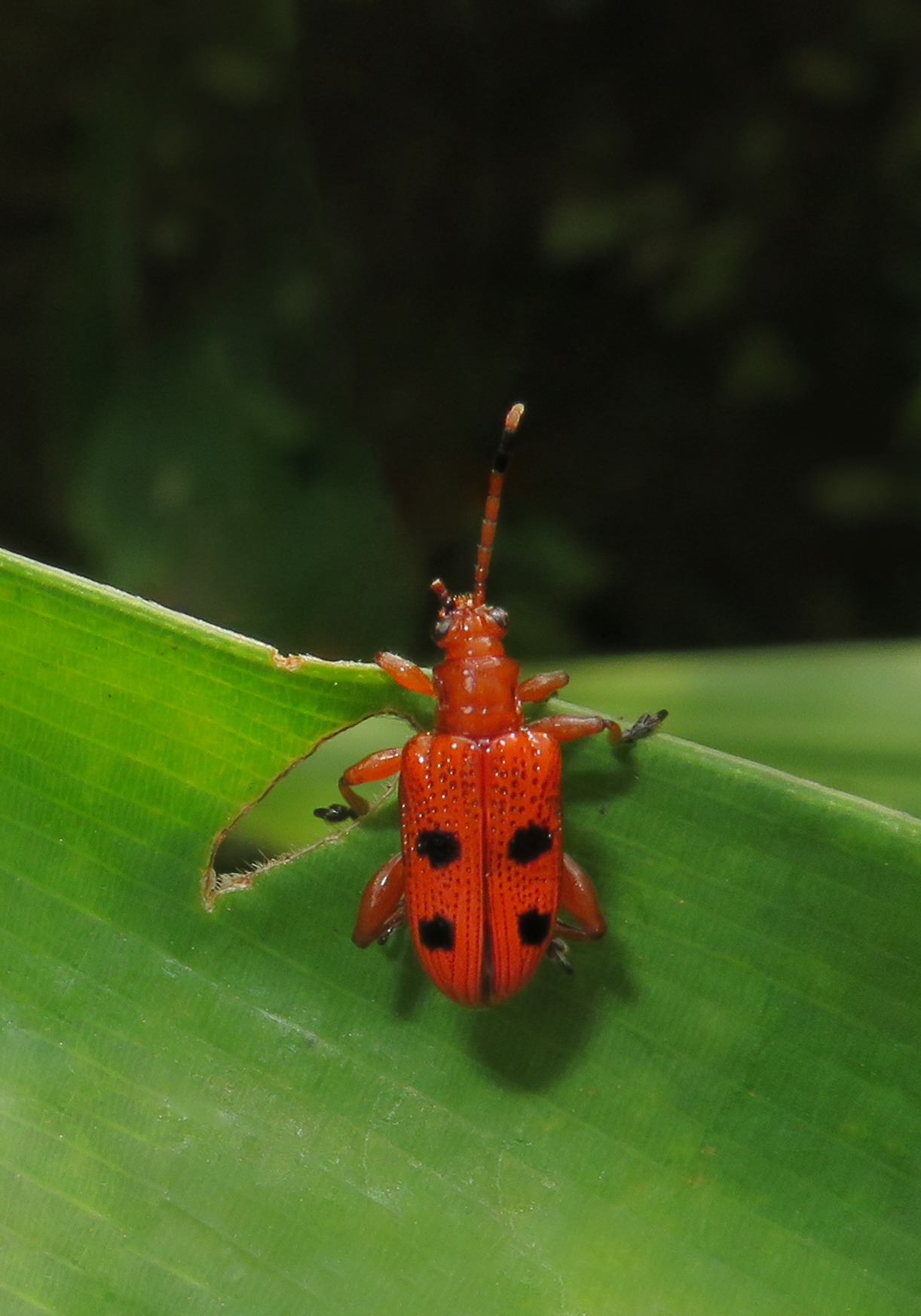
Lema is a genus of leaf beetles within the tribe Lemini, subfamily Criocerinae (Family Chrysomelidae, Order Coleoptera). The genus is widely distributed across tropical and temperate regions of the world and is especially diverse in the Old World tropics. Species of Lema are commonly associated with herbaceous plants, particularly monocotyledons such as grasses and sedges, though some species also utilize dicotyledonous host plants.
Adult Lema beetles are generally small to medium-sized and have an elongate, narrow, and parallel-sided body form. The integument is typically smooth and shiny, often exhibiting metallic or glossy coloration in shades of blue, green, coppery, or black, sometimes with contrasting reddish or yellowish markings. The head is fully exposed and not concealed by the pronotum, and the antennae are filiform and moderately long. Legs are slender and well adapted for movement on foliage.
Larvae of Lema are external leaf feeders and are notable for the characteristic criocerine fecal shield, in which larvae cover their bodies with a layer of excrement and shed skins. This behavior provides effective protection against predators and parasitoids. Larval feeding commonly produces elongated feeding scars on leaves, reflecting their linear feeding movements.
The genus Lema includes numerous species, some of which are of agricultural importance. Certain species feed on economically important plants and may cause localized damage to crops, although most have limited impact and occur at low population densities. Life cycles generally involve close synchronization with host plant availability.
Ecologically, Lema species are integral components of plant–insect interactions, particularly in grassland and agricultural ecosystems. They serve as herbivores, prey for predators, and hosts for parasitoids, contributing to ecological balance. The genus Lema is of taxonomic and ecological interest due to its diversity, specialized feeding habits, and characteristic larval defensive behavior.