

Tribe Lamiini
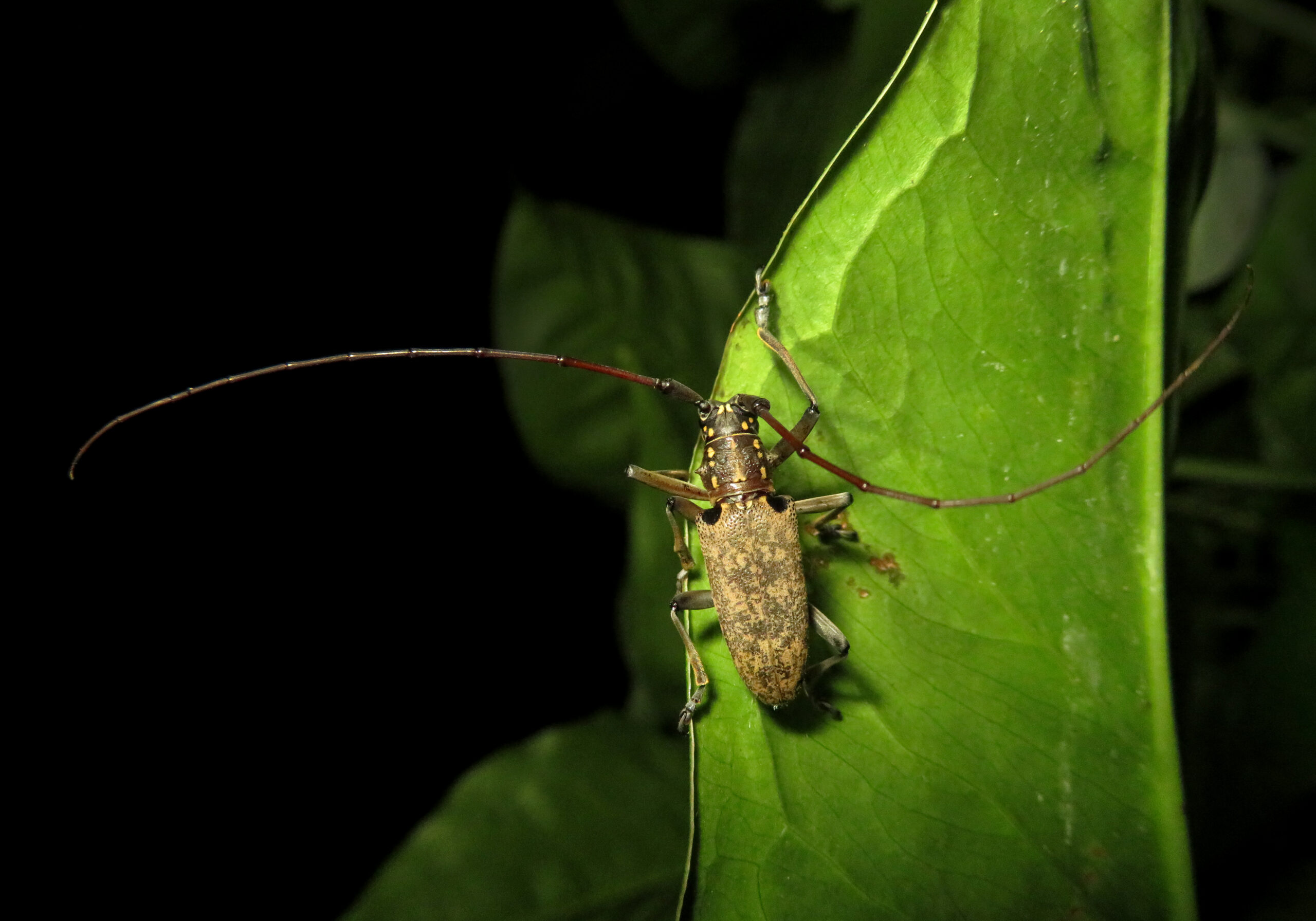
Lamiini is a large and diverse tribe of longhorn beetles within the subfamily Lamiinae (Family Cerambycidae, Order Coleoptera). Members of this tribe are widely distributed across tropical and temperate regions, with especially high diversity in Asia, Africa, and the Americas.
Beetles of Lamiini are typically medium- to large-sized, with elongated, cylindrical bodies and very long antennae, often equal to or exceeding the body length. The integument is frequently covered with fine hairs or dense pubescence, sometimes forming mottled patterns in shades of brown, gray, black, or greenish tones. This cryptic coloration helps them blend into bark, wood, or lichen-covered surfaces.
The pronotum may bear lateral spines or tubercles in some species. Elytra are usually elongate and parallel-sided, sometimes textured with punctures or subtle ridges. The head is often robust, with strong mandibles adapted for chewing plant material.
Larvae of Lamiini are typical wood-borers, developing within stems, trunks, or branches of host plants. They feed internally on wood or plant tissues, creating tunnels that may weaken or damage the host. Many species are associated with specific trees or shrubs, and some can be economically important as forestry or agricultural pests.
Adults are generally active during warm seasons and may be nocturnal or crepuscular, though some species are active by day. They feed on bark, leaves, sap, or sometimes flowers, depending on the species.
The life cycle follows complete metamorphosis: egg (laid on or in host plant tissue), larva (wood-boring stage), pupa (usually within the host plant), and adult.
Tribe Lamiini represents a prominent lineage of longhorn beetles characterized by elongated bodies, long antennae, cryptic coloration, and larval development within woody plants.