Bali Wildlife
Every Spices Matter


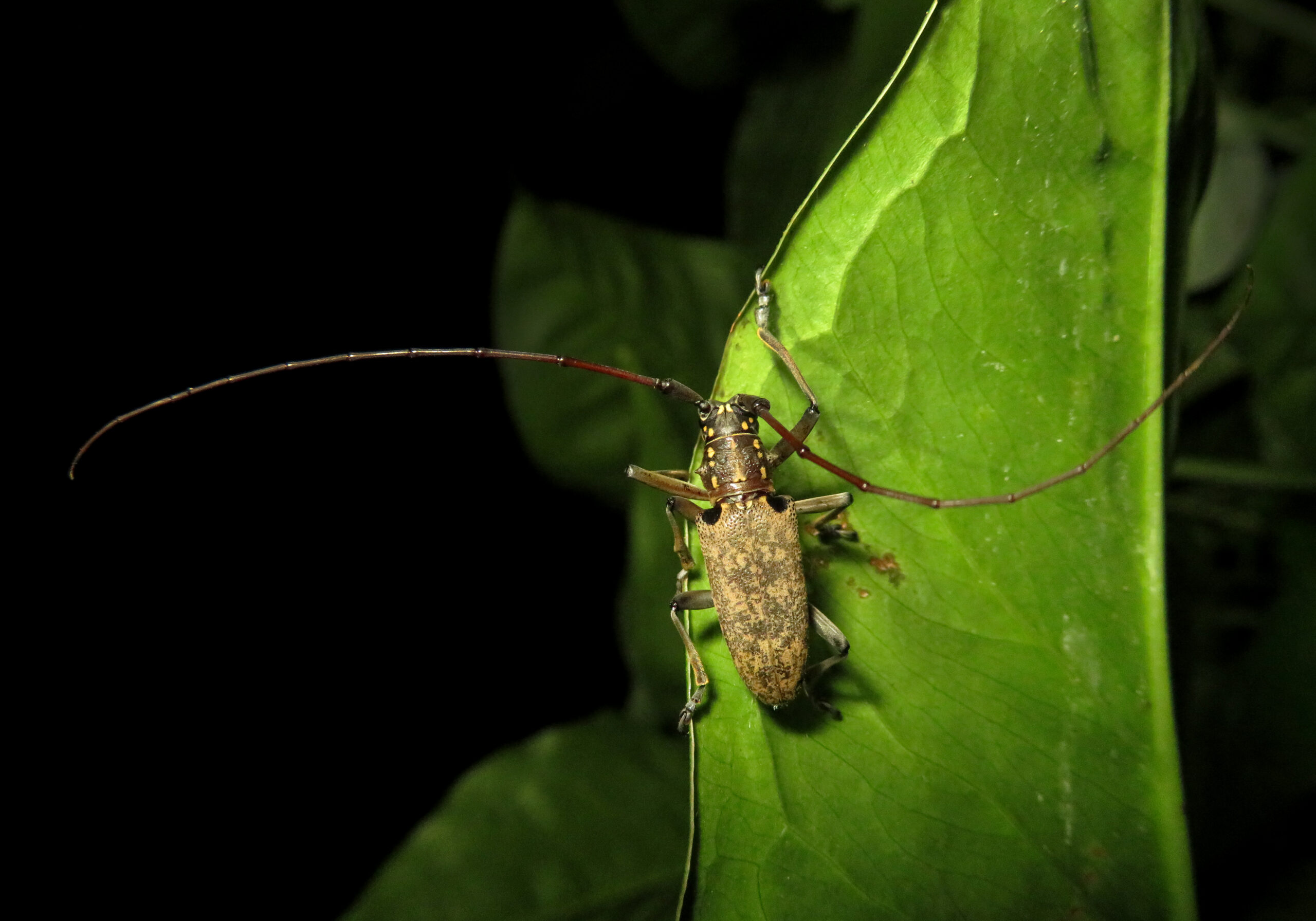
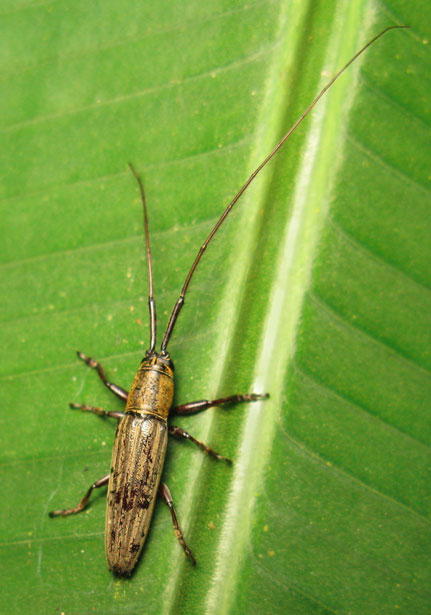
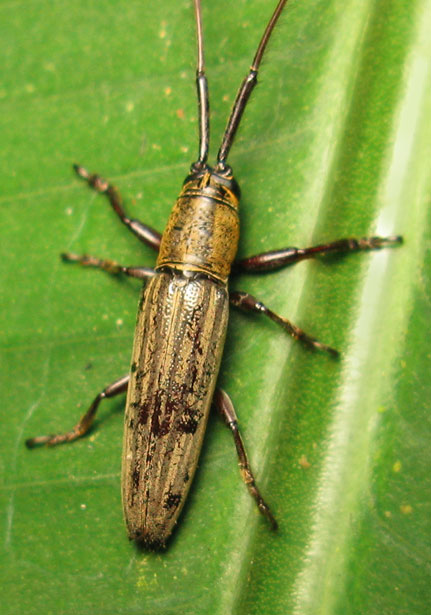
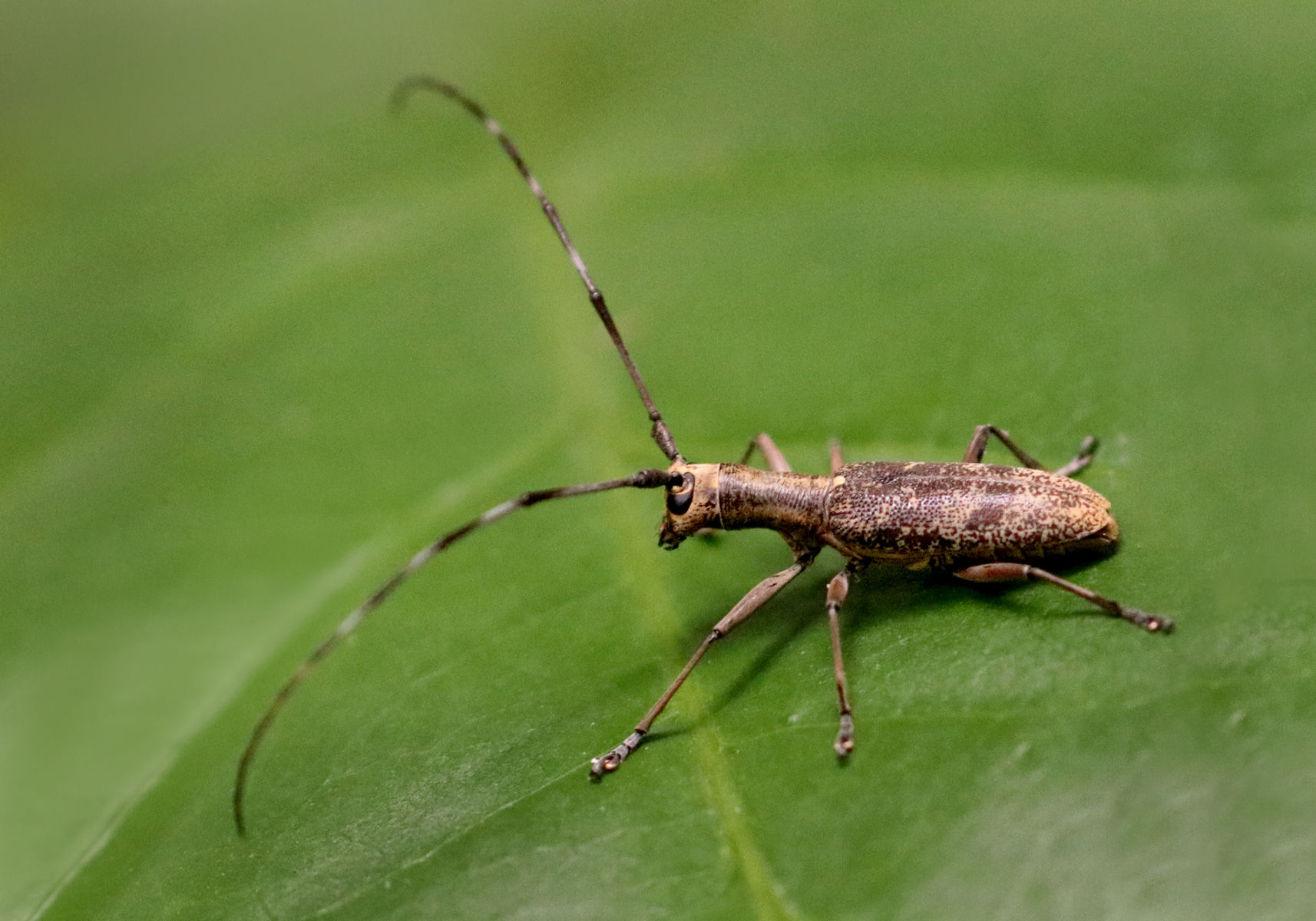
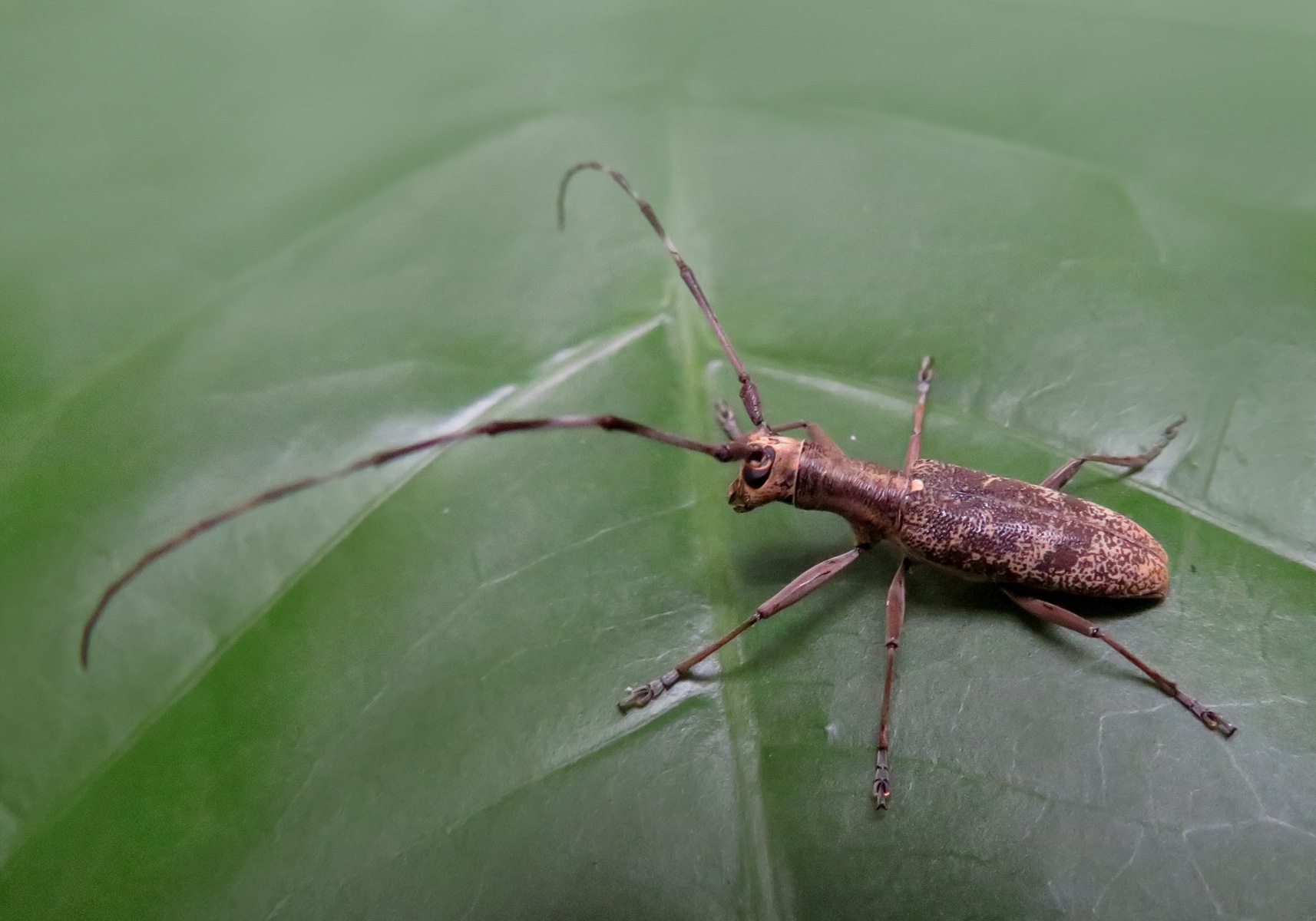
Lamiinae is the largest and most diverse subfamily within the family Cerambycidae (Order Coleoptera), commonly known as flat-faced longhorn beetles. Members of this subfamily are distributed worldwide, with exceptional diversity in tropical and subtropical regions. They inhabit a wide range of environments, particularly forests, woodlands, and shrublands, but many species also occur in agricultural and disturbed habitats.
Adult Lamiinae are generally medium to large beetles with robust to elongate bodies. A defining characteristic of the subfamily is the flat or slightly concave face, from which the common name “flat-faced longhorns” is derived. Antennae are long and filiform, often exceeding body length in males. The eyes are deeply notched, wrapping around the antennal bases. The body surface is frequently covered with dense pubescence or scales, producing cryptic patterns of gray, brown, green, or mottled colors that provide camouflage against bark, lichens, or foliage.
Larvae of Lamiinae are typical cerambycid borers, developing within wood, stems, or roots of host plants. Many species are xylophagous, feeding on dead or dying wood, while others infest living trees and shrubs. Larval development may last from one to several years, depending on species and environmental conditions.
Lamiinae includes numerous tribes and genera, such as Batocera, Monochamus, Acalolepta, and Anoplophora. Some species, including several Monochamus and Anoplophora, are economically important pests due to their ability to damage timber, forest trees, and ornamental plants, and in some cases transmit plant pathogens.
Ecologically, Lamiinae plays a major role in forest ecosystems through the breakdown of woody material and nutrient cycling. While many species contribute positively as decomposers, pest species can have significant economic and ecological impacts. The immense diversity, distinctive morphology, and ecological importance of Lamiinae make it a central subfamily within the longhorn beetles.