

Malayan Eggfly (Hypolimnas anomala)
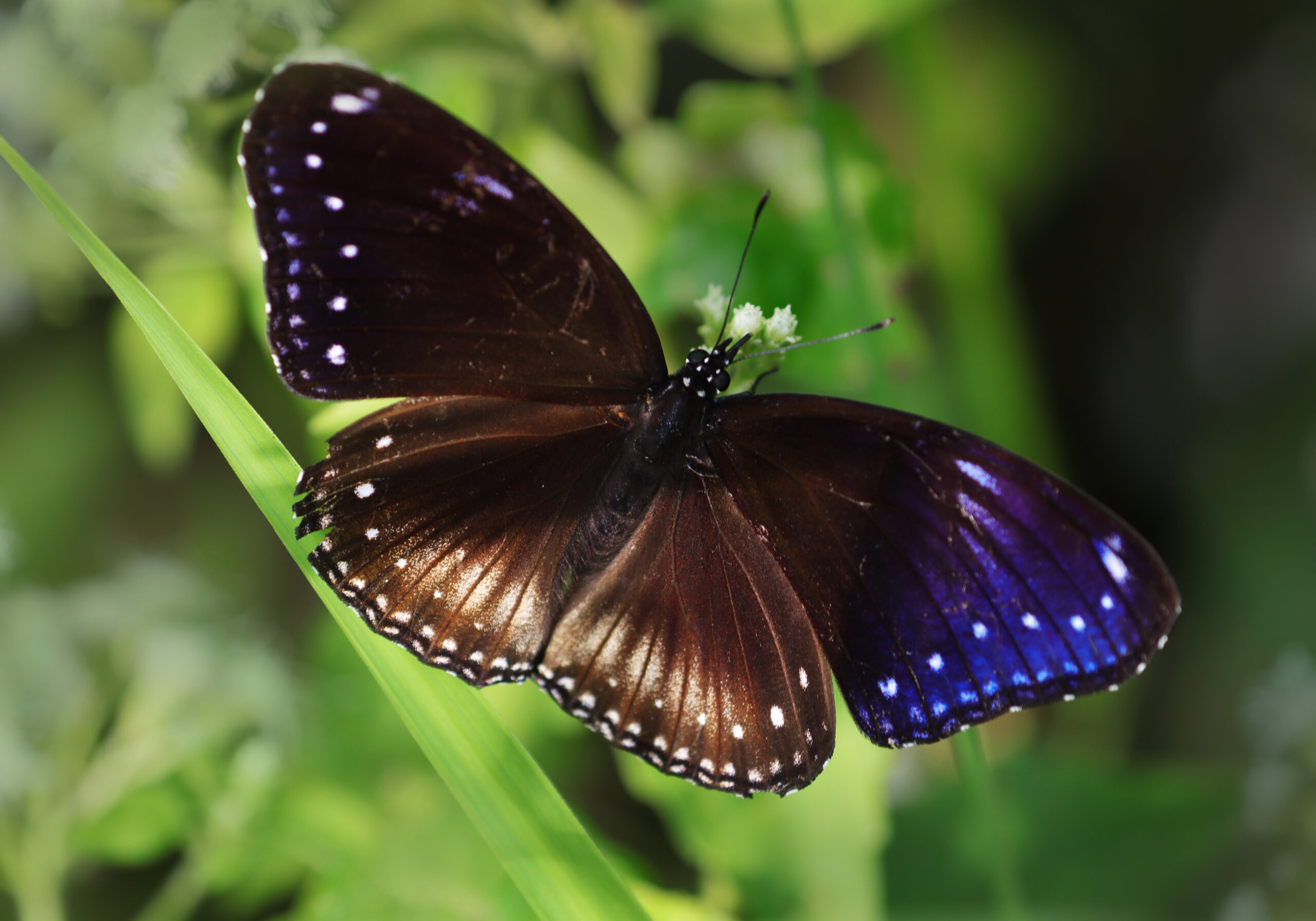
Hypolimnas anomala is a species of brush-footed butterfly belonging to the genus Hypolimnas (Tribe Junoniini, Subfamily Nymphalinae, Family Nymphalidae, Order Lepidoptera). Commonly known as the Malayan Eggfly, it is distributed throughout parts of Southeast Asia, including Peninsular Malaysia, southern Thailand, Singapore, Borneo, Sumatra, and nearby islands. The species inhabits tropical rainforests, secondary forests, forest edges, riverine woodlands, plantations, parks, and shaded gardens, where suitable larval host plants are available.
Hypolimnas anomala is a medium to large butterfly with a wingspan of approximately 65–85 mm. It possesses a robust body and broad, rounded wings typical of the genus. The species exhibits marked sexual dimorphism. Males are predominantly dark brown to black with conspicuous iridescent bluish or violet markings and contrasting white patches on the wings. Females are generally larger and more variable in coloration, displaying brown, orange, white, and black markings that provide effective camouflage among forest vegetation. The undersides of both sexes are intricately patterned with shades of brown, gray, and cream, allowing them to blend with dead leaves and tree bark when resting.
Adults are diurnal and are strong, agile fliers, commonly seen along forest paths, stream margins, and sunlit clearings. They frequently bask with their wings spread to regulate body temperature before making rapid flights in search of food or mates. Adults feed primarily on nectar from flowering plants using their long, coiled proboscis but also obtain nutrients from fermenting fruits, tree sap, animal dung, carrion, and mineral-rich mud. Males often engage in mud-puddling to acquire essential minerals that enhance reproductive success and may defend territories in sunny forest openings.
The life cycle involves complete metamorphosis, consisting of egg, larva (caterpillar), pupa (chrysalis), and adult stages. Females lay eggs singly on the leaves of host plants. The caterpillars are dark-colored and bear numerous branched spines that provide protection against predators. They feed on a variety of herbaceous plants and shrubs, particularly members of the family Acanthaceae. Pupation takes place on vegetation, where the angular chrysalis hangs suspended head downward by its cremaster until the adult emerges.
Ecologically, Hypolimnas anomala is an important pollinator of flowering plants within tropical forest ecosystems. Its caterpillars contribute to plant–herbivore interactions, while both larvae and adults provide food for birds, reptiles, spiders, predatory insects, and parasitoids. Because it is closely associated with forest habitats and responds to habitat disturbance, the Malayan Eggfly serves as a useful indicator of tropical forest health and regional biodiversity.