

Jawed Land Leeches (Family Haemadipsidae)
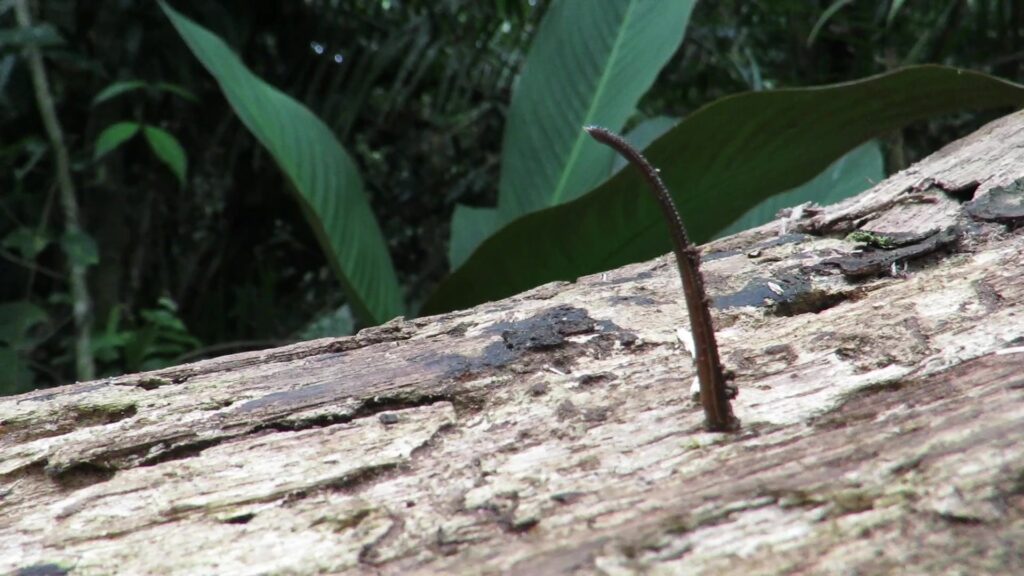
Haemadipsidae is a family of terrestrial leeches belonging to the phylum Annelida, class Clitellata, and order Arhynchobdellida. Its members are commonly known as land leeches because they are adapted to living on moist forest floors and vegetation rather than permanently in water. They are particularly well known in tropical and subtropical regions, where they inhabit humid forests and other environments with high moisture levels. Many species are blood-feeding ectoparasites that attach to passing animals, including mammals, birds, reptiles, and amphibians.
Members of Haemadipsidae generally possess elongated, flexible bodies divided into numerous external ring-like annuli. Their bodies may be cylindrical or somewhat flattened, depending on the species and its state of contraction. Like other leeches, they lack the prominent bristles found in many earthworms and possess specialized suckers at the ends of the body. The posterior sucker provides attachment and helps with locomotion, while the anterior sucker surrounds the mouth and is used during feeding. These structures allow land leeches to move across leaves, soil, tree roots, and other surfaces.
Land leeches vary in size, coloration, and body markings. Their colors commonly include brown, dark green, olive, black, and reddish shades, sometimes accompanied by longitudinal stripes or contrasting patterns. Many species blend well with damp leaf litter and forest vegetation, making them difficult to notice. Their soft, muscular bodies can extend and contract considerably, allowing them to move efficiently through dense undergrowth and reach potential hosts.
Haemadipsidae is distributed mainly across tropical and subtropical regions of South Asia, Southeast Asia, East Asia, and parts of Australasia. Some species also occur on islands of the Indo-Pacific region. They are especially associated with humid forests, rainforests, plantations, and shaded areas with abundant ground vegetation. Moisture is essential to their activity because their bodies are vulnerable to drying. They are therefore often more active during rainy weather or in locations where humidity remains high.
One of the most distinctive characteristics of haemadipsid leeches is their host-seeking behavior. When a potential host approaches, they may extend the front portion of the body, respond to movement or other environmental cues, and crawl toward the animal. Some species climb low vegetation and wait for passing hosts, while others search along the forest floor. They attach using their suckers and feed on blood, then detach and retreat into the surrounding vegetation or leaf litter.
Their feeding adaptations allow them to obtain blood efficiently. Depending on the species, the mouth contains small jaws with teeth that cut the host’s skin. Salivary secretions may contain anticoagulants that prevent blood from clotting during feeding. Because a blood meal provides substantial nutrients, land leeches may survive for extended periods between feedings. Their ability to remain inactive in sheltered, humid locations helps them conserve energy when hosts are scarce.
Reproduction in Haemadipsidae follows the general pattern of leeches. Most species are hermaphroditic, meaning that individuals possess both male and female reproductive organs, although mating usually involves the exchange of sperm between individuals. Eggs are deposited in protective cocoons in suitable moist locations, such as soil or sheltered ground cover. The young hatch as small leeches and develop without a free-swimming larval stage. Reproductive timing and developmental rates depend on species and environmental conditions.
Haemadipsidae occupies an important ecological position in forest food webs. As blood-feeding parasites, these leeches interact with a variety of vertebrate hosts and can influence host behavior and parasite burdens. They may also serve as prey for some predators, including birds and other animals that consume invertebrates. Their presence can be a characteristic feature of humid forest ecosystems, where their activity reflects the availability of suitable microhabitats and hosts.
Although land leeches are often considered a nuisance by hikers and other people visiting forests, they are natural components of tropical ecosystems. Some species may affect livestock or wildlife through repeated blood feeding, but their ecological effects vary. Habitat alteration, changes in rainfall patterns, and the loss of humid forest environments can influence their distribution and abundance.
Overall, Haemadipsidae is a distinctive family of terrestrial leeches characterized by specialized suckers, flexible bodies, and adaptations for blood feeding in humid environments. Its members are particularly associated with tropical forests, where they locate and attach to passing hosts. Although their feeding behavior can be uncomfortable for humans and other animals, land leeches form part of the natural ecological communities of the habitats they occupy.