

Shore Crabs (Family Grapsidae)
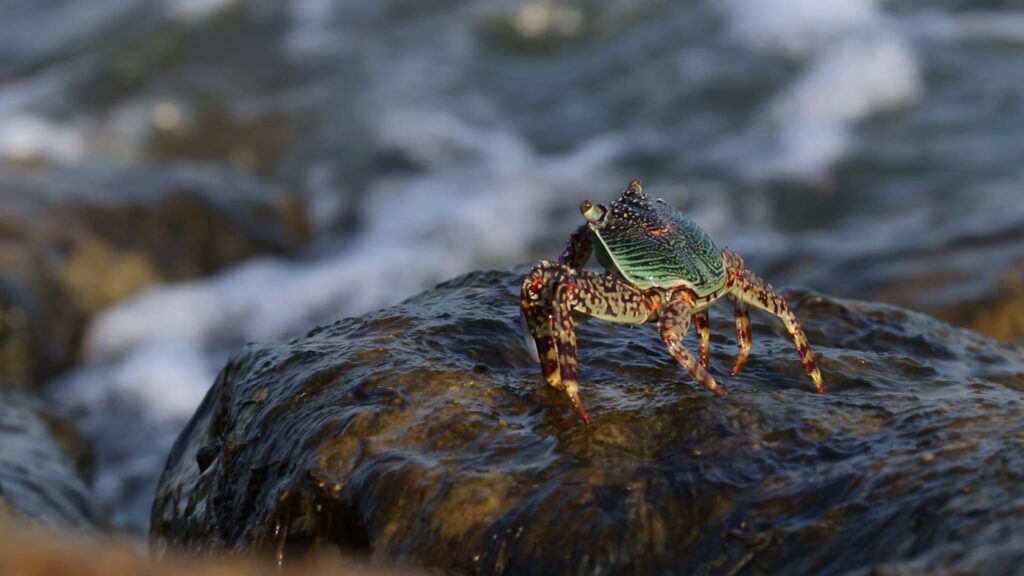
Family Grapsidae is a family of decapod crustaceans belonging to the infraorder Brachyura and the superfamily Grapsoidea. Commonly associated with shore crabs and coastal crabs, members of this family inhabit tropical, subtropical, and temperate coastal environments, including rocky shores, mangrove forests, estuaries, tidal flats, and coastal woodlands. They generally possess compact, relatively broad carapaces, strong walking legs, and well-developed claws used for feeding, defense, and interactions with other crabs. Their body size and coloration vary among species, ranging from dark brown and gray to greenish, reddish, or mottled patterns that provide camouflage against rocks, mud, and vegetation. Many grapsid crabs are adapted to life in the intertidal zone, where they shelter beneath stones, within rock crevices, among mangrove roots, or inside burrows during periods of exposure. Some species can tolerate considerable variation in temperature, salinity, and moisture, allowing them to remain active in environments that experience substantial tidal fluctuations. Their diets are diverse and may include algae, decaying plant material, detritus, carrion, and small invertebrates. Through their feeding and movement, they contribute to nutrient cycling and the transfer of organic matter within coastal ecosystems. Reproduction generally involves females carrying fertilized eggs beneath the abdomen, followed by the release of planktonic larvae into coastal waters, where they develop before settling into suitable habitats. Members of Grapsidae also serve as prey for fish, shorebirds, and other coastal predators, making them important components of intertidal food webs. Although many species are relatively adaptable, their populations may be affected by coastal development, pollution, habitat destruction, and changes in shoreline conditions. Through their ecological interactions and adaptations to fluctuating coastal environments, Grapsidae represents an important family of crabs in shoreline and intertidal ecosystems.