Bali Wildlife
Every Spices Matter


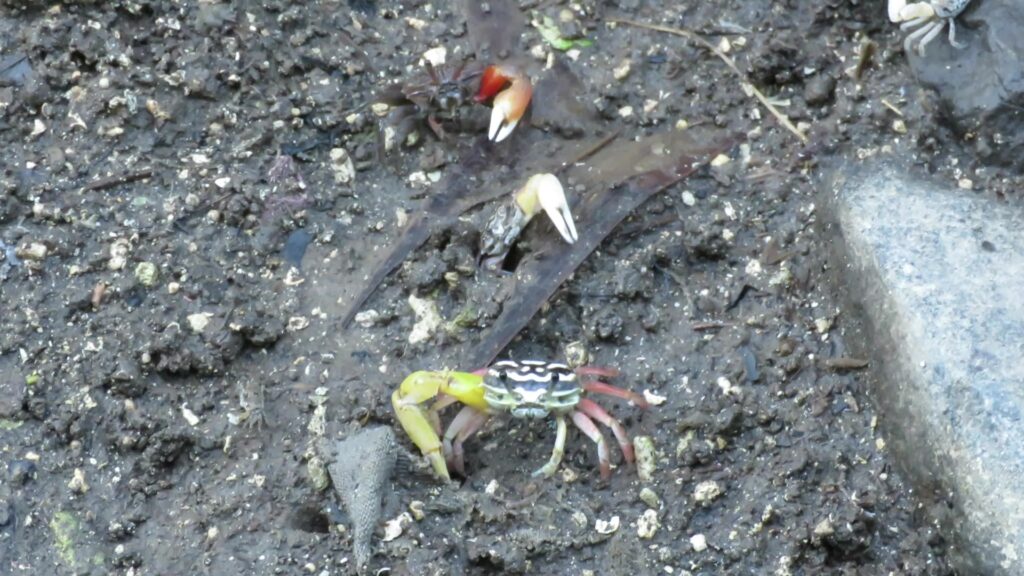
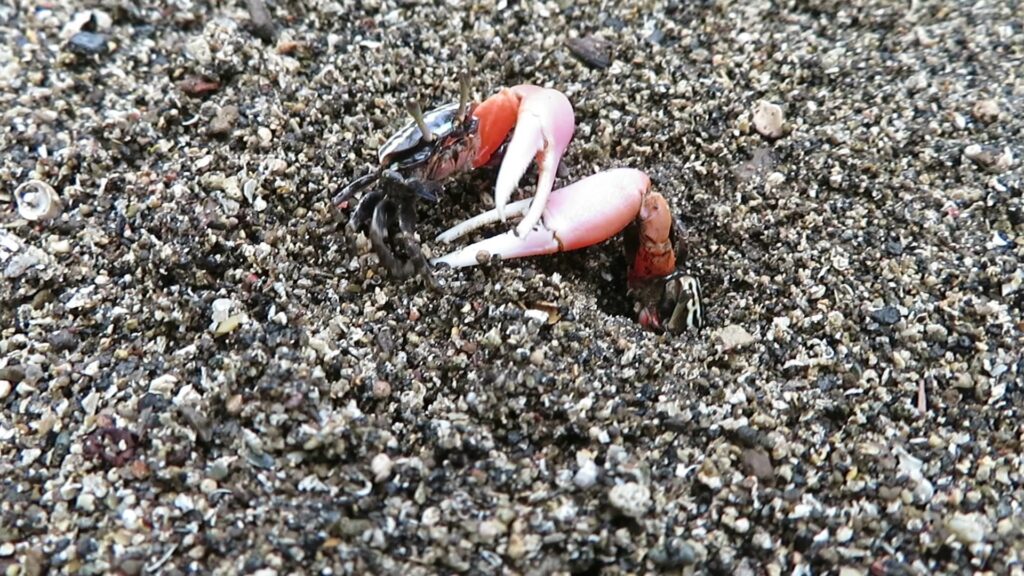
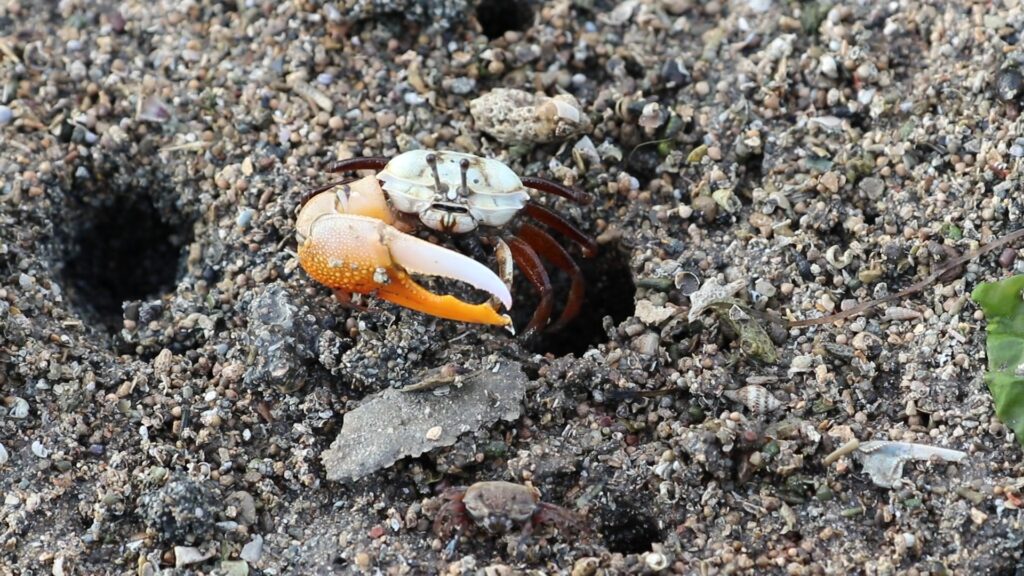
Gelasimini is a tribe of fiddler crabs belonging to the subfamily Gelasiminae and the family Ocypodidae. These small to medium-sized semi-terrestrial crustaceans inhabit tropical and subtropical coastal environments, particularly mangrove forests, muddy estuaries, sandy tidal flats, salt marshes, and sheltered lagoons. They are distinguished by the pronounced claw asymmetry of adult males, which possess one greatly enlarged claw and one smaller feeding claw, while females generally have two similarly sized claws. The enlarged claw is used primarily for courtship displays, communication, territorial defense, and competition with other males.
Members of Gelasimini typically have compact, broad carapaces, elongated eyestalks, and walking legs adapted for moving across soft intertidal substrates. Many species construct burrows in mud or sand, where they shelter from predators, extreme temperatures, and desiccation during low tide. Their activity is closely associated with tidal cycles, and they often emerge onto exposed sediment to feed, interact, and perform visual displays. The enlarged claws of males may exhibit distinctive colors and patterns that vary among species and populations.
Gelasimini crabs are primarily deposit feeders, collecting sediment with their small claws and extracting organic material, microorganisms, algae, and detritus. Through feeding and burrowing, they contribute to sediment turnover, nutrient cycling, and the decomposition of organic matter in coastal ecosystems. They also form an important part of intertidal food webs, serving as prey for shorebirds, fish, reptiles, and other predators. Reproduction involves the release of planktonic larvae into coastal waters, where they develop before settling and metamorphosing into juvenile crabs. Although historically many fiddler crabs were grouped within the broadly defined genus Uca, taxonomic revisions have distributed species among several genera. Gelasimini therefore represents a distinctive evolutionary grouping of fiddler crabs whose specialized behaviors, burrowing habits, and ecological functions contribute significantly to the biodiversity and functioning of tropical and subtropical shorelines.