

Broad-fronted and Indo-west Pacific Fiddler Crabs (Subfamily Gelasiminae)
-
Animals(Kingdom Animalia)
- Arthropods(Phylum Arthropoda)
- Crustaceans(Subphylum Crustacea)
- Typical Crustaceans(Superclass Multicrustacea)
- Crustaceans(Subphylum Crustacea)
- Arthropods(Phylum Arthropoda)
The subfamily Gelasiminae comprises a diverse group of fiddler crabs within the family Ocypodidae, infraorder Brachyura, and order Decapoda. These small to medium-sized crustaceans are best known for the striking difference between the claws of adult males, one of which is greatly enlarged and used in courtship displays and territorial interactions. Gelasiminae includes many fiddler crabs traditionally classified in the genus Uca and now distributed among several recognized genera, including Gelasimus, Austruca, Gelasimus-related lineages, and others. The group is particularly associated with tropical and subtropical intertidal habitats.
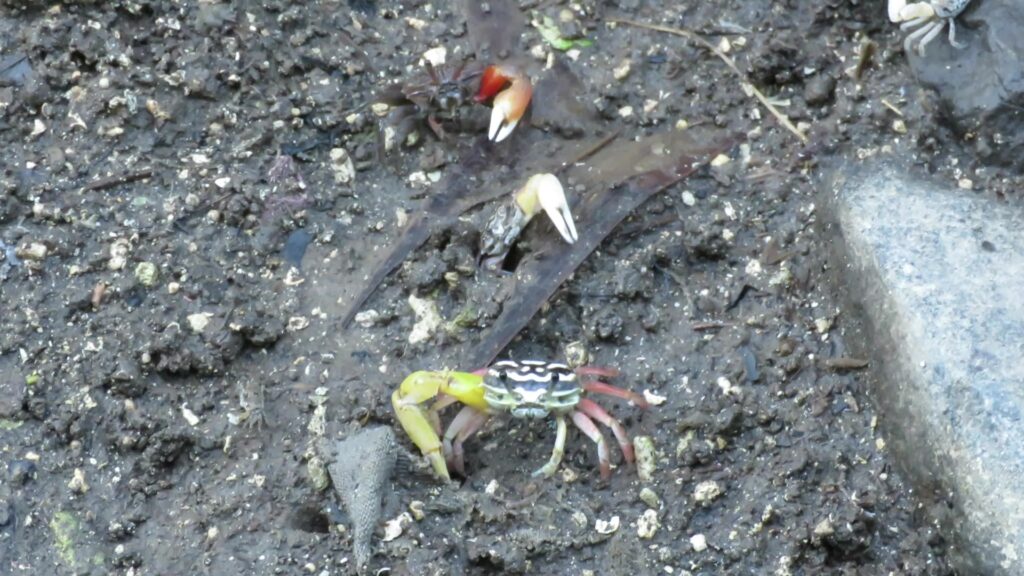
Gelasimines generally possess a compact body protected by a hard, calcified carapace. The carapace is often roughly square or trapezoidal, with differences in width, surface texture, and eye-stalk placement among species. Coloration ranges from dull brown and gray to vivid blue, orange, red, yellow, and combinations of these colors. Some individuals display striking patterns on the carapace and legs, while others blend into the surrounding sediment. Color can vary with species, sex, age, reproductive condition, and environmental factors.
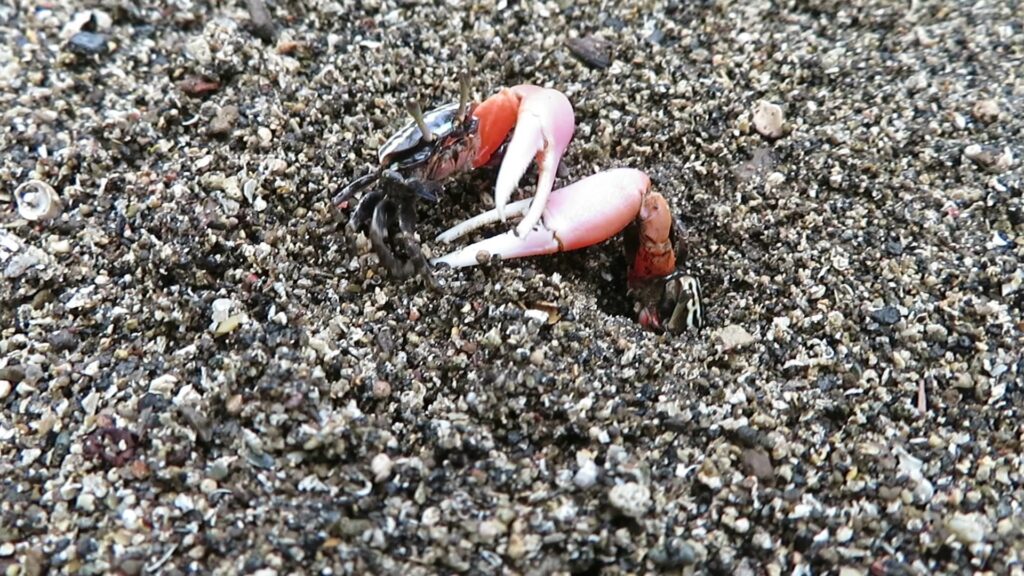
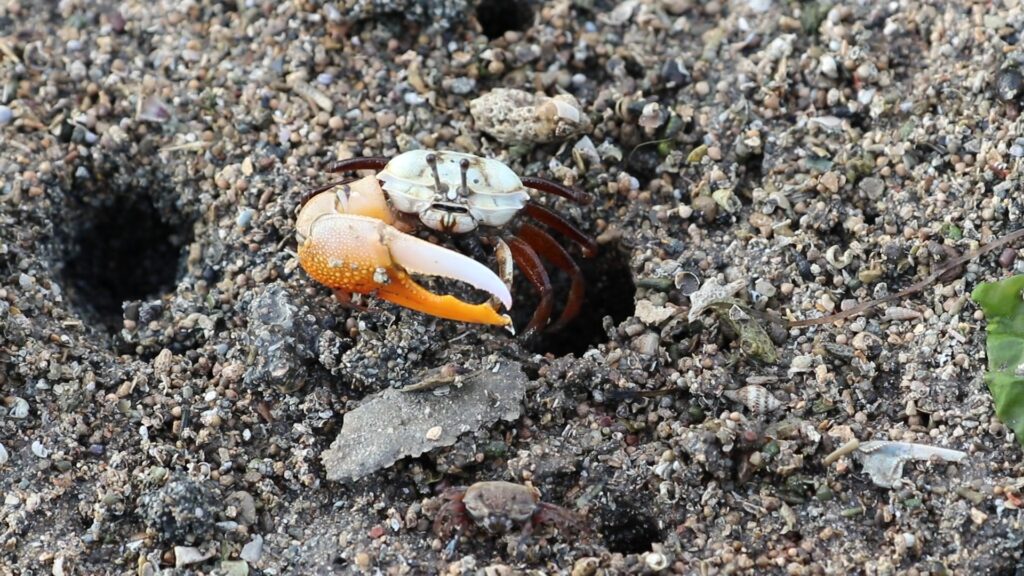
The most distinctive feature of male gelasimines is their enlarged major claw, which may be nearly as large as the rest of the body in some species. This claw is used primarily for visual signaling, courtship, and competition with rival males rather than for routine feeding. Males wave the claw in characteristic movements that vary among species and can help females recognize potential mates. The smaller claw is used to collect sediment and transfer food to the mouth. Females possess two relatively small claws that are adapted for feeding efficiently.
Like other true crabs, gelasimines have four pairs of walking legs in addition to their first pair of claw-bearing appendages. Their legs allow them to move rapidly across mudflats and sandy surfaces, avoid predators, and retreat into burrows. The eyes are carried on long, movable stalks, providing a broad field of vision across exposed intertidal areas. These visual capabilities are especially important in fiddler crabs because they rely heavily on sight to detect predators, assess neighboring crabs, and coordinate courtship displays.
Gelasiminae is found mainly in tropical and subtropical coastal regions, particularly in the Indo-Pacific and other warm coastal areas, depending on the genus and species. Its members commonly inhabit muddy or sandy tidal flats, mangrove forests, salt marshes, estuaries, and sheltered shorelines. Many species favor soft sediment in which they can excavate burrows. These habitats provide food, protection, and places for mating and egg development. The distribution of individual species is often influenced by sediment type, salinity, tidal exposure, and the availability of suitable burrowing sites.
Burrowing is central to the biology of gelasimines. Each crab may maintain a burrow that serves as a refuge from predators, high temperatures, and dehydration during low tide. Burrows also provide shelter during inactivity and may be important in courtship and reproduction. Crabs often retreat quickly into their burrows when disturbed and may block the entrance or remain underground until conditions become safer. Burrow depth and structure vary according to species, sediment moisture, and local environmental conditions.
Gelasimines are primarily deposit feeders. They use their small claws to collect sediment and sort it for algae, bacteria, fungi, and decomposing organic material. After extracting edible particles, they discard the remaining sediment in small pellets that accumulate around their feeding areas. This activity helps process organic matter and redistribute nutrients within tidal-flat ecosystems. Because they selectively feed on material within the sediment, fiddler crabs can also influence microbial communities and the distribution of organic resources.
Reproduction involves courtship displays, mate selection, and the production of eggs by females. Males commonly wave their enlarged claws near burrow entrances to attract females or discourage rivals. In many species, females visit or enter male burrows during courtship and mating. After fertilization, females carry eggs beneath the abdomen on specialized appendages. When the eggs hatch, the larvae are released into the water, where they undergo planktonic development before settling into suitable coastal habitats. Tides, lunar cycles, and local environmental conditions may influence the timing of larval release.
Gelasiminae plays an important ecological role in mangroves, salt marshes, and intertidal flats. By processing sediment and organic matter, these crabs contribute to nutrient cycling and can influence sediment aeration and microbial activity. Their burrows alter the physical structure of the substrate and create small refuges used by other organisms. Gelasimines are also important prey for shorebirds, fish, and other coastal predators. Their abundance and feeding behavior can therefore affect the functioning of intertidal ecosystems.
Despite their ecological adaptability, gelasimines can be affected by habitat destruction and coastal disturbance. Mangrove clearance, land reclamation, pollution, changes in sediment supply, and intensive shoreline development may reduce the availability of suitable burrowing areas. Trampling and repeated disturbance by people or vehicles can also interfere with feeding and courtship. Protecting mangroves, tidal flats, and estuarine habitats helps conserve these crabs and the ecological processes they support.
Overall, Gelasiminae represents an important group of fiddler crabs distinguished by their sexually dimorphic claws, visual communication, burrowing behavior, and sediment-feeding lifestyle. Their adaptations allow them to thrive in the changing conditions of intertidal habitats, where they contribute to nutrient cycling, sediment processes, and coastal food webs. Their distinctive courtship behavior and ecological importance make them valuable subjects for research in animal behavior, evolution, and coastal ecology.