Bali Wildlife
Every Spices Matter


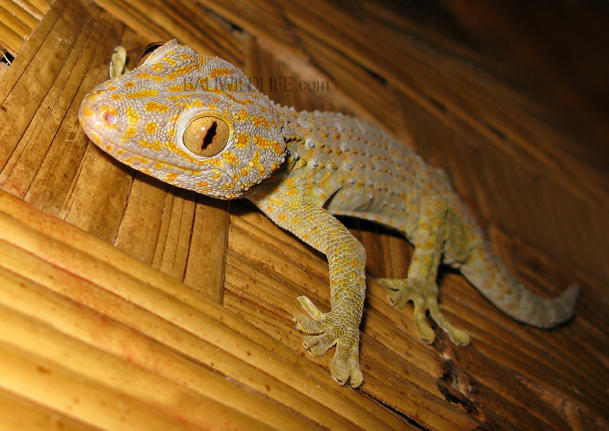
Gekko gecko, commonly known as the tokay gecko, is a large and robust gecko species within the genus Gekko, family Gekkonidae, infraorder Gekkota, and order Squamata. It is one of the most recognizable geckos in Asia.
This species is widely distributed across South and Southeast Asia, including Indonesia, Thailand, Malaysia, Vietnam, and parts of southern China. It inhabits tropical rainforests, limestone karsts, rural landscapes, and urban environments, often living in close association with human buildings.
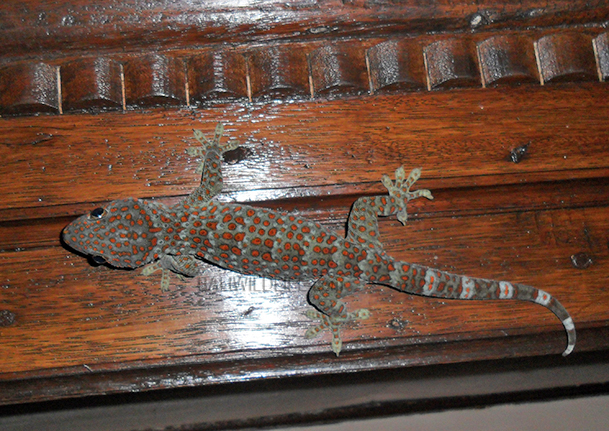
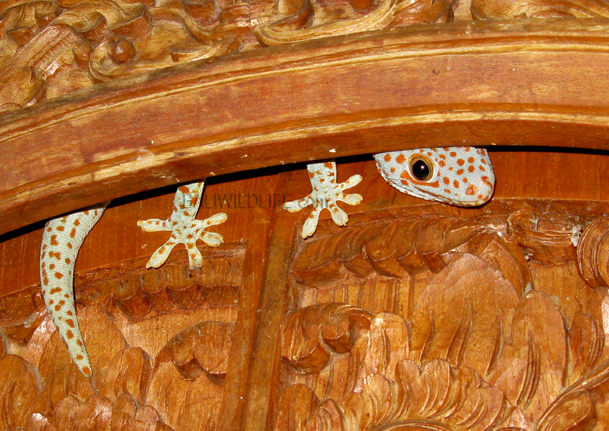
Gekko gecko is among the largest gecko species, commonly reaching 25–35 cm in total length. It has a stout body, a broad head, and powerful jaws. The skin is typically bluish-gray to pale gray, marked with striking orange or reddish spots and bands. The toes bear strong adhesive pads that allow climbing on smooth vertical surfaces and ceilings.
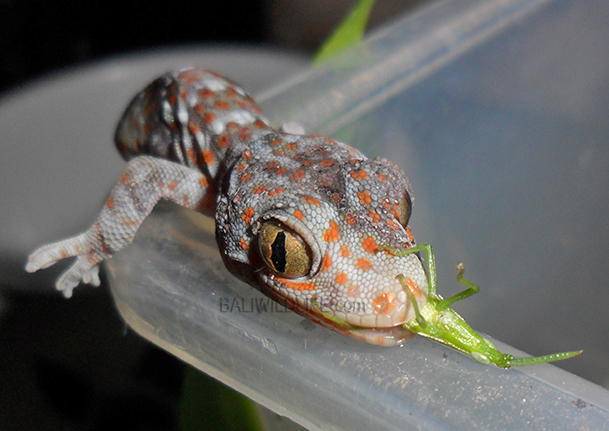
The tokay gecko is nocturnal and primarily insectivorous, feeding on large insects such as beetles, moths, and grasshoppers. Larger individuals may also prey on small vertebrates including lizards, rodents, and occasionally small birds. It is well known for its loud, distinctive call that sounds like “to-kay,” which gives the species its common name.
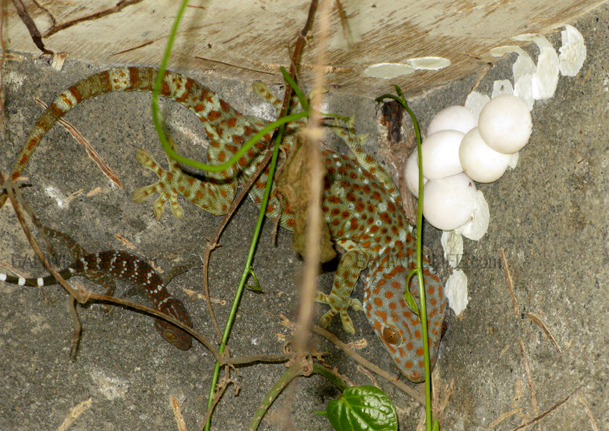
Reproduction is oviparous, with females usually laying two hard-shelled eggs attached to a secure surface. The species is territorial and can be defensive when threatened, capable of delivering a strong bite. Ecologically, Gekko gecko serves as an important predator in forest and urban ecosystems, helping to control insect and small vertebrate populations.