Bali Wildlife
Every Spices Matter


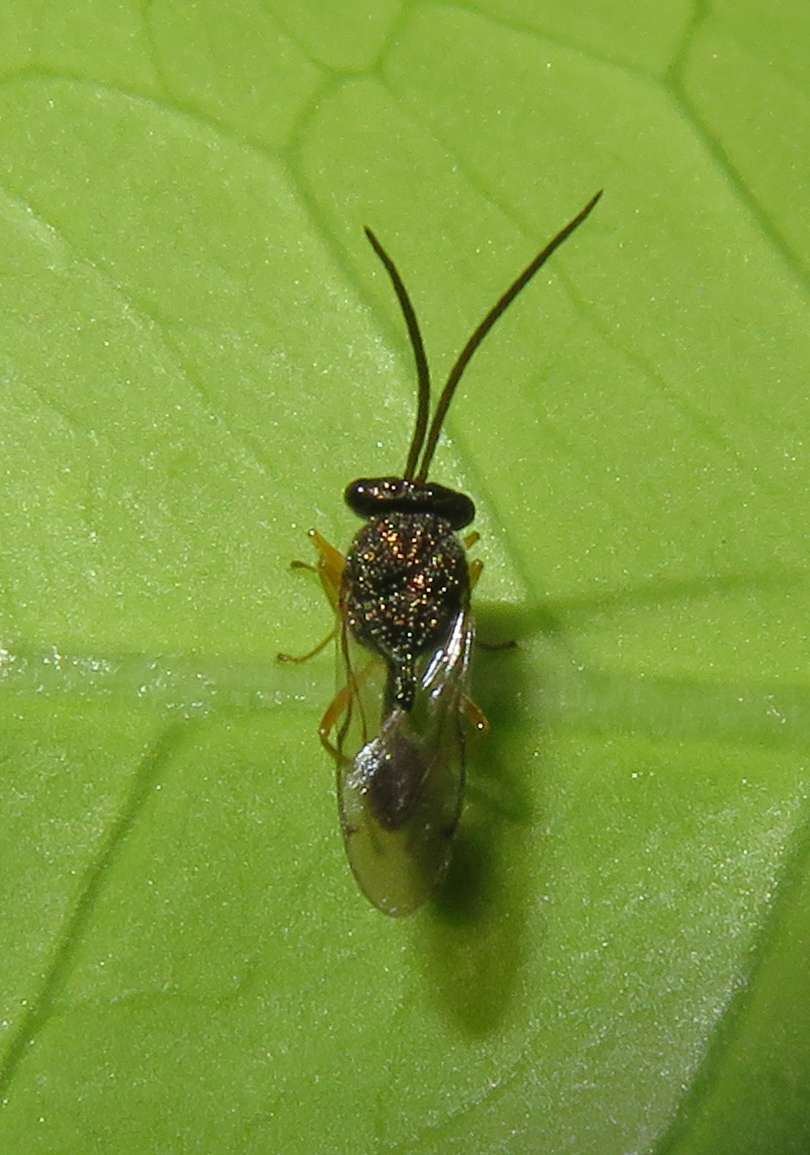
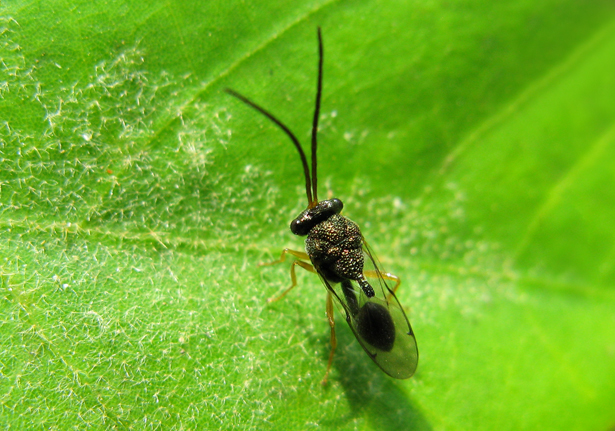
Eucharitinae is the principal subfamily within the family Eucharitidae (Superfamily Chalcidoidea, Order Hymenoptera), comprising a diverse group of highly specialized parasitoid wasps that target ants. Members of this subfamily are distributed worldwide, with the greatest diversity in tropical and subtropical regions where ant populations are abundant.
Wasps of the subfamily Eucharitinae are generally small and often display a compact or sometimes elongate body form. Many species exhibit metallic coloration, such as green, blue, or bronze, though some may be darker or less conspicuous. The head is relatively large with well-developed compound eyes, and the antennae are typically short to moderately long. Wings are membranous and may be clear or lightly marked.
A defining characteristic of Eucharitinae is their highly specialized life cycle, which is closely associated with ant colonies. Females lay eggs on plant surfaces, such as leaves or buds, rather than directly on their hosts. The first-instar larvae, known as planidia, are active and must attach themselves to foraging ants or other insects that will transport them into the ant nest.
Once inside the nest, the larvae transfer to ant brood, where they develop as parasitoids of ant larvae or pupae. They feed on or within the host, eventually completing development and emerging as adults. This indirect method of host access is a distinctive feature of the group.
The life cycle involves complete metamorphosis and includes multiple specialized stages adapted for host location and exploitation. Many species exhibit a high degree of host specificity, often targeting particular ant genera.
Ecologically, Eucharitinae play an important role in regulating ant populations and contribute to complex interactions within ant colonies. Their intricate life histories and host relationships make them a remarkable example of evolutionary specialization among parasitoid wasps and an important component of biodiversity.