

Genus Epepeotes
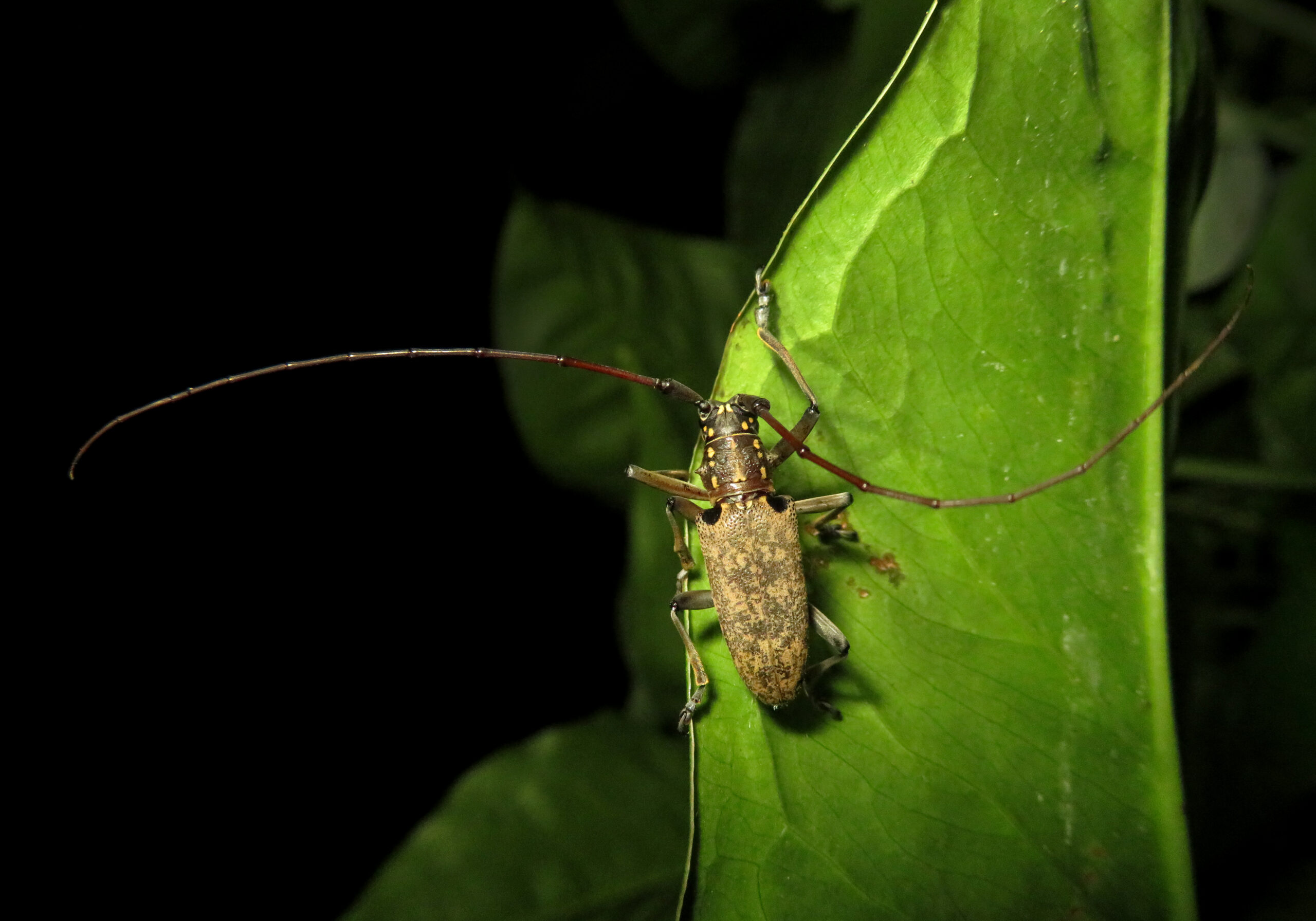
Epepeotes is a genus of longhorn beetles within the tribe Lamiini (Subfamily Lamiinae, Family Cerambycidae, Order Coleoptera). The genus is primarily distributed in South, Southeast, and East Asia, with several species occurring in tropical and subtropical forest regions.
Members of Epepeotes are generally medium- to large-sized beetles with an elongate, cylindrical body typical of longhorn beetles. The antennae are long and segmented, often reaching or exceeding the length of the body, especially in males. The body surface is usually covered with dense pubescence or fine hairs that form mottled or patterned markings in shades of brown, gray, black, or pale yellow. This cryptic coloration allows them to blend effectively with bark and lichen-covered tree trunks.
The pronotum is typically rounded and may bear small lateral tubercles or spines. Elytra are elongate and often show subtle ridges, punctation, or patterned scaling. The overall appearance is robust yet well adapted for camouflage in forest habitats.
Larvae of Epepeotes are wood-borers, developing inside the trunks or branches of host trees. They feed on internal woody tissues, creating tunnels that may weaken the plant. Some species are associated with specific host plants and may occasionally be of economic concern if they infest cultivated or ornamental trees.
Adults are usually active during warm seasons and may be nocturnal or crepuscular. They are often attracted to lights at night. Adult feeding may include bark, foliage, or sap, depending on the species.
The life cycle includes complete metamorphosis: egg (laid on or in host plant tissue), larva (wood-boring stage), pupa (within the host), and adult.
Genus Epepeotes represents a distinctive group of Asian longhorn beetles characterized by long antennae, bark-mimicking coloration, and larval development within woody plants.