Bali Wildlife
Every Spices Matter


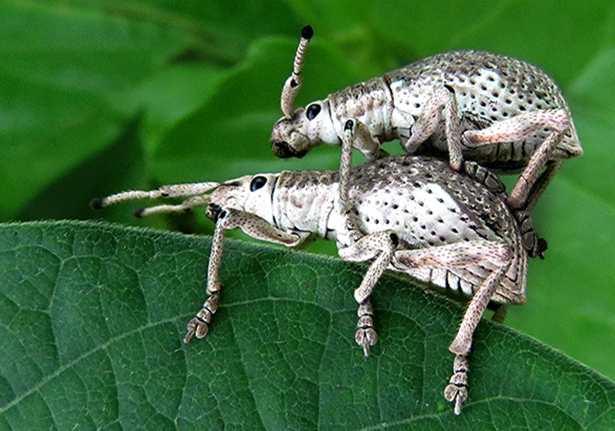
Entiminae, commonly known as broad-nosed weevils, is one of the largest and most diverse subfamilies within the family Curculionidae (Order Coleoptera). Members of this subfamily are distributed worldwide and occupy a wide range of terrestrial habitats, from forests and grasslands to agricultural landscapes and urban environments. They are especially diverse in tropical regions but are also well represented in temperate zones.
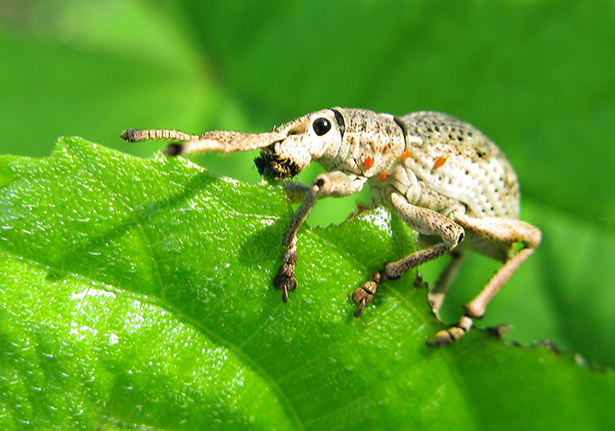
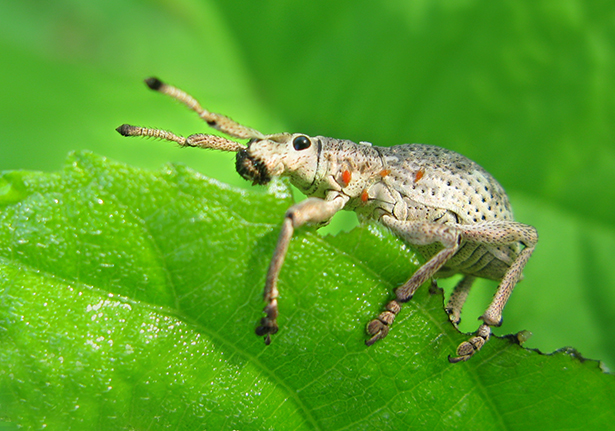
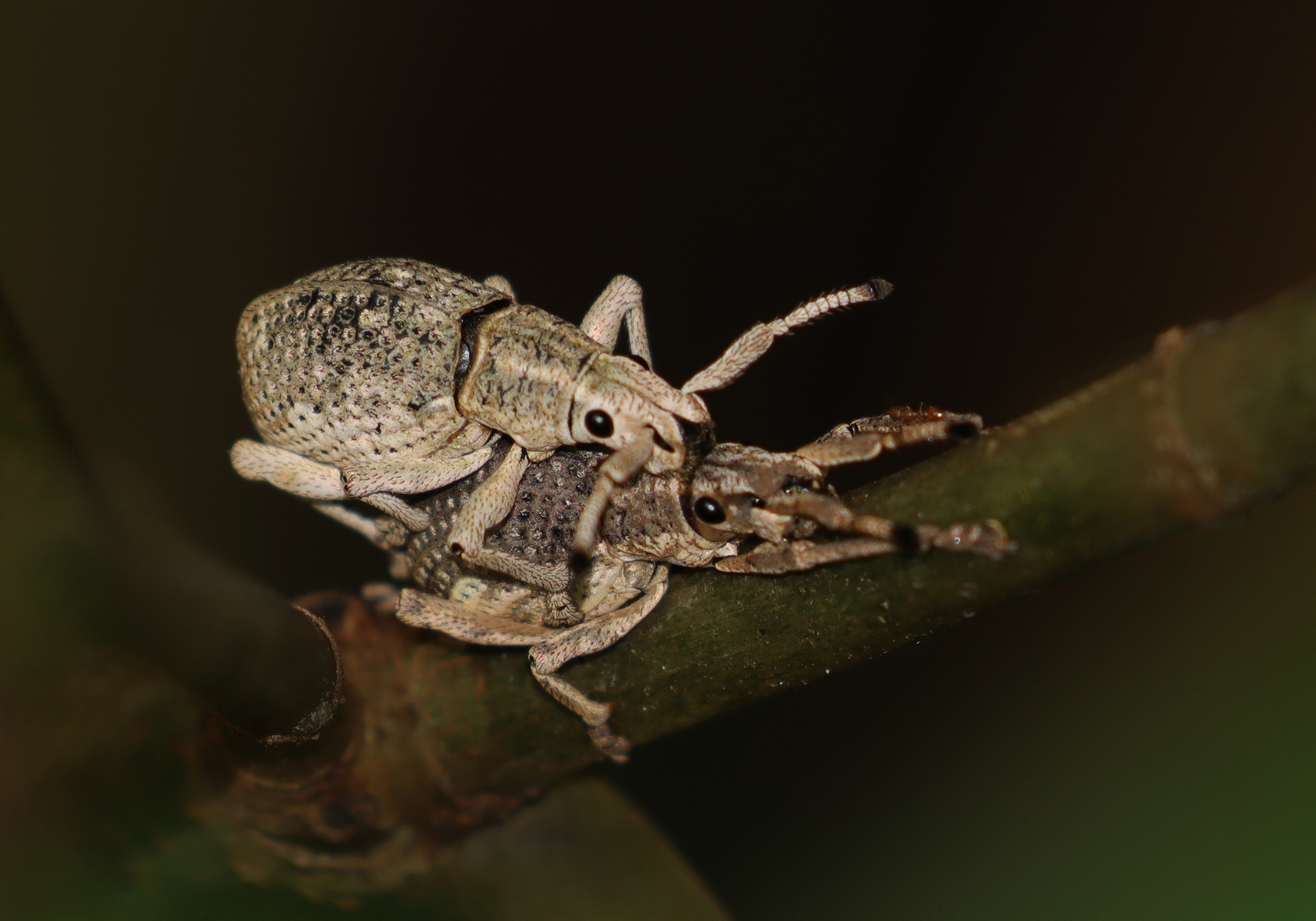
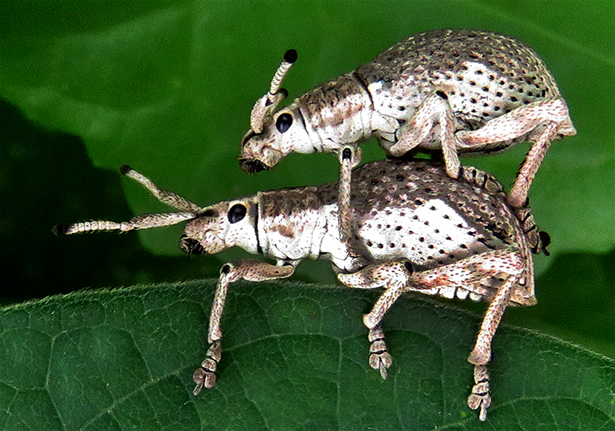
Adult Entiminae are characterized by a short, broad rostrum that is not strongly elongated, giving rise to the common name “broad-nosed weevils.” The antennae are elbowed and usually inserted near the apex of the rostrum. Body shape is generally robust and oval to elongate, often covered with scales, setae, or dense pubescence that can form distinctive color patterns. Many species are cryptically colored, blending well with bark, soil, or foliage.
Larvae of Entiminae are legless, C-shaped grubs that typically live in the soil. They feed mainly on plant roots, while adults feed on leaves, stems, or buds. This combination of below-ground larval feeding and above-ground adult feeding makes many species economically important pests in agriculture, horticulture, and forestry.
Entiminae includes numerous tribes and genera, such as Otiorhynchus, Sitona, Diaprepes, and Naupactus. Several species are well known for their wide host range and adaptability, and some reproduce parthenogenetically, allowing populations to establish and spread rapidly.
Ecologically, Entiminae plays a significant role in plant–herbivore interactions and soil ecosystems. While many species are harmful to crops and ornamental plants, others occur at low densities and are part of natural food webs, serving as prey for predators and parasitoids. The broad distribution, ecological versatility, and economic importance of Entiminae make it one of the most prominent and intensively studied subfamilies of weevils.