Bali Wildlife
Every Spices Matter


Dyakiidae is a family of air-breathing land snails within the superfamily Trochomorphoidea (Order Stylommatophora, Superorder Eupulmonata, Class Gastropoda, Phylum Mollusca). The family is primarily distributed in Southeast Asia, particularly in Malaysia, Indonesia, Borneo, the Philippines, and surrounding regions, where it represents an important component of tropical forest molluscan diversity.
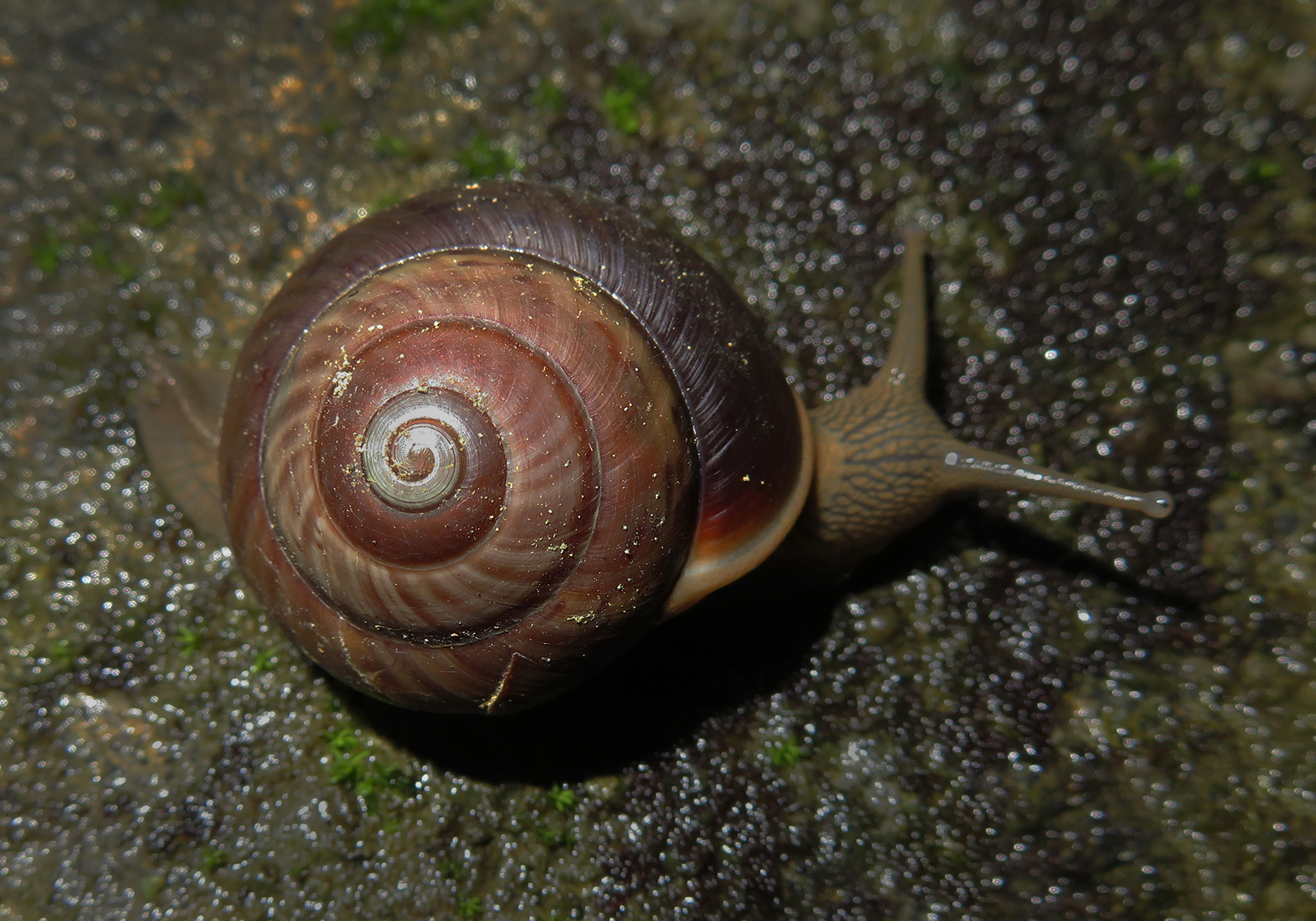
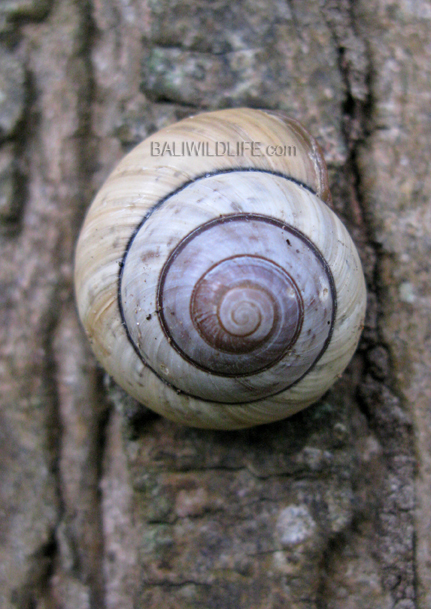
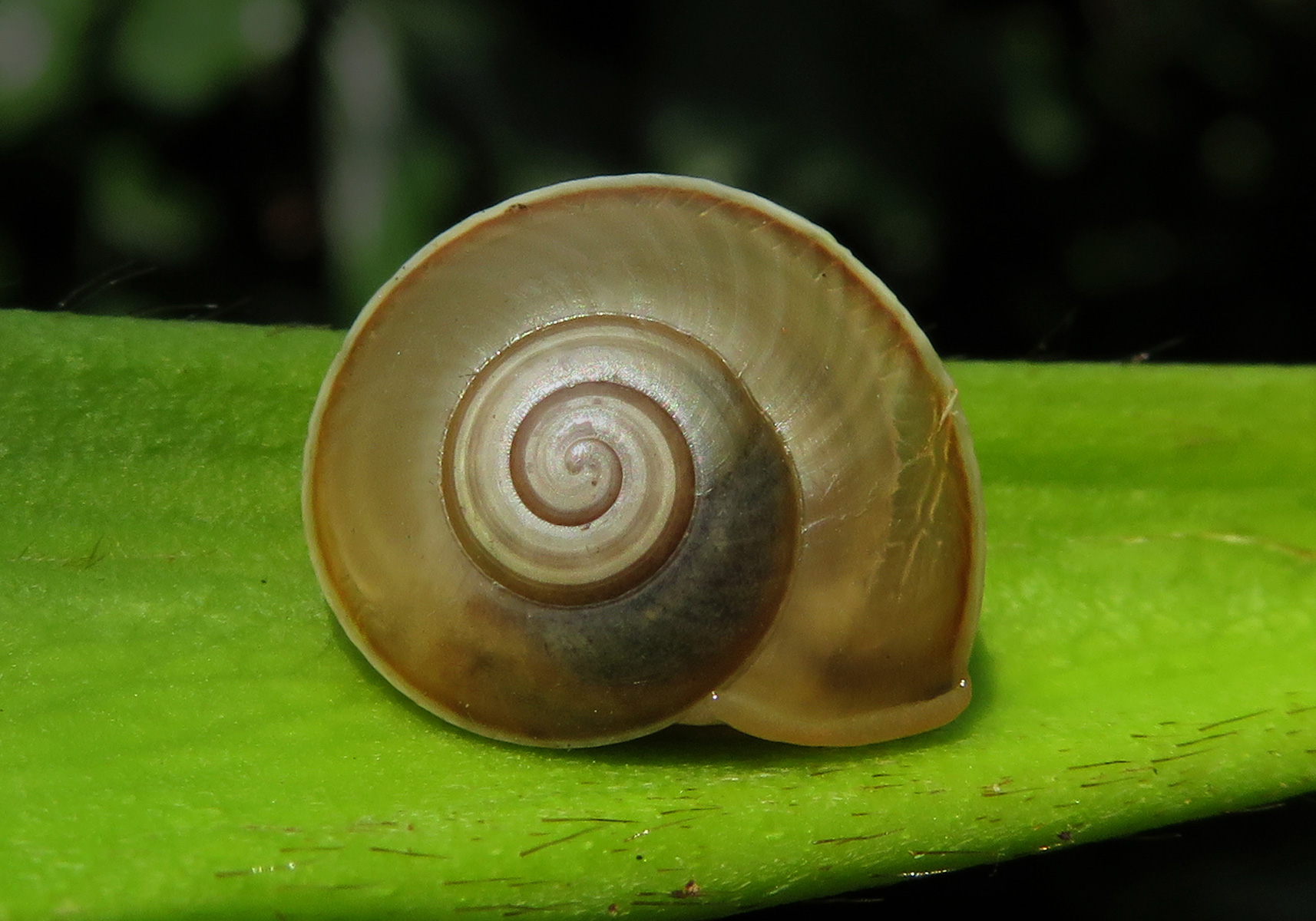
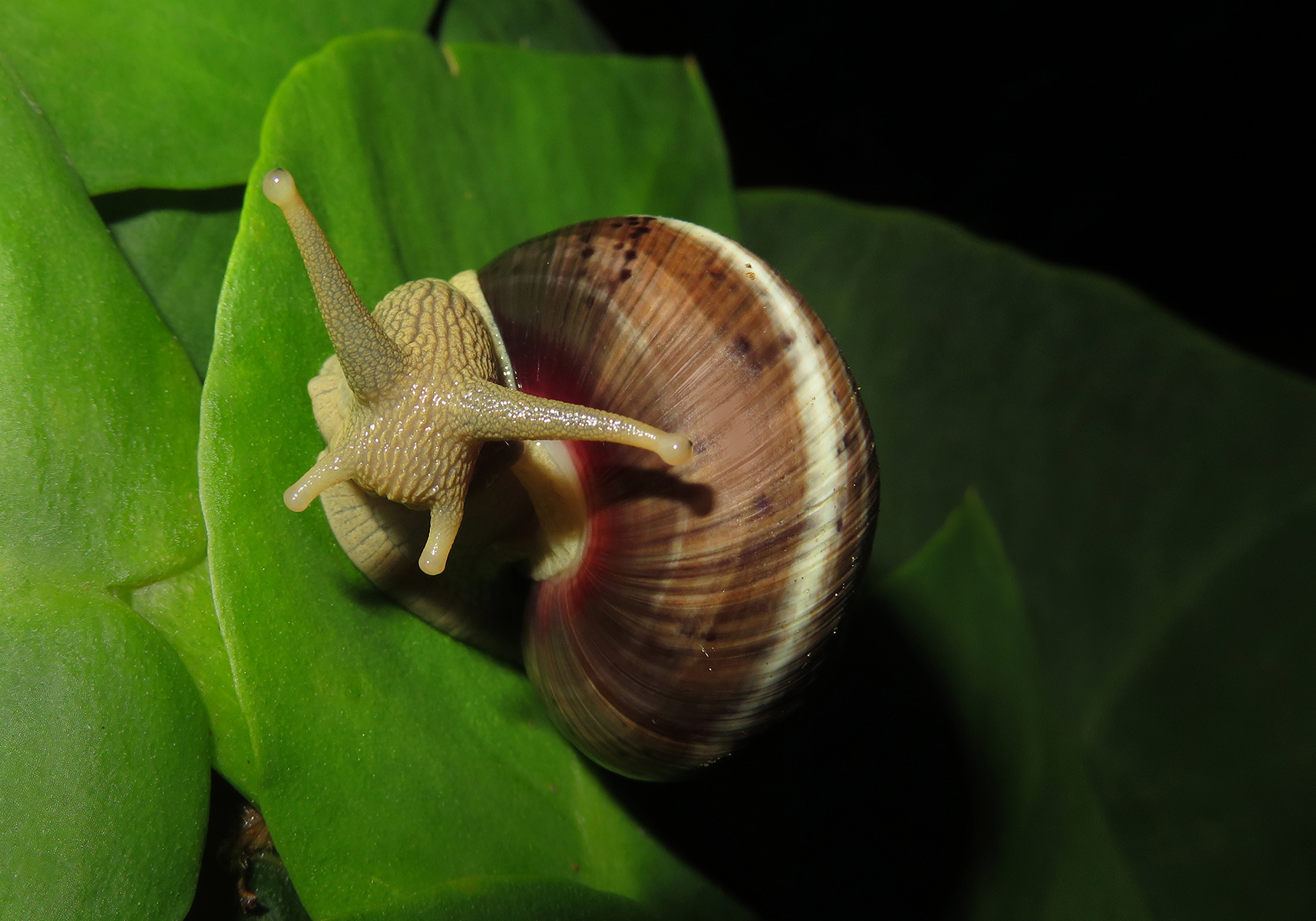
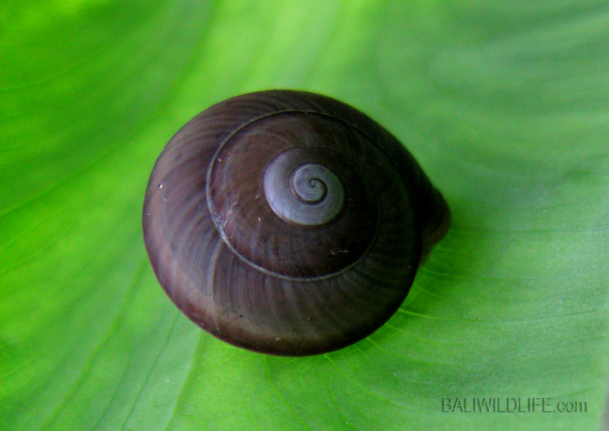
Members of Dyakiidae generally possess a well-developed external shell, which is often depressed to helicoid or trochiform in shape. The shell is typically thin to moderately solid and may display fine growth lines or subtle surface sculpture. Coloration varies among species, ranging from uniform brown or horn-colored to patterned forms. The aperture is usually simple and rounded, without strong internal barriers.
Like other stylommatophoran gastropods, dyakiids have two pairs of retractile tentacles, with the eyes situated at the tips of the upper pair. Respiration occurs through a pulmonate lung, with a visible pneumostome opening on the mantle edge. The muscular foot enables slow movement across leaf litter, vegetation, and rocky substrates.
Ecologically, Dyakiidae species are mainly found in humid tropical forests, often associated with limestone karst habitats. They are primarily herbivorous or detritivorous, feeding on algae, fungi, and decaying plant matter. Many species exhibit restricted geographic ranges, leading to notable levels of regional endemism.
Reproduction is hermaphroditic with internal fertilization and direct development. Eggs are laid in moist soil or protected microhabitats within forest environments.
Family Dyakiidae represents a distinctive Southeast Asian lineage of land snails, characterized by often depressed shells, forest specialization, and high diversity in tropical ecosystems.