

Subfamily Dotillinae
-
Animals(Kingdom Animalia)
- Arthropods(Phylum Arthropoda)
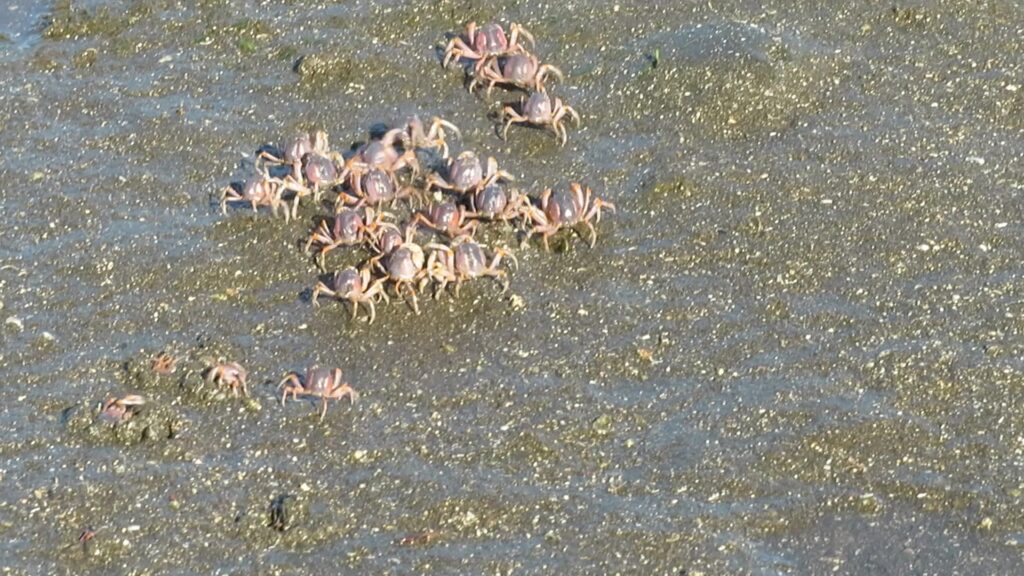
Subfamily Dotillinae is a group of small brachyuran crabs belonging to the family Dotillidae within the order Decapoda. Members of this subfamily, commonly associated with sand-bubbler crabs, inhabit intertidal environments along tropical and subtropical coastlines, particularly across the Indo-West Pacific region. They are commonly found on sandy beaches, muddy tidal flats, estuaries, and sheltered coastal shores, where they are adapted to fluctuating tides and soft sediment substrates. These crabs generally possess compact bodies, relatively small carapaces, and walking legs suited for moving across sand and mud. Many species exhibit specialized feeding behavior, collecting surface sediment and extracting organic matter, microalgae, bacteria, and other microorganisms before discarding the remaining sediment as small pellets. This activity often produces distinctive patterns of sand pellets across exposed tidal flats. Members of Dotillinae frequently construct burrows or retreat beneath the sediment to avoid predators, extreme temperatures, and desiccation during low tide. Their feeding and burrowing activities contribute to sediment mixing, nutrient cycling, and the processing of organic material in coastal ecosystems. Reproduction typically involves the release of planktonic larvae into the water, where they undergo several developmental stages before settling into suitable intertidal habitats. These crabs also serve as food for shorebirds, fish, and other coastal predators, making them an important component of intertidal food webs. Although adapted to dynamic coastal conditions, their populations can be affected by shoreline development, pollution, beach modification, and the degradation of estuarine habitats. Through their specialized sediment-feeding habits and ecological interactions, members of Dotillinae contribute to the biodiversity and functioning of sandy and muddy coastal ecosystems.