

Sand Bubbler Crabs and Allies (Family Dotillidae)
-
Animals(Kingdom Animalia)
- Arthropods(Phylum Arthropoda)
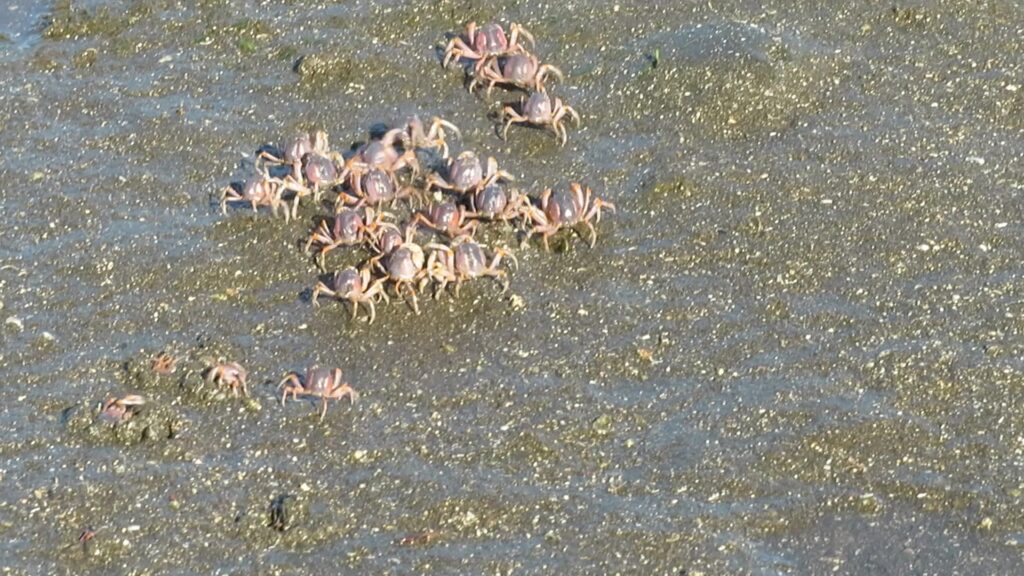
Family Dotillidae is a family of small brachyuran crabs belonging to the infraorder Brachyura within the order Decapoda. Commonly known as sand-bubbler crabs, members of this family are primarily found along tropical and subtropical coastlines of the Indo-West Pacific region, inhabiting sandy beaches, muddy tidal flats, estuaries, and sheltered intertidal environments. They are generally characterized by their small body size, compact carapaces, and adaptations for life on soft coastal sediments. Many species are especially active during low tide, when they emerge from the sand to feed on organic material and microorganisms. During feeding, they process surface sediment and deposit small, rounded pellets of cleaned sand around their feeding areas, creating distinctive patterns across exposed beaches and tidal flats. When the tide rises or environmental conditions become unfavorable, these crabs retreat into burrows or bury themselves in the substrate to avoid predators and prevent desiccation. Their diet consists mainly of organic detritus, microalgae, bacteria, and other microscopic organisms associated with sand and mud. Reproduction generally involves the release of planktonic larvae into coastal waters, where they develop before settling into suitable intertidal habitats. Dotillidae plays an important ecological role by contributing to sediment turnover, nutrient cycling, and the transfer of organic matter through coastal food webs. These crabs also serve as prey for shorebirds, fish, and other coastal predators. Although many species are adapted to naturally fluctuating tidal conditions, their habitats may be threatened by coastal development, beach modification, pollution, tourism, and the degradation of estuarine environments. Through their specialized feeding behavior and close association with sandy and muddy shorelines, members of Dotillidae represent an important component of intertidal biodiversity and coastal ecosystem functioning.