Bali Wildlife
Every Spices Matter


Dendrelaphis is a genus of slender arboreal snakes within the family Colubridae (Subfamily Ahaetuliinae, Order Squamata). Commonly known as bronzeback tree snakes, members of this genus are widely distributed across South Asia, Southeast Asia, southern China, and parts of Australasia. They are typically associated with forests, woodland edges, mangroves, plantations, gardens, and other habitats containing dense vegetation.
Snakes of the genus Dendrelaphis are generally slender, agile, and highly adapted to life in trees and shrubs. They possess a long body, elongated tail, and large eyes with round pupils, providing excellent vision for detecting prey and predators during daylight hours. Their coloration varies among species but commonly includes shades of bronze, brown, green, olive, or gray, often accompanied by contrasting stripes or markings along the body.
Most species are diurnal and rely heavily on vision while actively foraging among branches and foliage. They are exceptionally fast-moving and are capable of rapidly navigating through vegetation. When threatened, some species may flatten the neck and anterior body, exposing brightly colored skin between the scales as a defensive display.
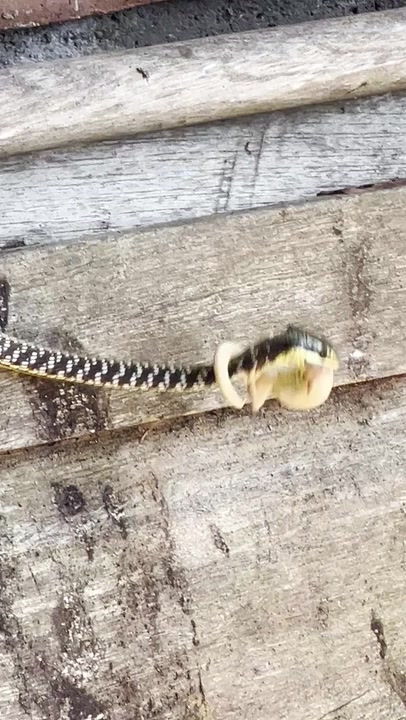
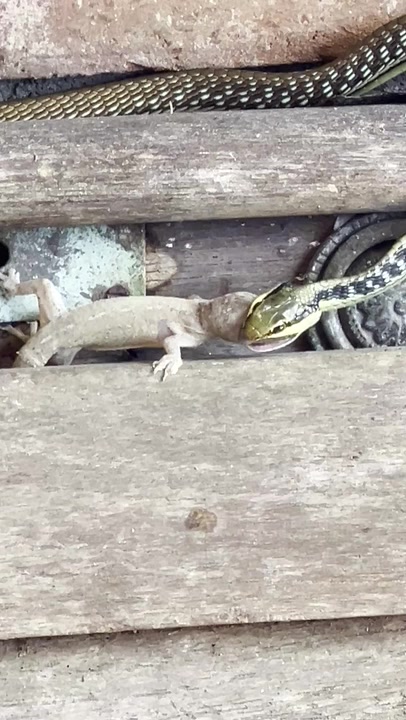
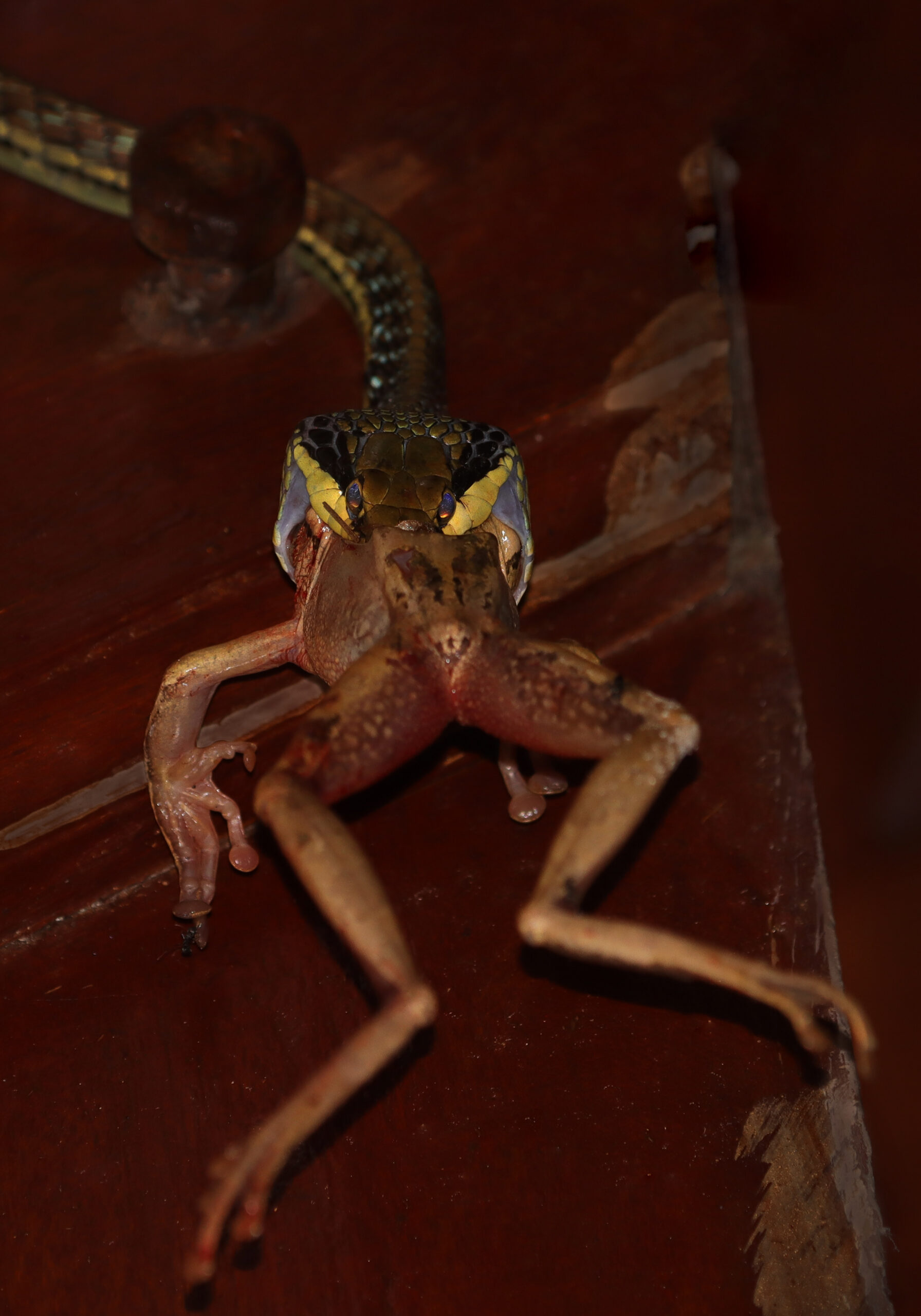
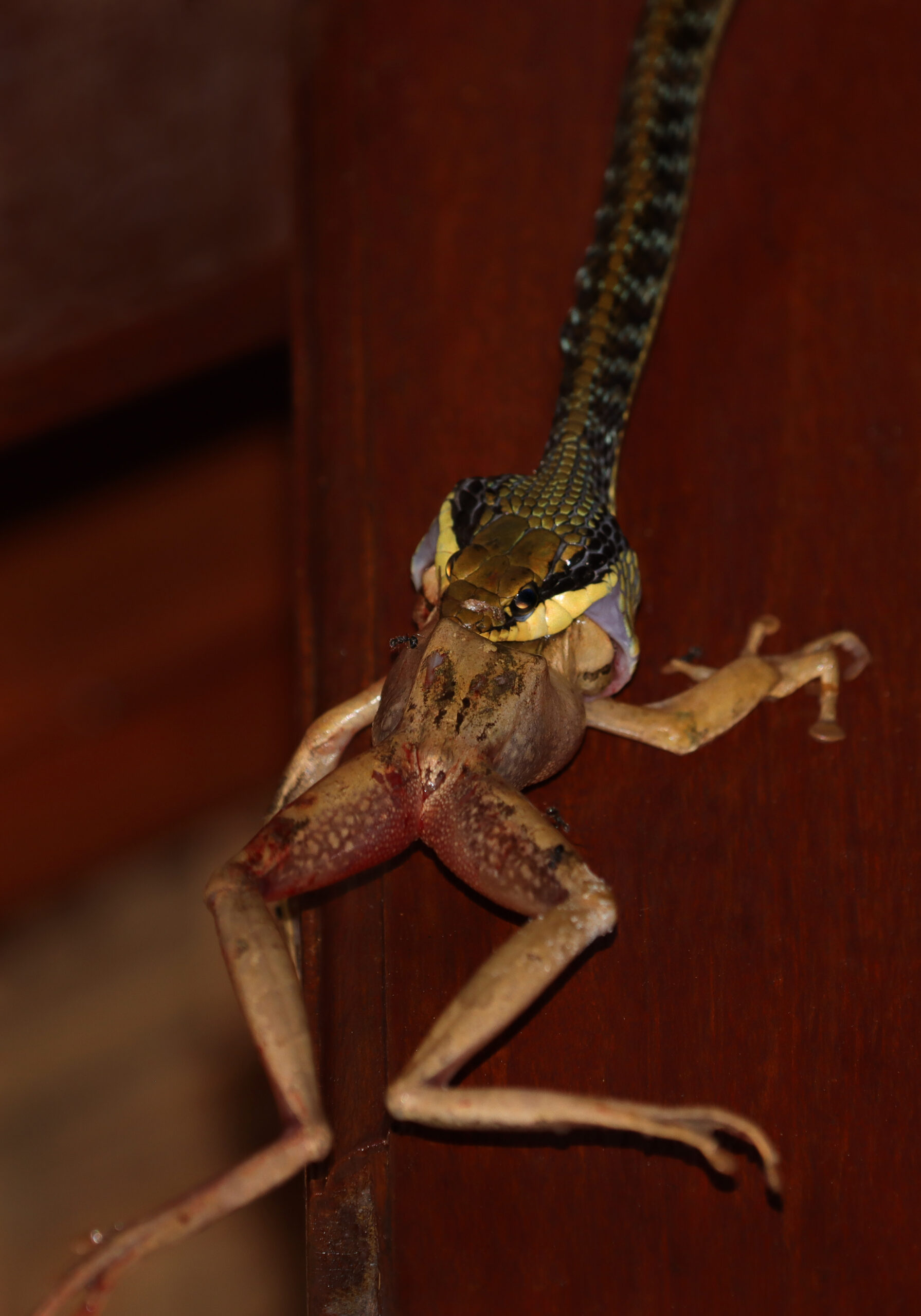
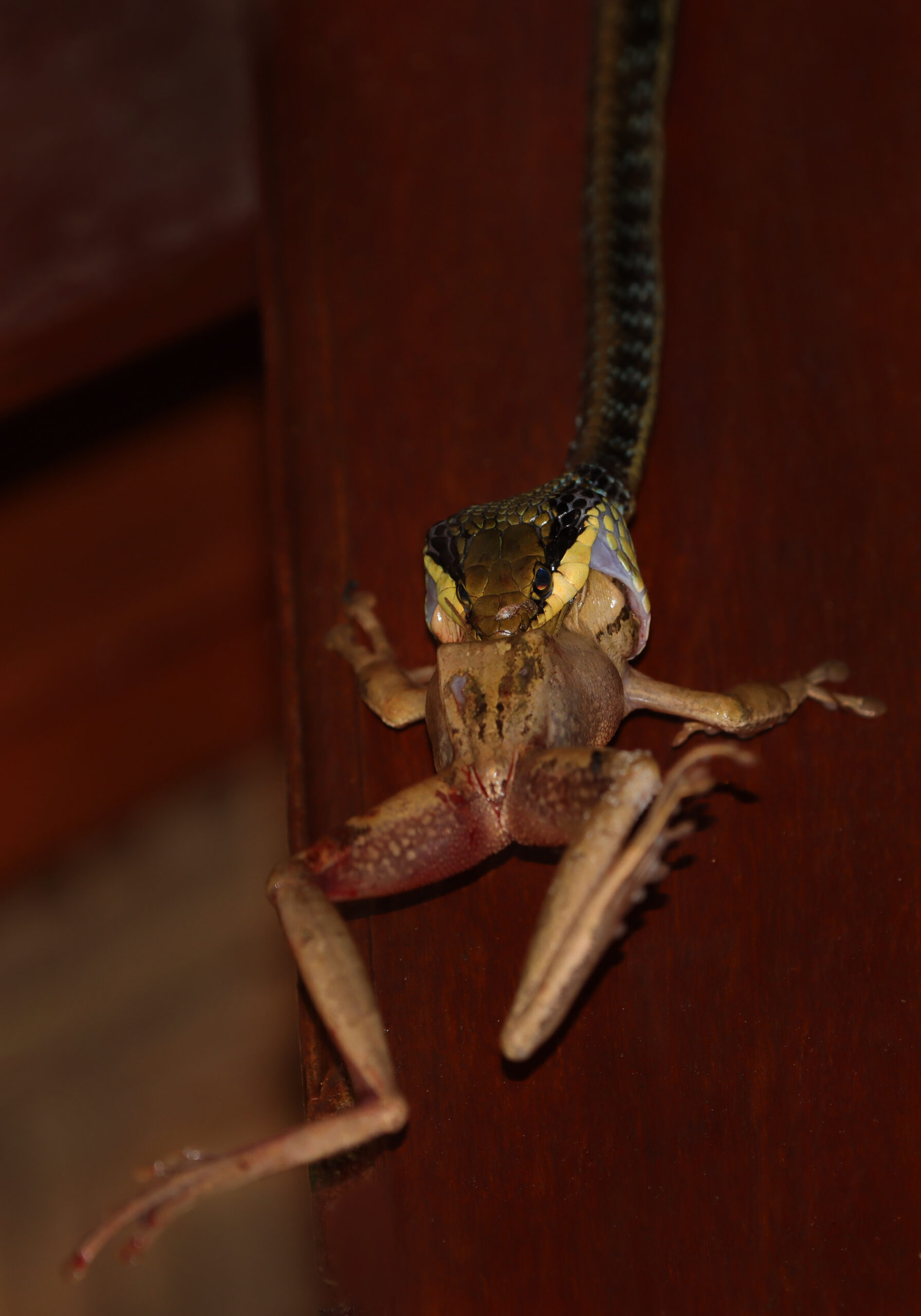
The diet of Dendrelaphis species consists primarily of small vertebrates, including lizards, frogs, geckos, and occasionally small birds or mammals. They capture prey using speed and agility rather than constriction.
Reproduction is oviparous, with females laying eggs in concealed locations such as tree hollows, leaf litter, or sheltered crevices. Hatchlings are independent from birth and begin hunting small prey shortly after emerging.
The genus includes numerous species, such as Dendrelaphis pictus (Painted Bronzeback), Dendrelaphis formosus (Elegant Bronzeback), and Dendrelaphis caudolineatus (Striped Bronzeback), each adapted to particular habitats and geographic regions.
Ecologically, Dendrelaphis snakes play an important role as mid-level predators, helping regulate populations of small reptiles and amphibians. They also serve as prey for larger snakes, birds of prey, and mammals. Their presence contributes to the ecological balance of forest and woodland ecosystems, making them valuable components of tropical biodiversity.