Bali Wildlife
Every Spices Matter


Cryptotympana is a genus of true cicadas within the subfamily Cicadinae (Family Cicadidae, Superfamily Cicadoidea, Infraorder Cicadomorpha, Order Hemiptera). Species of this genus are distributed widely across South Asia, Southeast Asia, East Asia, and parts of the Indo-Pacific region. They inhabit tropical and subtropical forests, secondary woodlands, plantations, orchards, parks, gardens, and urban green spaces, where they are closely associated with mature trees.
Cicadas of the genus Cryptotympana are generally medium to large in size and possess a robust body, broad head, and two pairs of transparent membranous wings with distinct venation. Their coloration typically consists of shades of black, dark brown, olive, green, or reddish-brown, often with yellow or pale green markings on the thorax and abdomen. These colors provide effective camouflage against tree bark and foliage. Like other cicadas, they have large compound eyes, three simple eyes (ocelli), short bristle-like antennae, and piercing-sucking mouthparts adapted for feeding on plant sap.
Adults are primarily diurnal and are well known for the loud, species-specific songs produced by males. Sound is generated by paired tymbals located on the sides of the first abdominal segment, and the calls serve to attract females and facilitate species recognition. Many Cryptotympana species produce powerful, continuous calls that are a familiar feature of forests and urban parks during the warm season.
Both adults and nymphs feed exclusively on xylem sap. Adults obtain sap from the trunks and branches of trees, while the nymphs live underground, feeding on the roots of host plants. Owing to the low nutrient content of xylem sap, they consume large quantities of fluid and excrete excess water.
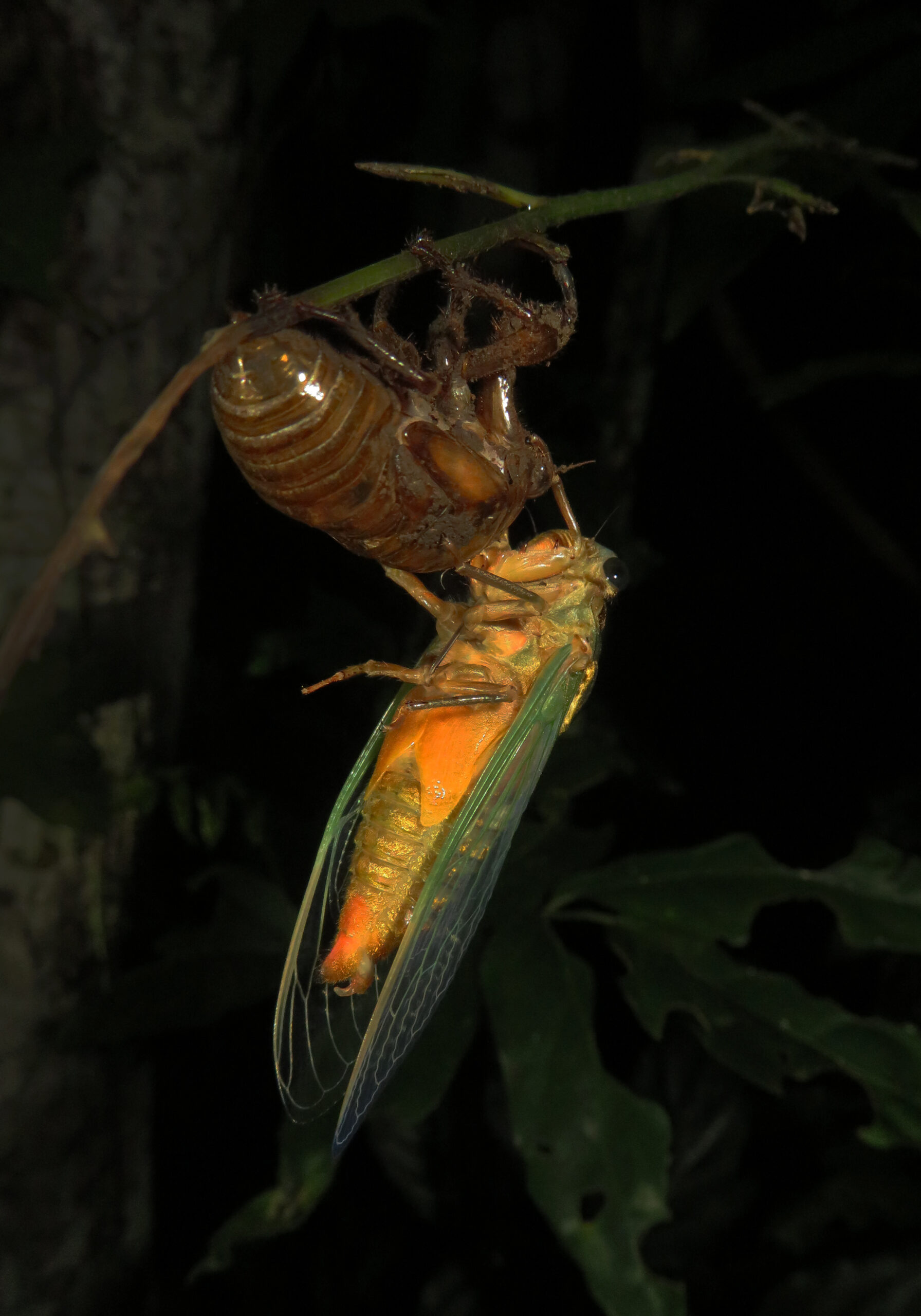
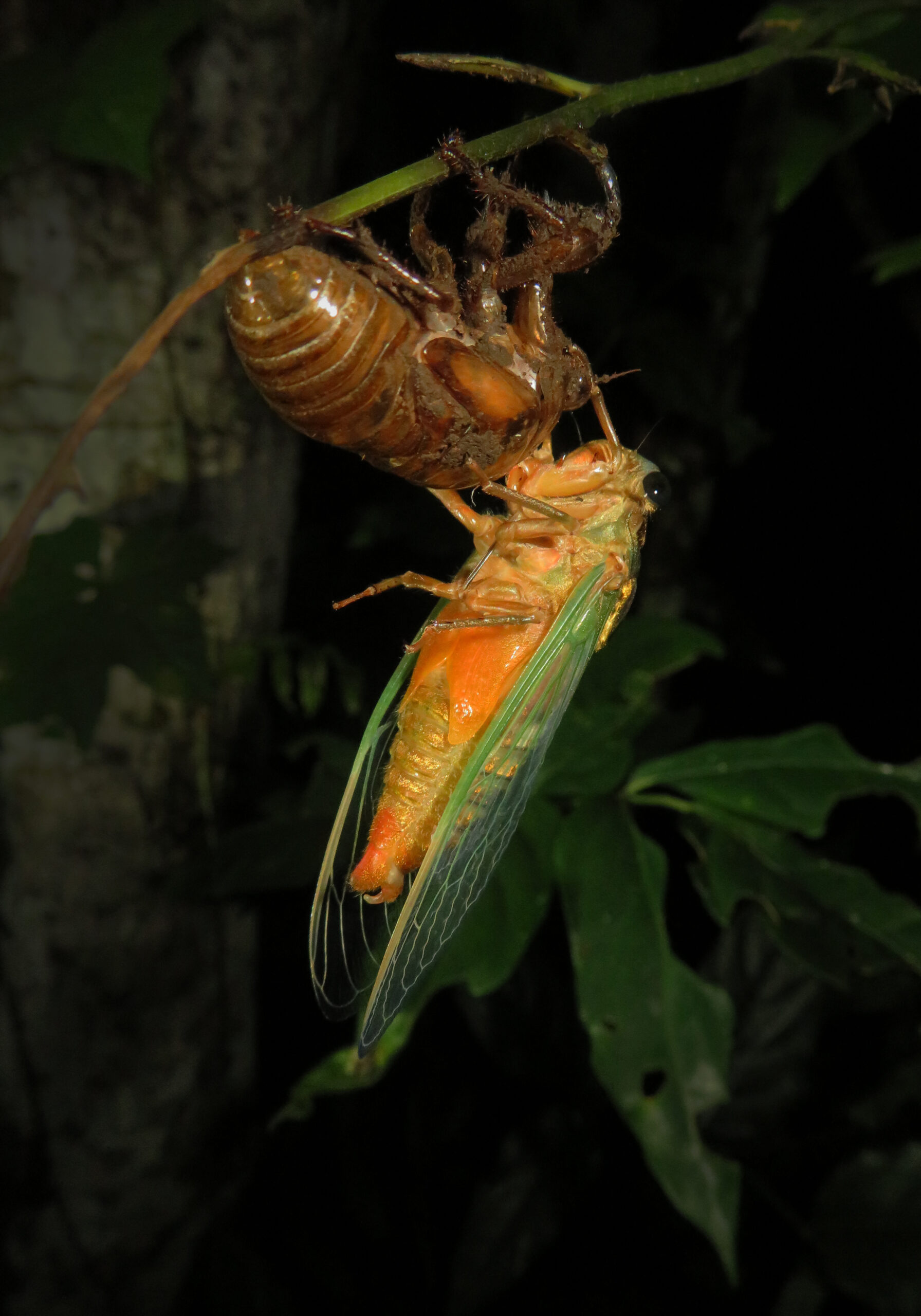
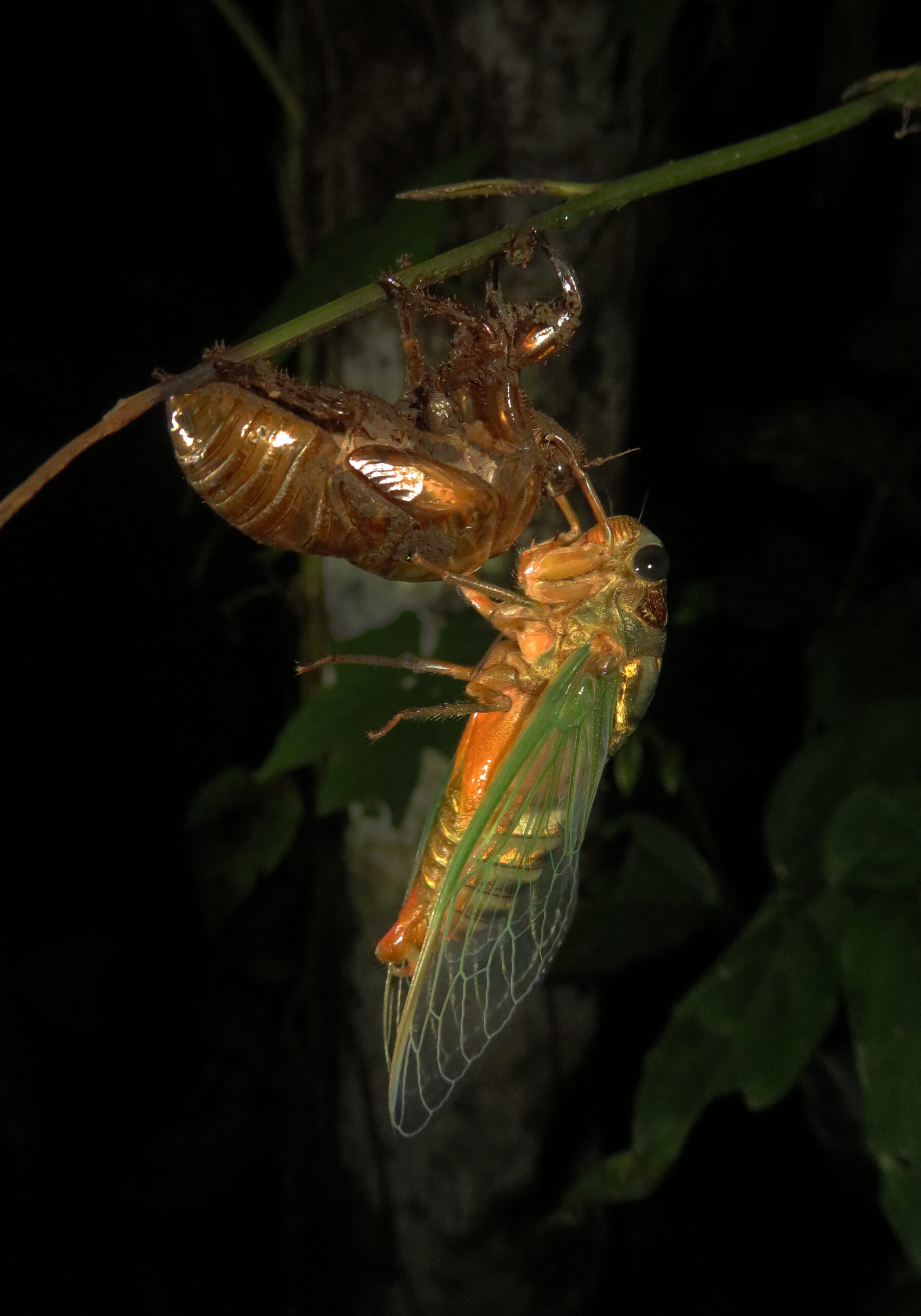
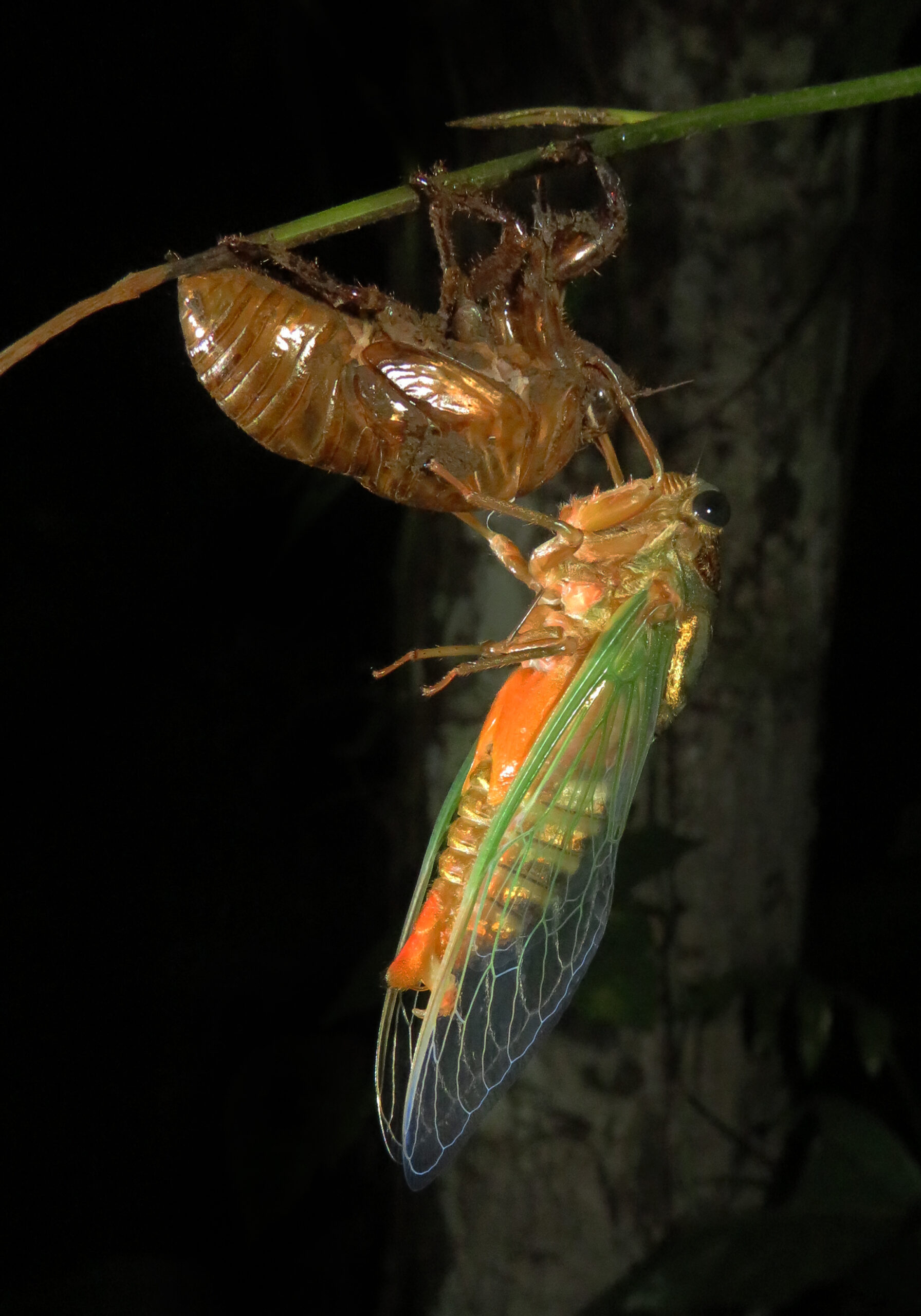
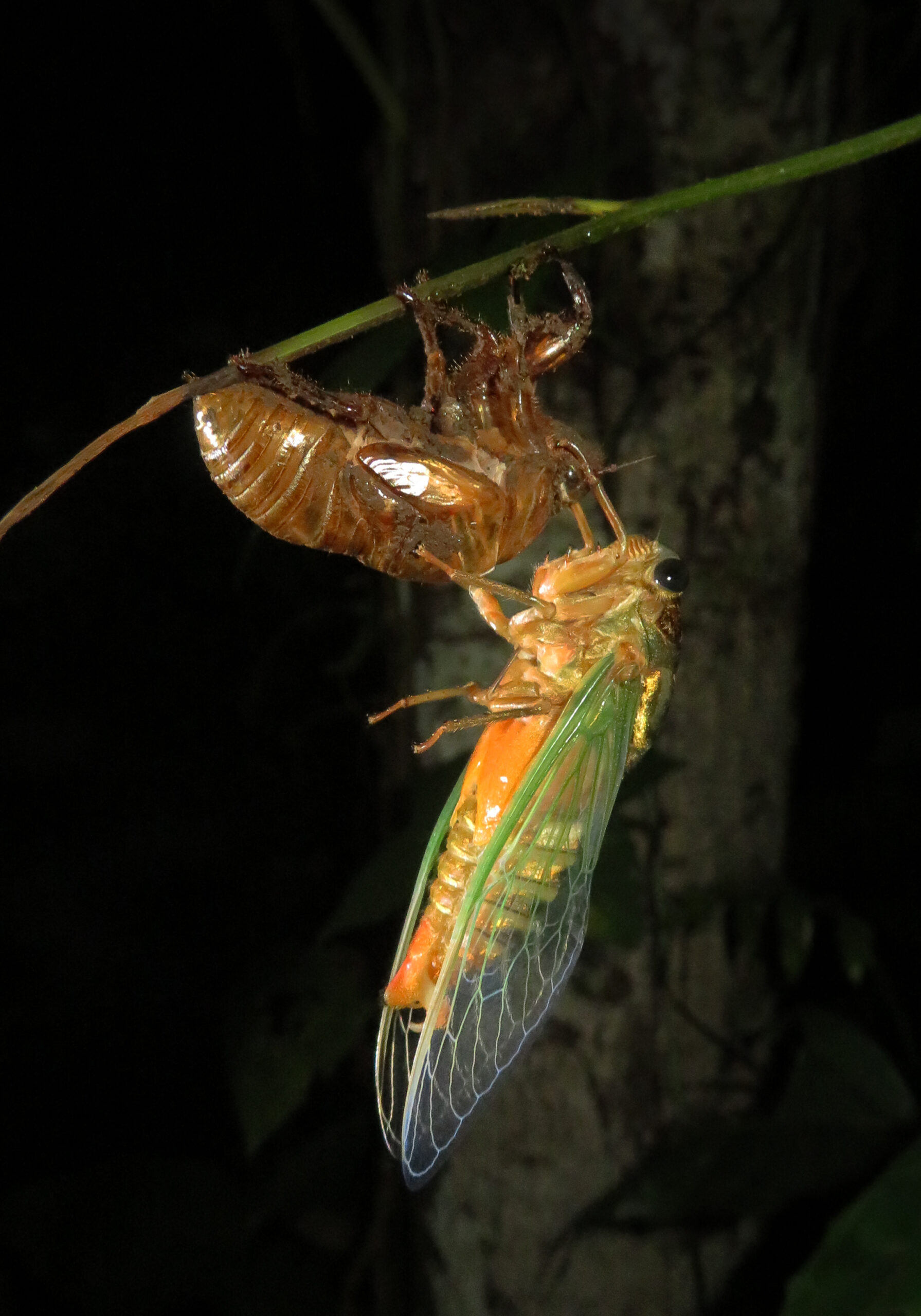
The life cycle involves incomplete metamorphosis, consisting of egg, nymph, and adult stages. Females insert eggs into slits cut in twigs or branches using their ovipositor. After hatching, the nymphs drop to the ground and burrow into the soil, where they feed on root sap for several years before emerging. Mature nymphs climb nearby trees or other vertical surfaces and molt into winged adults, leaving behind their characteristic empty exuviae.
The genus includes several well-known species, such as Cryptotympana atrata, Cryptotympana facialis, and Cryptotympana mandarina. Many species are common in both natural forests and urban environments, where their loud calls make them among the most recognizable cicadas in Asia.
Ecologically, Cryptotympana cicadas play an important role in forest and urban ecosystems by transferring energy from plants to higher trophic levels. Their underground nymphs contribute to soil aeration and nutrient cycling, while adults provide seasonal food for birds, mammals, reptiles, spiders, and predatory insects. Their close association with mature trees and sensitivity to habitat quality make them valuable indicators of ecosystem health and biodiversity.