Bali Wildlife
Every Spices Matter


Charontoidea is a superfamily within the order Amblypygi (whip spiders or tailless whip scorpions). Members of this group are primarily distributed in tropical and subtropical regions, especially in Southeast Asia, Africa, Australia, and nearby islands, where they inhabit forests, caves, and other humid environments.
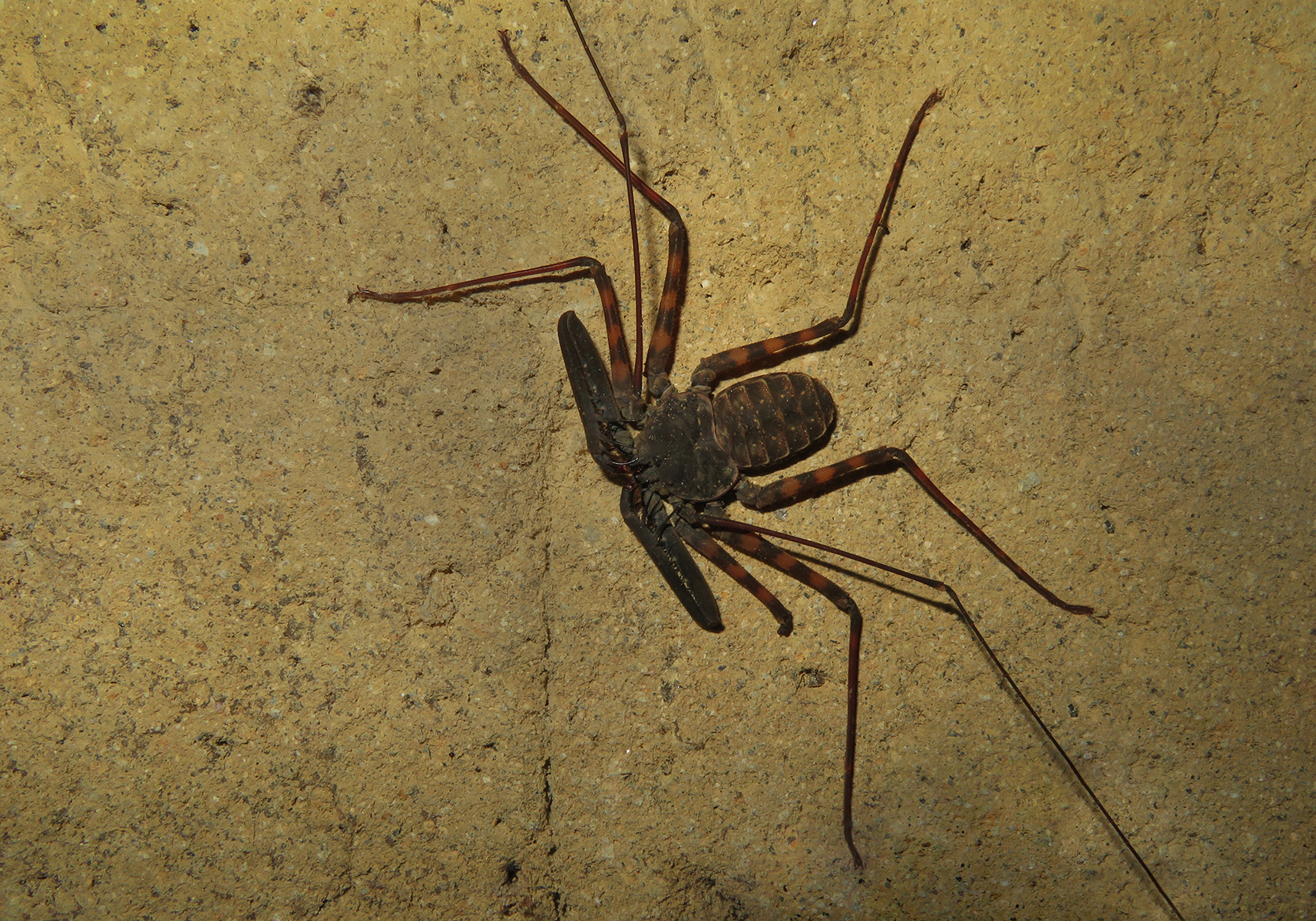
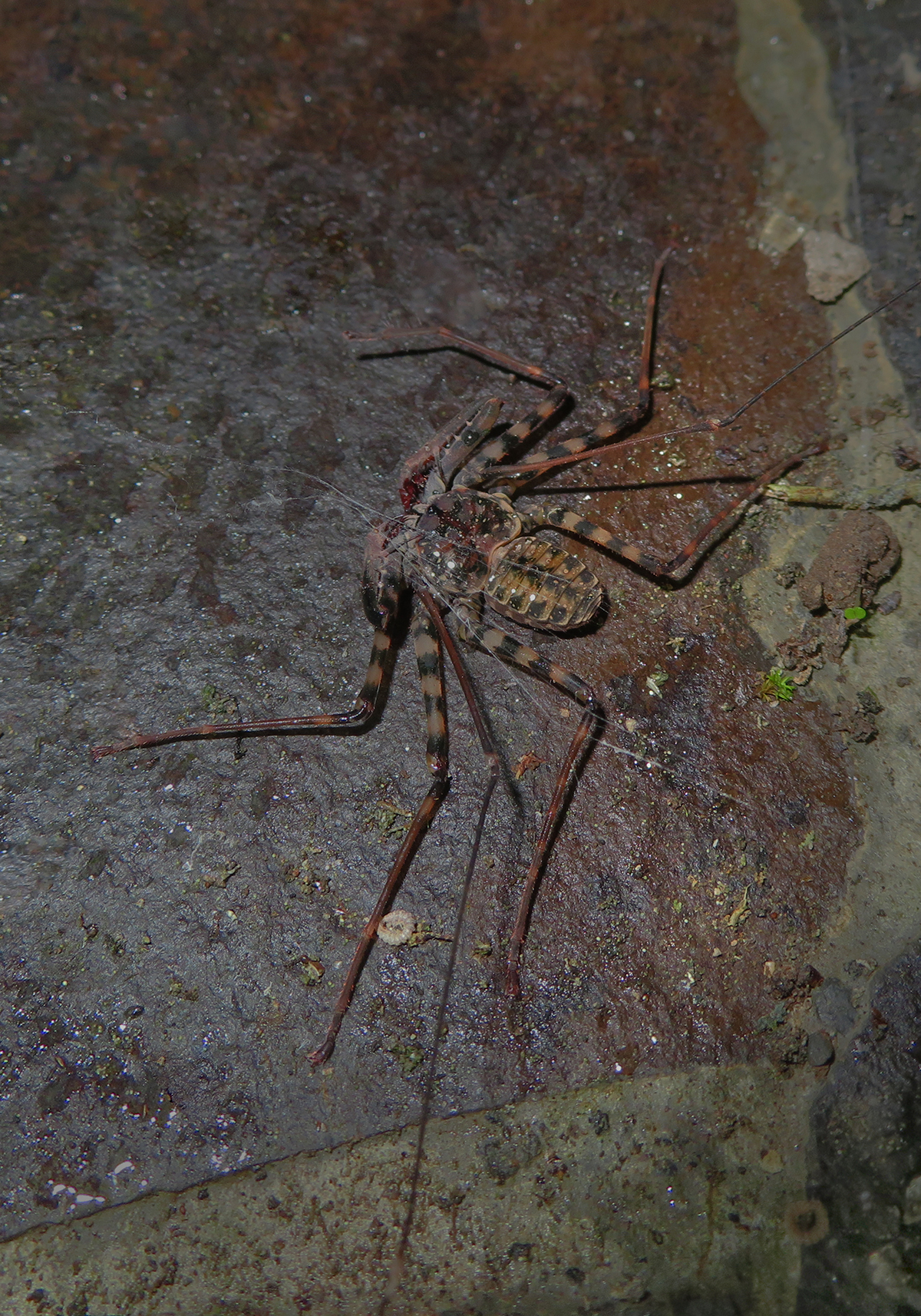
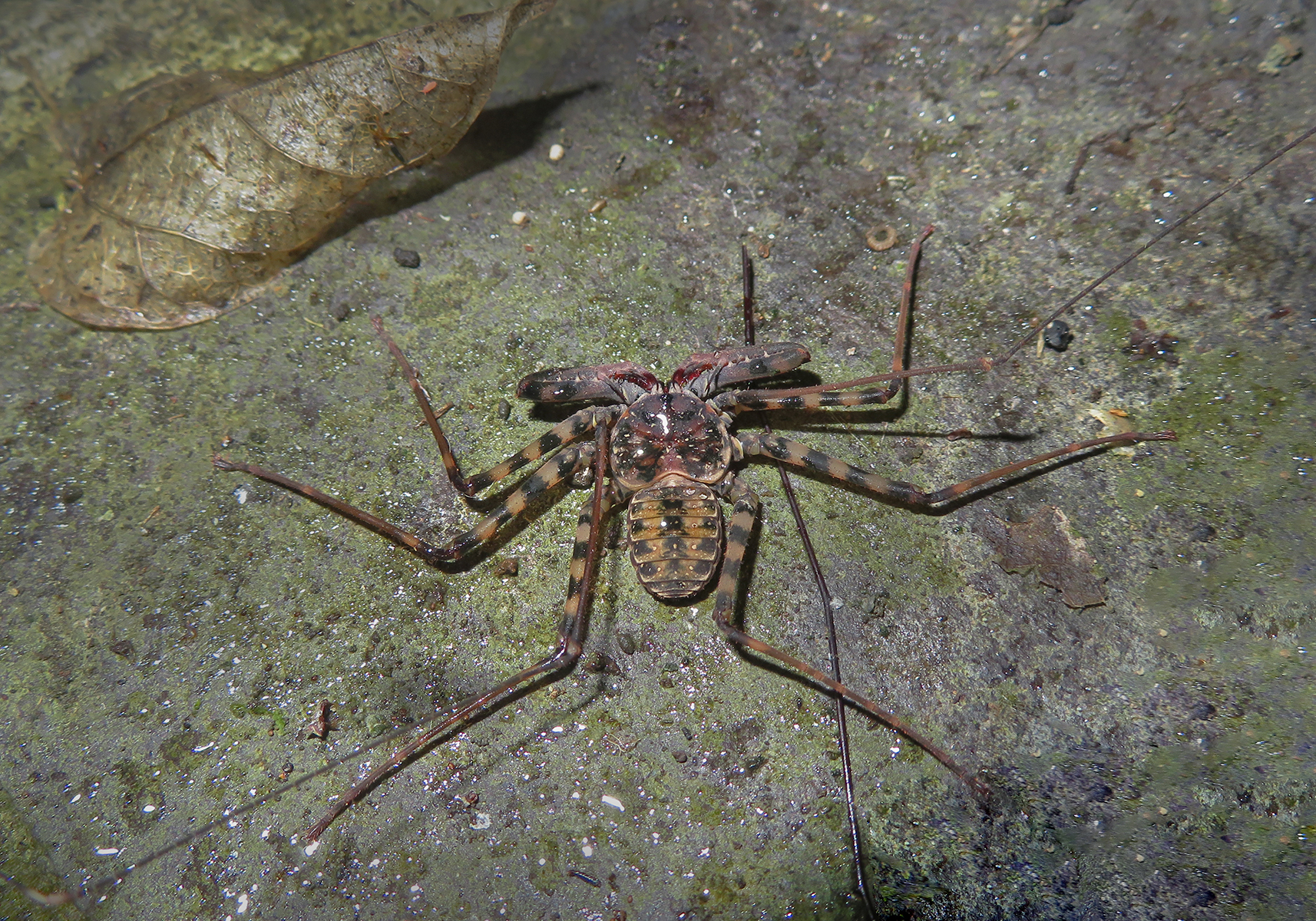
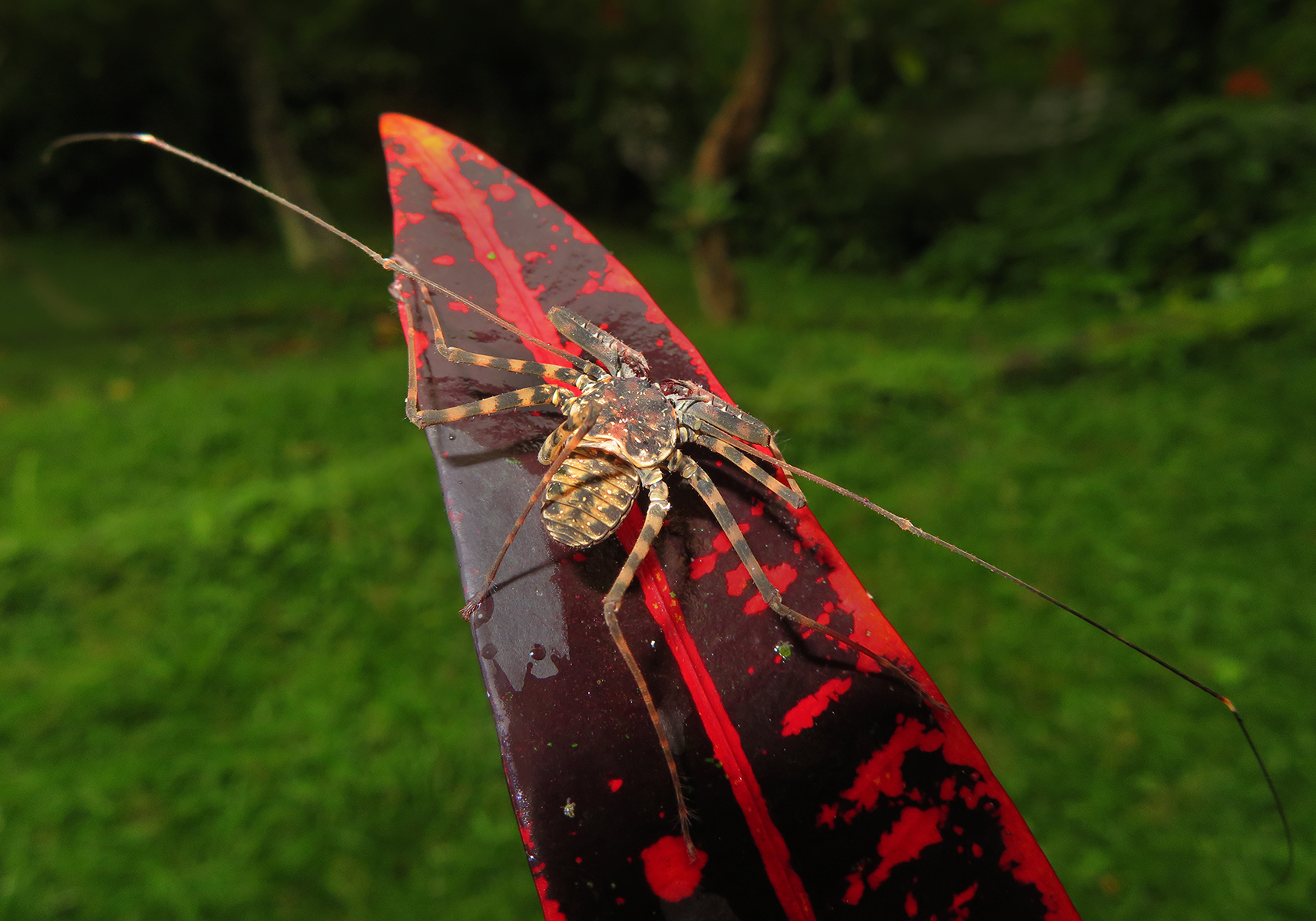
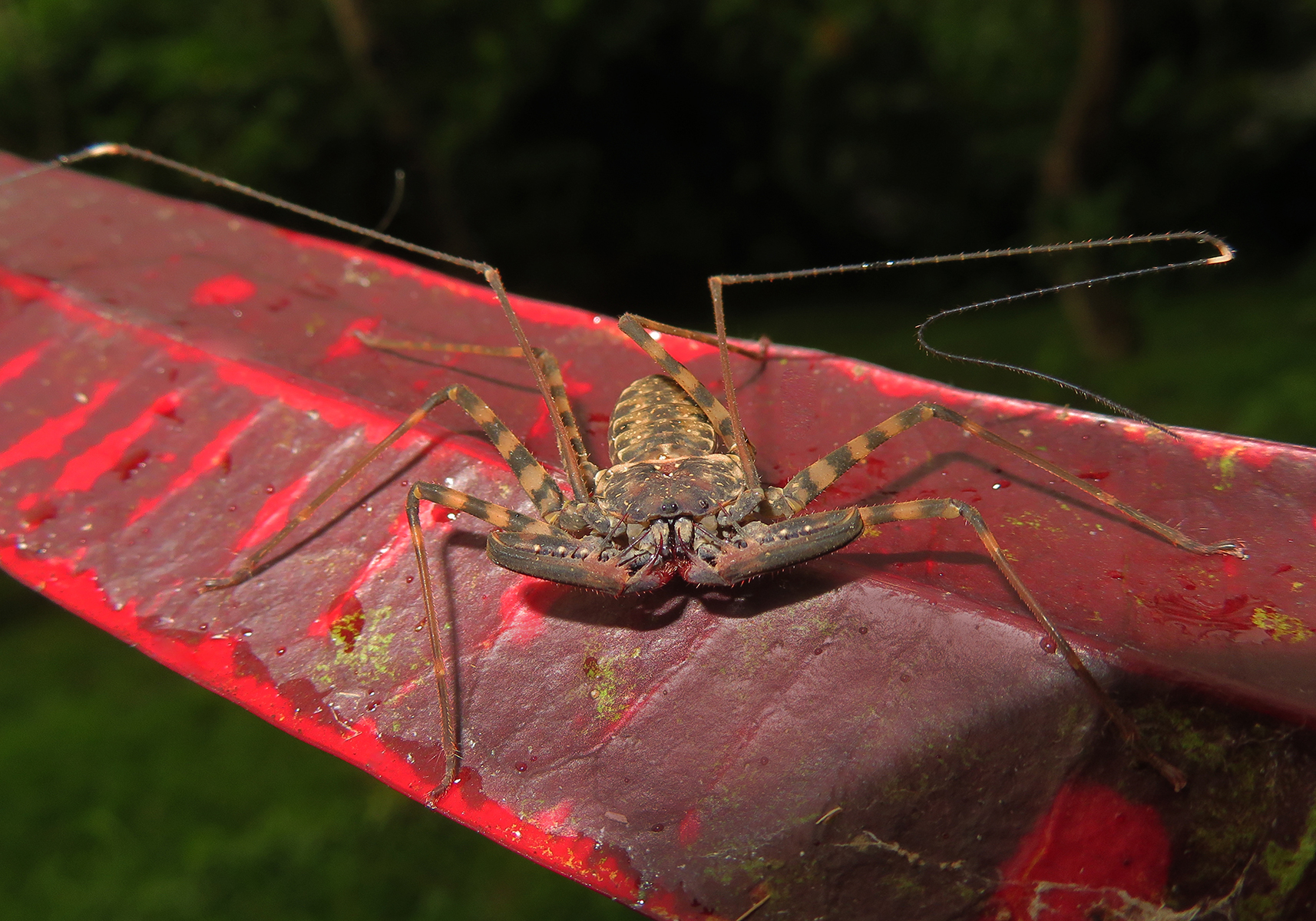
Charontoidea species share the general characteristics of amblypygids: a strongly flattened body, large raptorial pedipalps armed with spines for capturing prey, and extremely elongated first pair of legs that function as sensory appendages. These antenniform legs are highly flexible and covered with sensory structures used to detect vibrations, air currents, and chemical cues in low-light conditions.
The carapace is typically broad and flattened, aiding movement in narrow crevices under bark, rocks, or within caves. The abdomen is segmented and lacks a tail or stinger. Members of this superfamily are entirely non-venomous and rely on mechanical capture of prey rather than venom.
Charontoidea species are predominantly nocturnal predators, feeding on insects and other small arthropods. During the day, they shelter in cracks, under bark, inside tree hollows, or in cave walls, emerging at night to hunt.
Reproduction follows the typical amblypygid pattern: indirect sperm transfer via a spermatophore and maternal care of eggs and early instars. Females carry the eggs in a brood sac beneath the abdomen, and the young remain on the mother’s back until after their first molt.
Superfamily Charontoidea represents a lineage of whip spiders characterized by flattened morphology, highly developed sensory legs, spined pedipalps, and adaptation to humid, sheltered habitats in tropical regions.