Bali Wildlife
Every Spices Matter


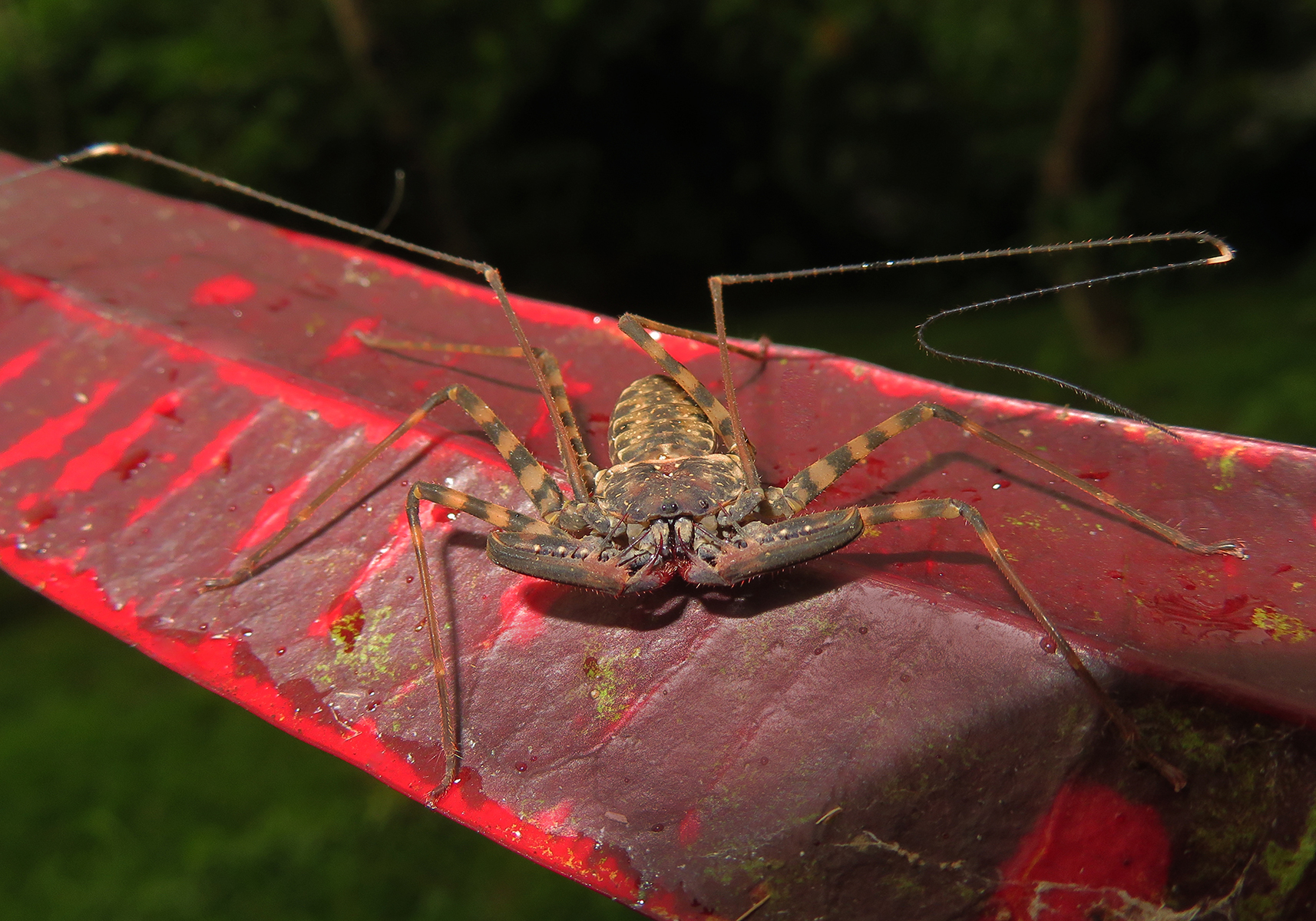
Charontidae is a family of whip spiders within the superfamily Charontoidea (Order Amblypygi). Members of this family are distributed mainly in tropical regions of Southeast Asia, Melanesia, Australia, and parts of the western Pacific, where they inhabit humid forests, caves, and sheltered microhabitats.
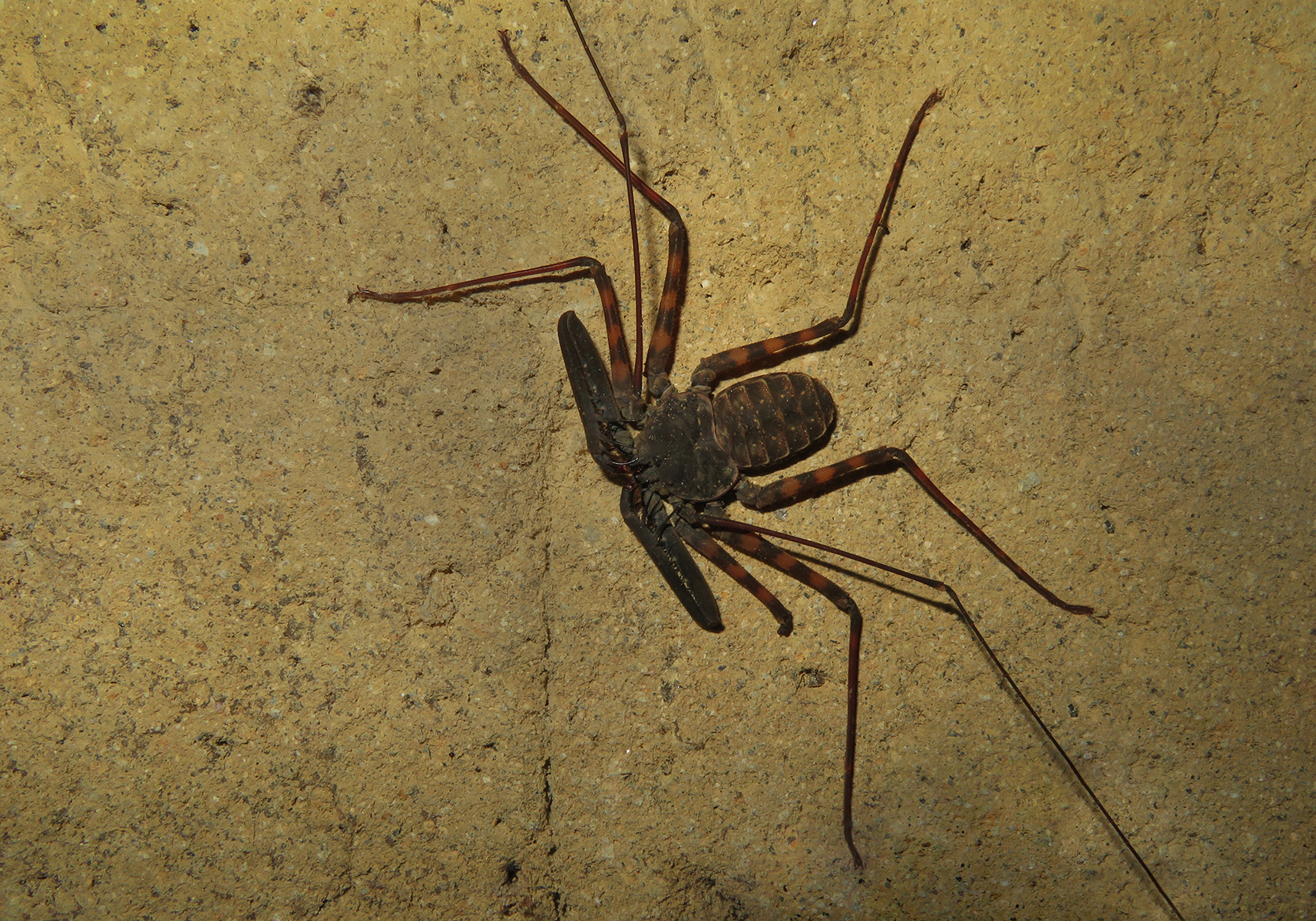
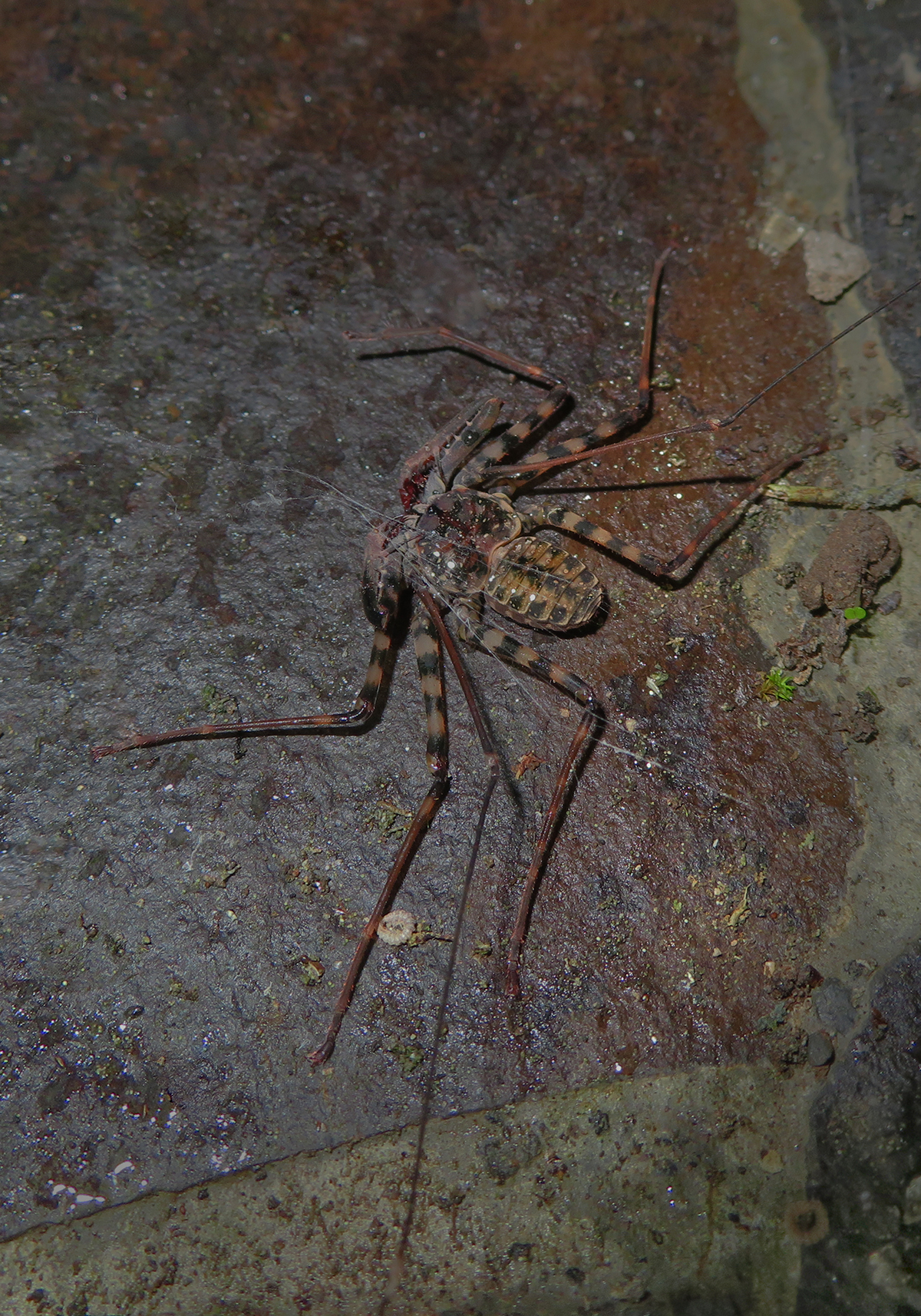
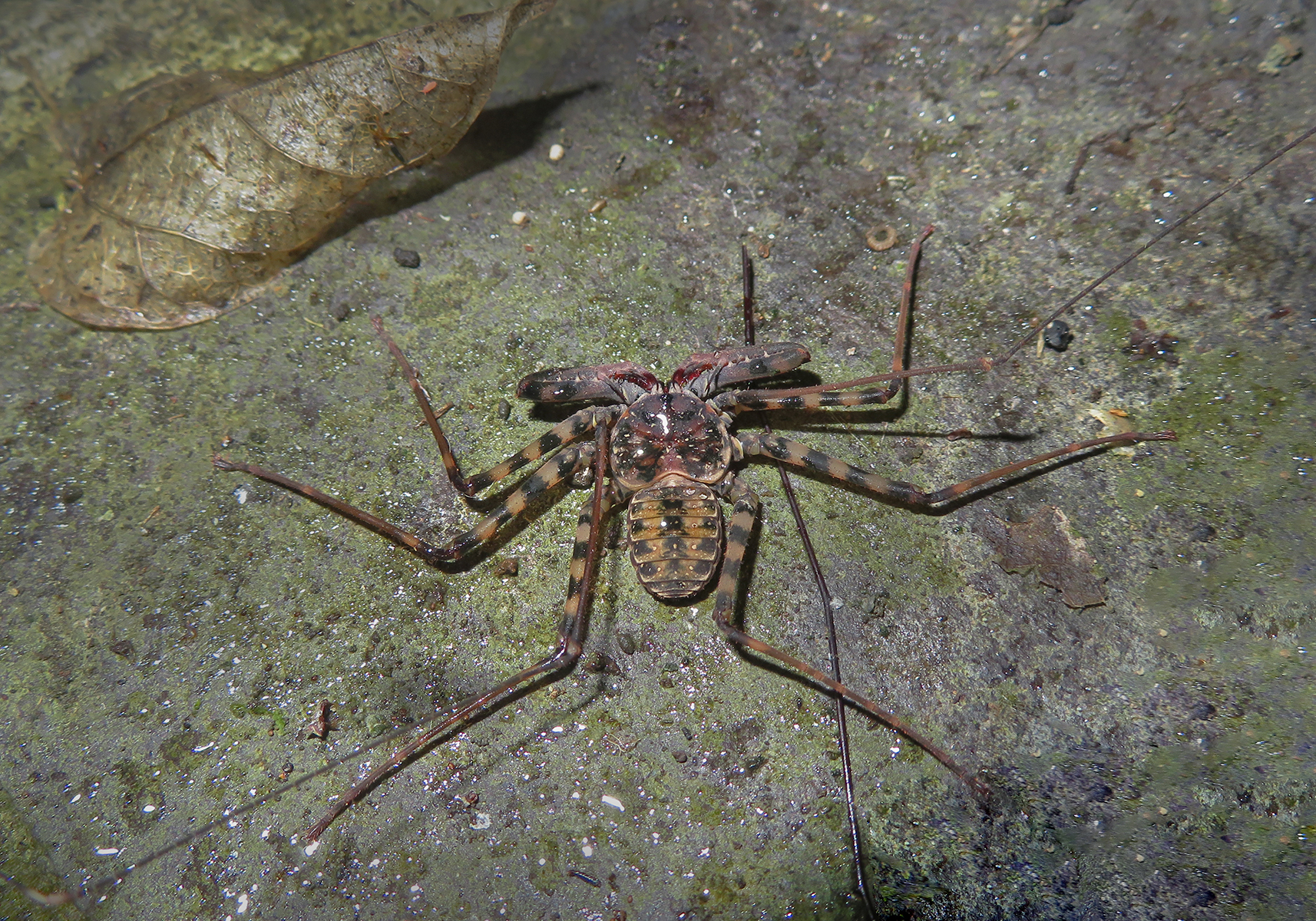
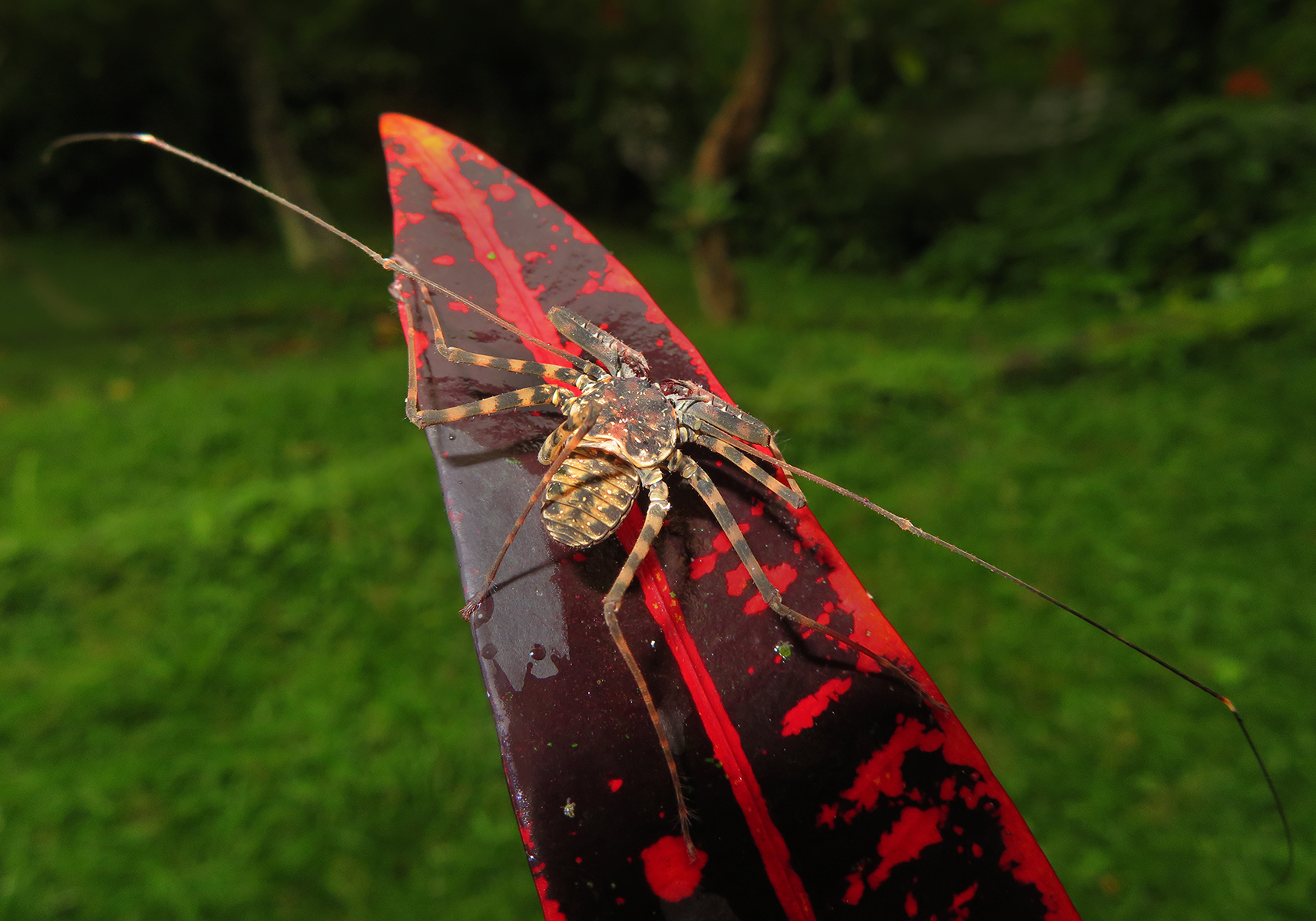
Charontidae species possess the characteristic amblypygid body plan: a strongly flattened body, broad carapace, and segmented abdomen without a tail or stinger. The first pair of legs is extremely elongated and modified into antenniform sensory appendages, used to explore surroundings and detect vibrations, prey, and obstacles in darkness.
The pedipalps are robust and armed with prominent spines, forming raptorial structures used to seize and hold prey. The remaining three pairs of walking legs allow sideways, crab-like movement and enable them to navigate efficiently through narrow crevices, under bark, or across cave surfaces.
Members of Charontidae are nocturnal predators, feeding primarily on insects and other small arthropods. They are non-venomous and rely on their spined pedipalps to capture prey. During the day, they remain hidden in moist, shaded locations to avoid desiccation.
Reproduction involves indirect sperm transfer via a spermatophore. Females exhibit maternal care by carrying eggs in a brood sac beneath the abdomen. After hatching, the young climb onto the mother’s back and remain there until after their first molt.
Family Charontidae represents a distinctive Indo-Pacific lineage of whip spiders characterized by flattened morphology, elongated sensory legs, strong maternal care behavior, and adaptation to humid tropical environments.