Bali Wildlife
Every Spices Matter


Centropus sinensis, commonly known as the Greater Coucal, is a large, non-parasitic cuckoo species within the genus Centropus (family Cuculidae, order Cuculiformes). It is widely distributed across South Asia and Southeast Asia, extending from the Indian subcontinent to southern China and Indonesia.
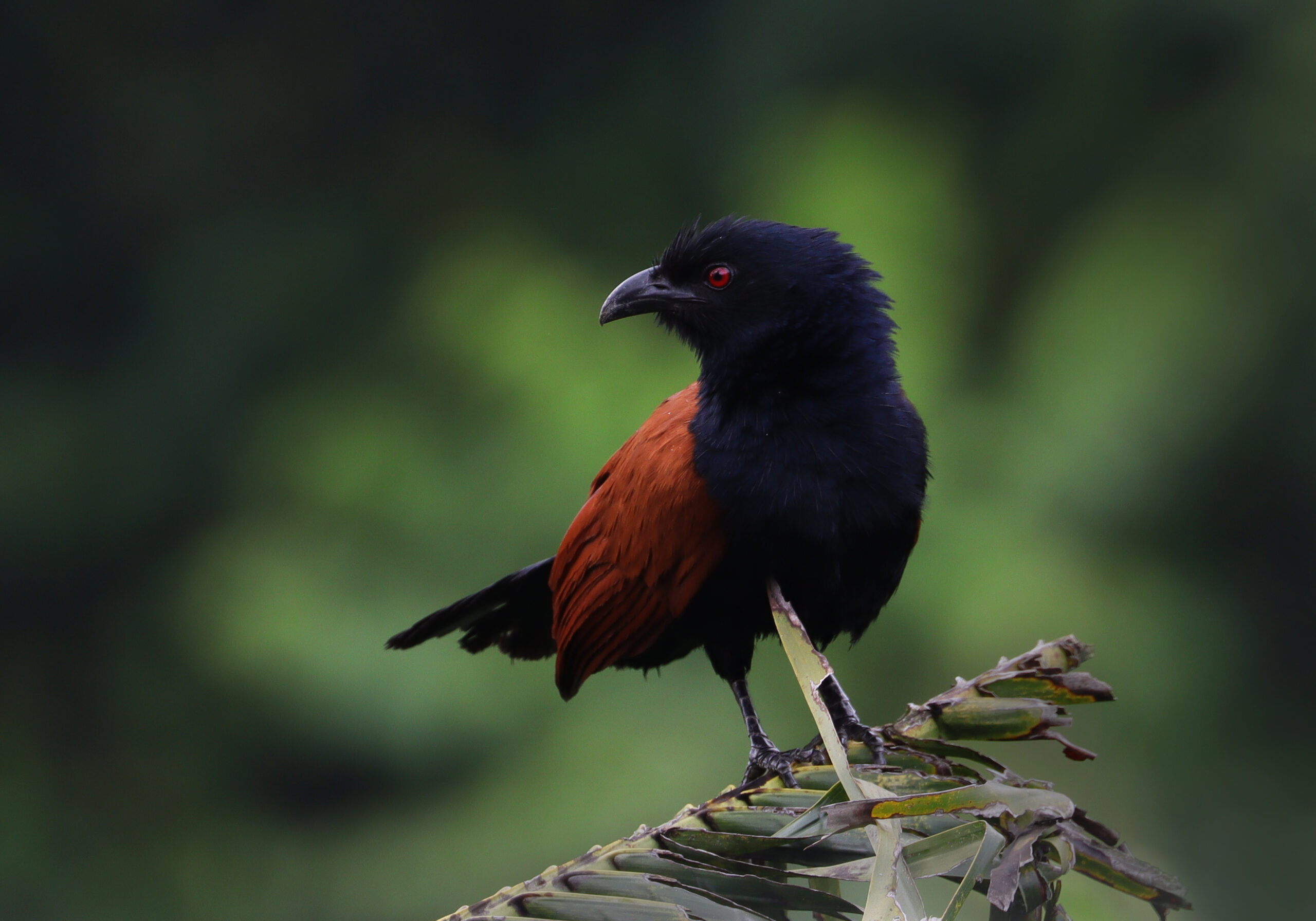
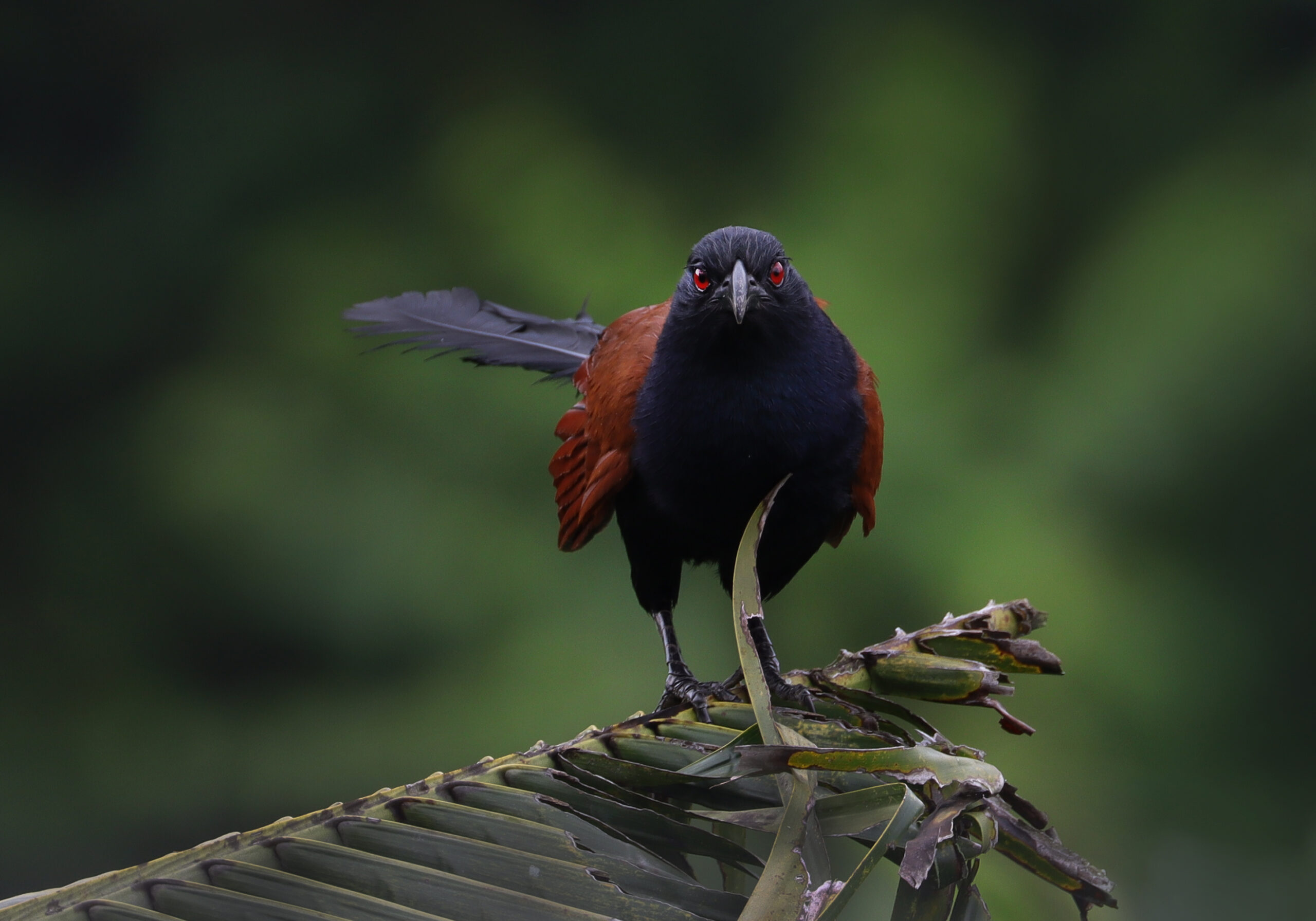
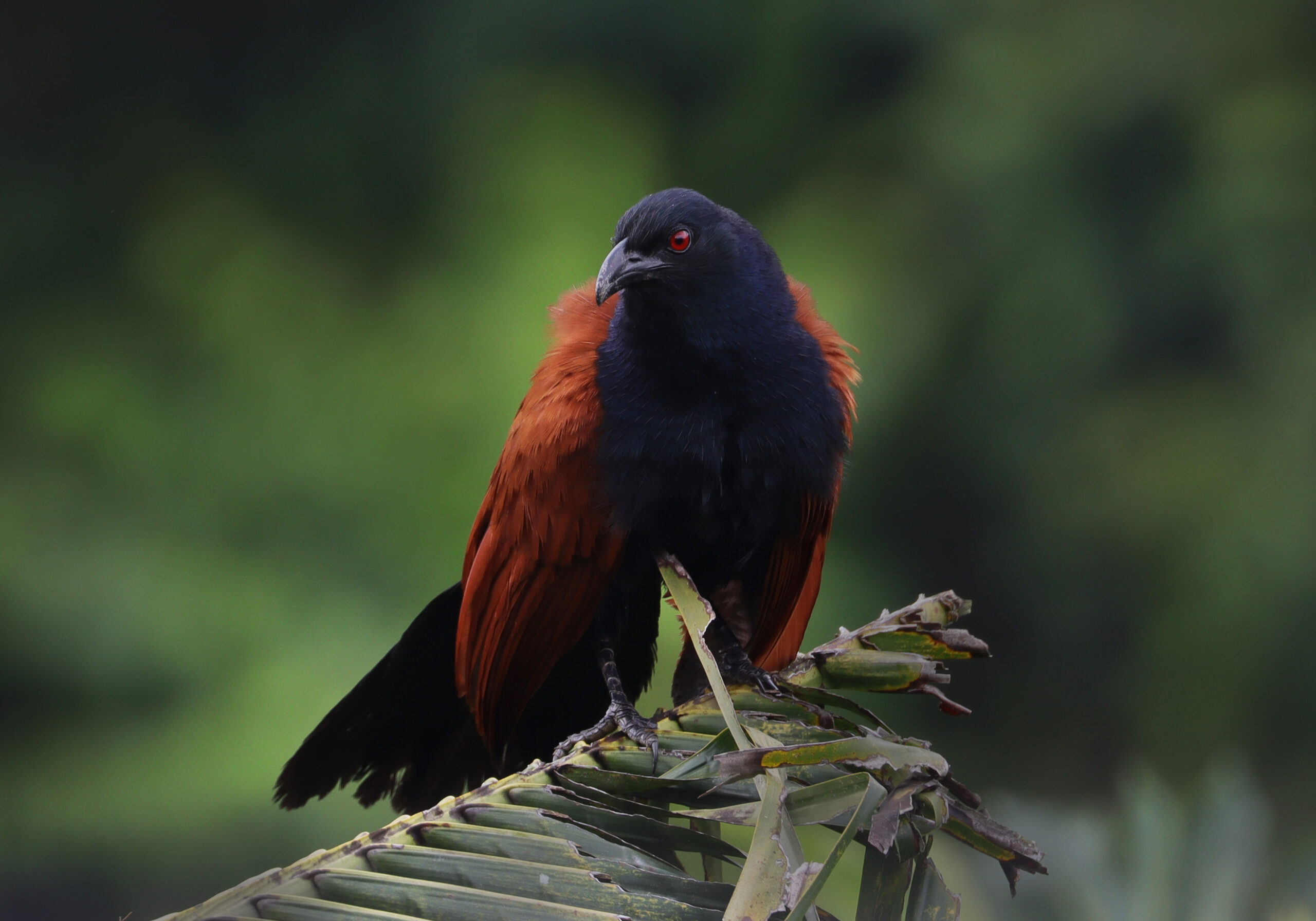
The Greater Coucal is a robust bird measuring about 43–48 cm in length. It has a glossy black head and body, rich chestnut-brown wings, a long broad black tail with a greenish or purplish sheen, and striking red eyes. The heavy body and strong legs reflect its largely terrestrial habits.
Unlike many cuckoos, Centropus sinensis does not practice brood parasitism. Instead, it builds its own dome-shaped nest in dense vegetation, where both parents may participate in incubation and chick rearing.
This species inhabits a wide range of environments, including grasslands, marshes, mangroves, forest edges, plantations, gardens, and agricultural areas. It prefers dense shrubs and undergrowth, where it forages mostly on or near the ground.
The Greater Coucal is primarily carnivorous, feeding on insects, caterpillars, small reptiles, amphibians, eggs, and small mammals. It is well known for its deep, resonant “coop-coop-coop” call, often heard at dawn and dusk.
Ecologically, Centropus sinensis plays an important role as a predator of insects and small vertebrates and is commonly observed in both rural and suburban landscapes.