Bali Wildlife
Every Spices Matter


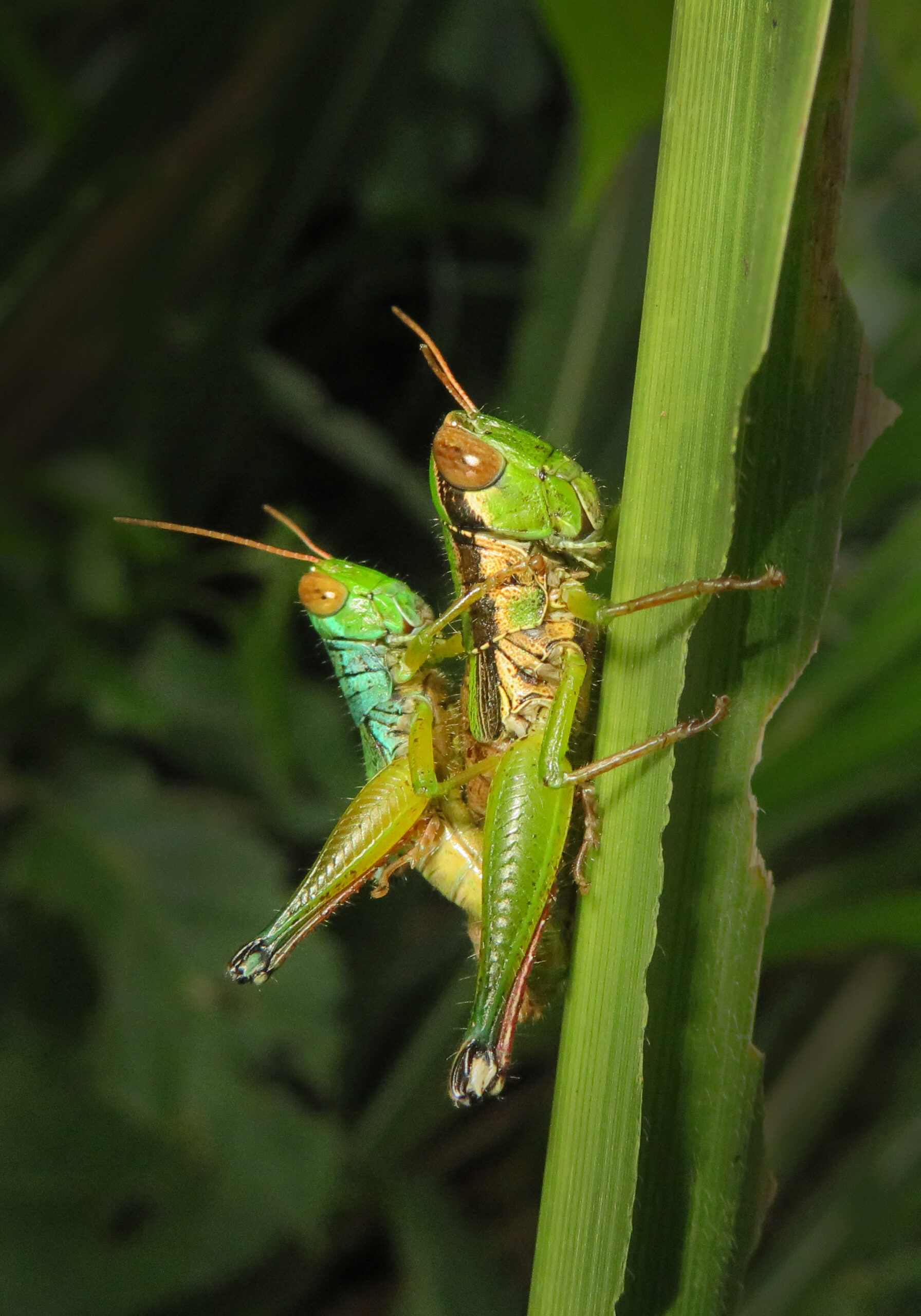
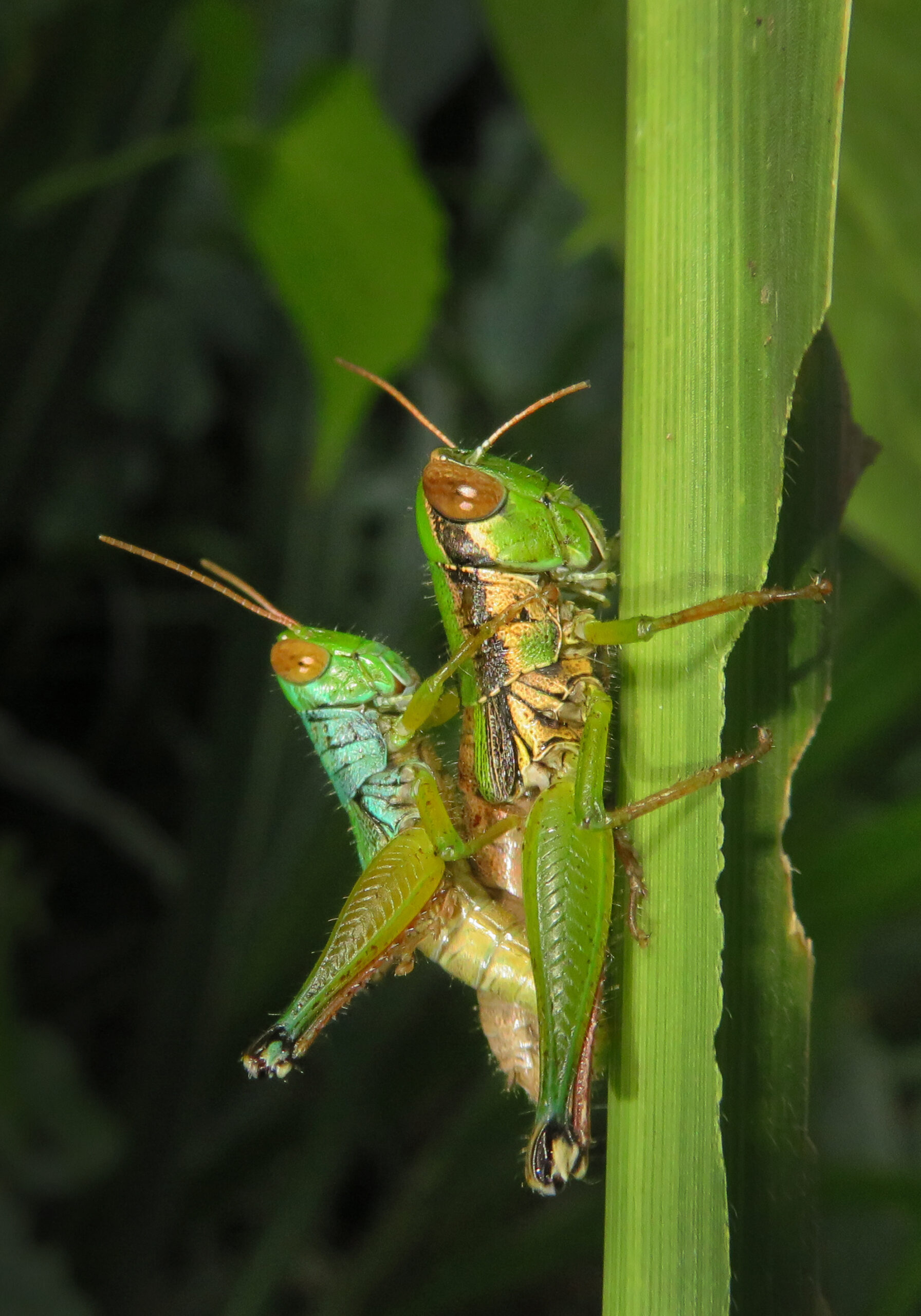
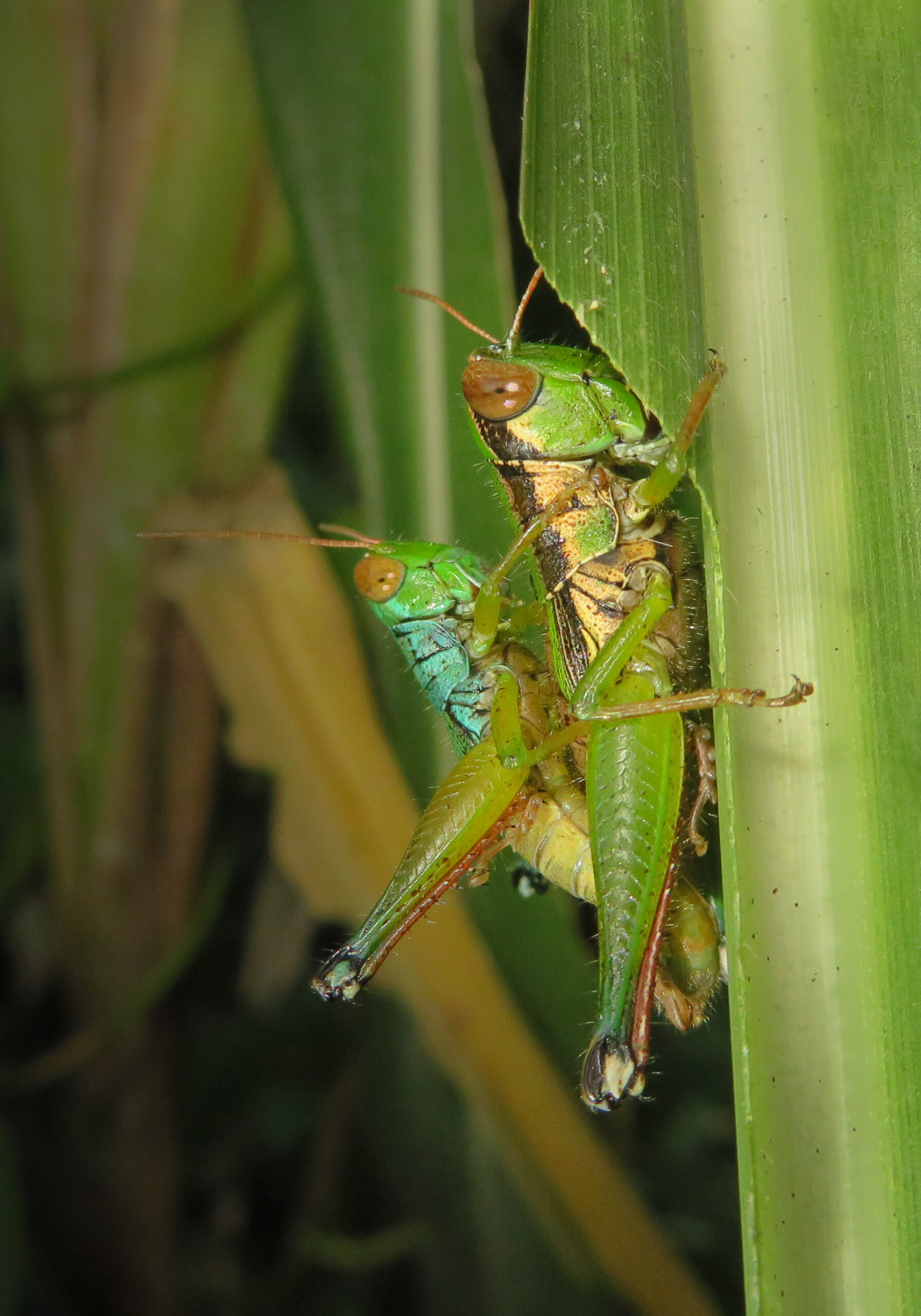
Caryandinae is a subfamily within the family Acrididae (Order Orthoptera), comprising a group of short-horned grasshoppers primarily distributed in the Old World tropics and subtropics. The subfamily is especially represented in South and Southeast Asia, parts of East Asia, and surrounding regions, where its members inhabit forests, forest edges, shrublands, and grass-dominated environments.
Members of Caryandinae are generally medium-sized grasshoppers with a sturdy but not overly massive body form. They are characterized by a moderately developed pronotum, relatively short antennae typical of acridids, and strong hind legs adapted for jumping. The head is often slightly elongated, with well-developed compound eyes. Wings may be fully developed, reduced, or absent depending on the genus and species, reflecting adaptation to different habitats and modes of life.
Coloration in Caryandinae is usually cryptic, dominated by shades of green, brown, or gray, allowing individuals to blend into grasses, shrubs, or forest floor vegetation. Some species may show subtle patterning or banding on the wings or body, which can be used in species recognition.
Like other Acrididae, Caryandinae undergo hemimetabolous development. Females lay eggs in pods in the soil or among plant material, and nymphs resemble adults but lack wings and reproductive organs. Development is influenced by environmental conditions such as temperature, humidity, and vegetation availability.
Ecologically, Caryandinae are herbivorous, feeding mainly on grasses and other low-growing plants, though some species may also consume leaves of shrubs or forest understory plants. They generally do not form large migratory swarms and are not considered major agricultural pests. Instead, they are important components of local ecosystems, contributing to plant biomass turnover and serving as prey for birds, reptiles, amphibians, and invertebrate predators.