Bali Wildlife
Every Spices Matter


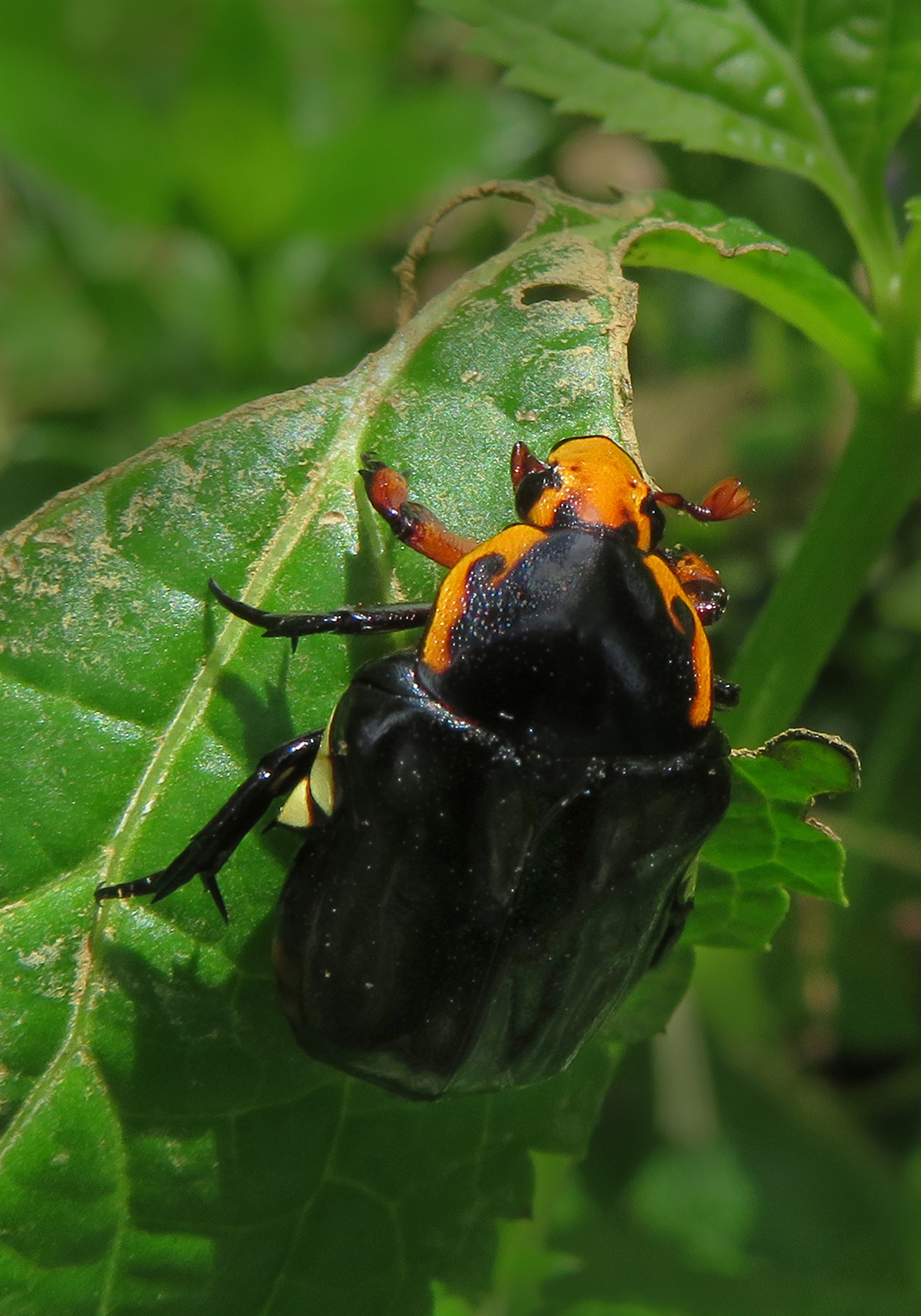
Campsiura is a genus of flower chafers within the subtribe Macromina (Tribe Cetoniini, Subfamily Cetoniinae, Family Scarabaeidae, Order Coleoptera). Species of this genus are primarily distributed in Africa, where they inhabit forested regions, woodland edges, and savanna environments.
Members of Campsiura are generally medium- to large-sized beetles with a robust, oval, and convex body typical of flower chafers. The dorsal surface is usually smooth and moderately glossy, often displaying metallic hues such as green, bronze, or copper, sometimes combined with darker or patterned markings. The elytra are well developed and may exhibit fine punctation or subtle sculpturing.
Like other cetoniines, Campsiura species possess the characteristic lateral elytral notch, which allows the hind wings to extend for flight without fully raising the elytra. This adaptation supports strong, agile flight during the day.
Adults are typically diurnal and are frequently observed visiting flowers, sap flows, and ripe or fermenting fruits. They feed on nectar, pollen, sap, and sugary plant exudates, and may play a role in pollination.
Larvae are typical C-shaped scarab grubs, developing in decaying wood, leaf litter, compost, or soil rich in organic matter. They are saprophagous and contribute to decomposition and nutrient cycling.
The life cycle follows complete metamorphosis: egg, larva, pupa, and adult, with development influenced by environmental conditions such as temperature and food availability.
Genus Campsiura represents a group of African flower chafers distinguished by their robust build, metallic coloration, and ecological association with flowers and decomposing organic substrates.