Bali Wildlife
Every Spices Matter


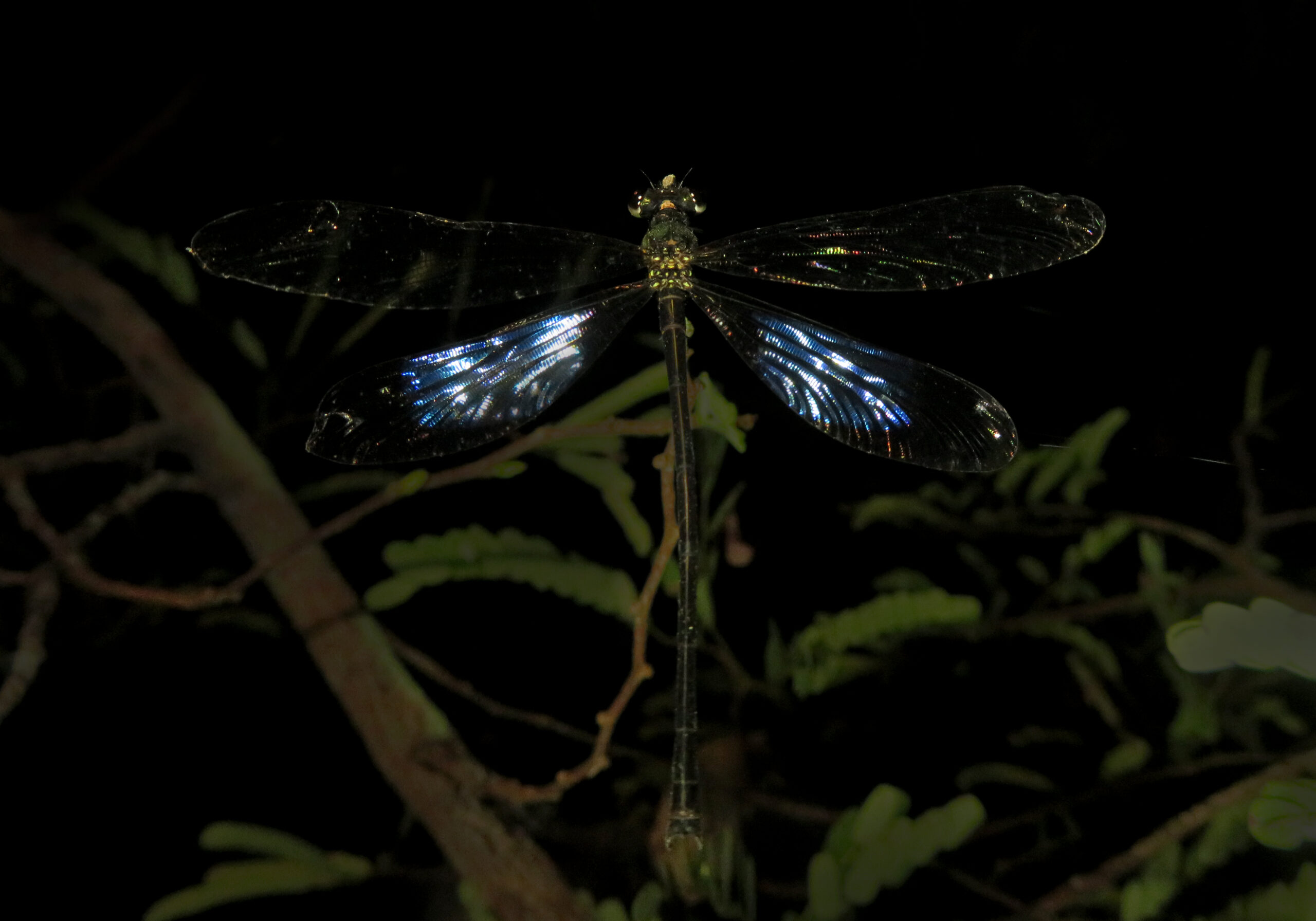
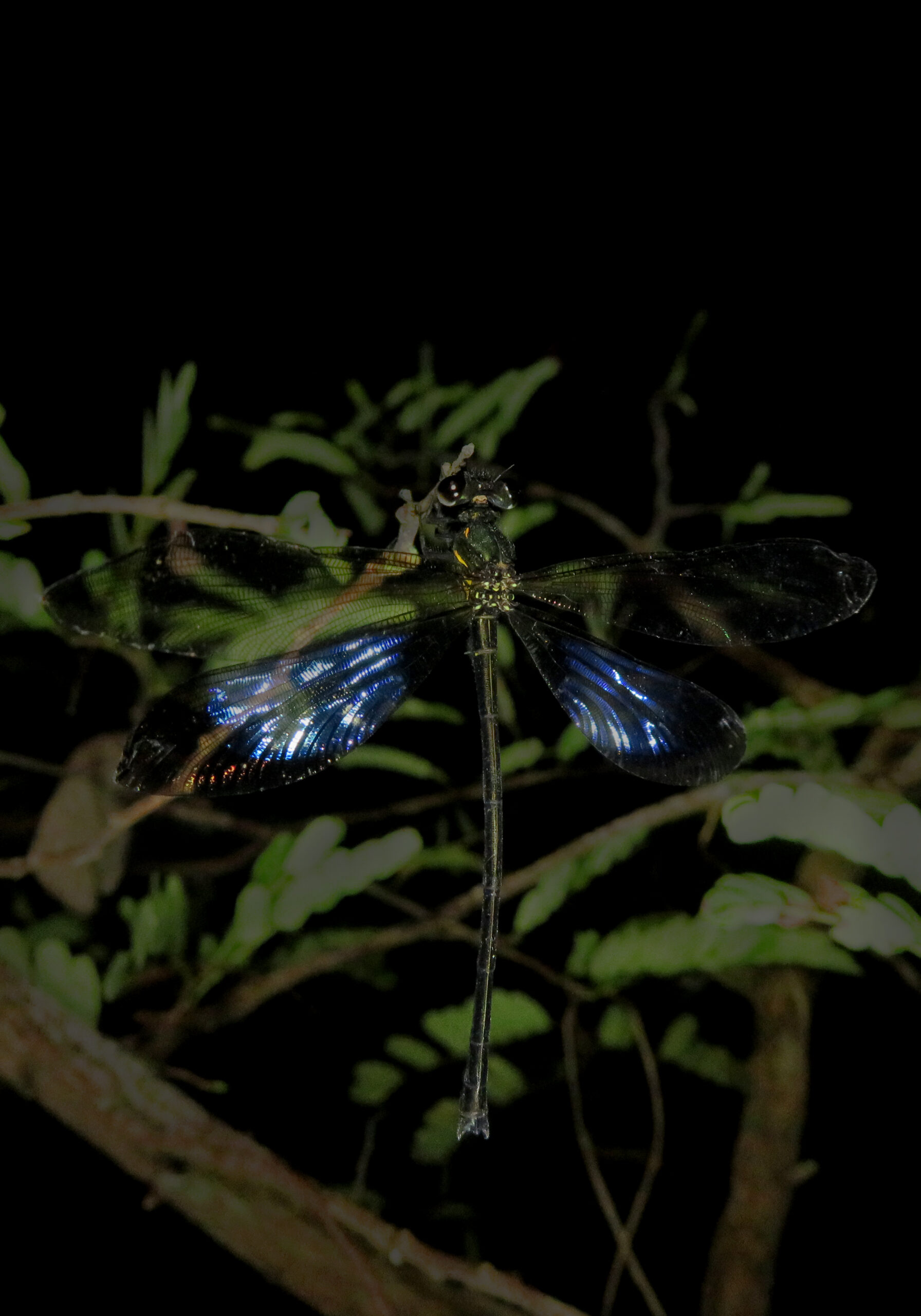
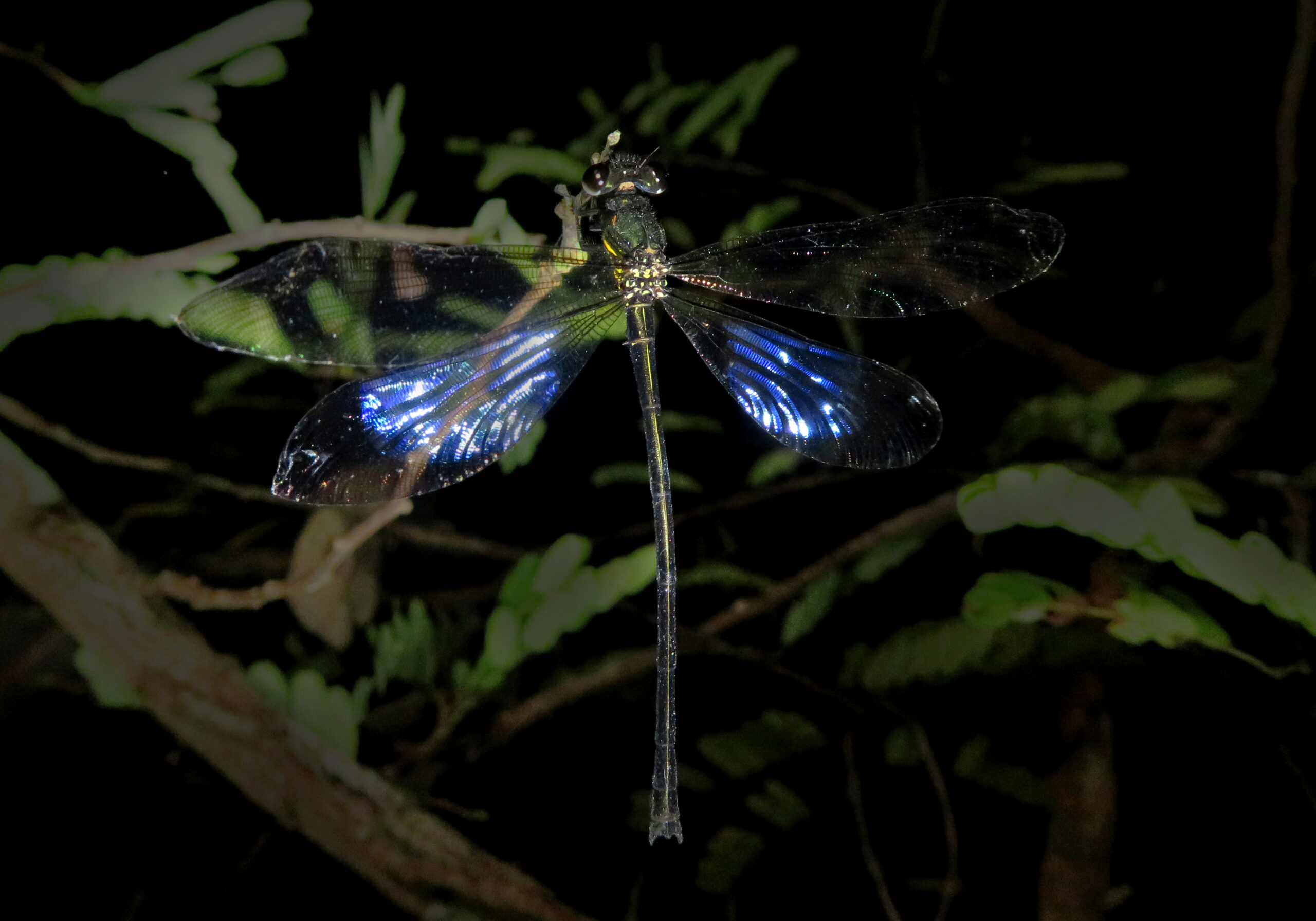
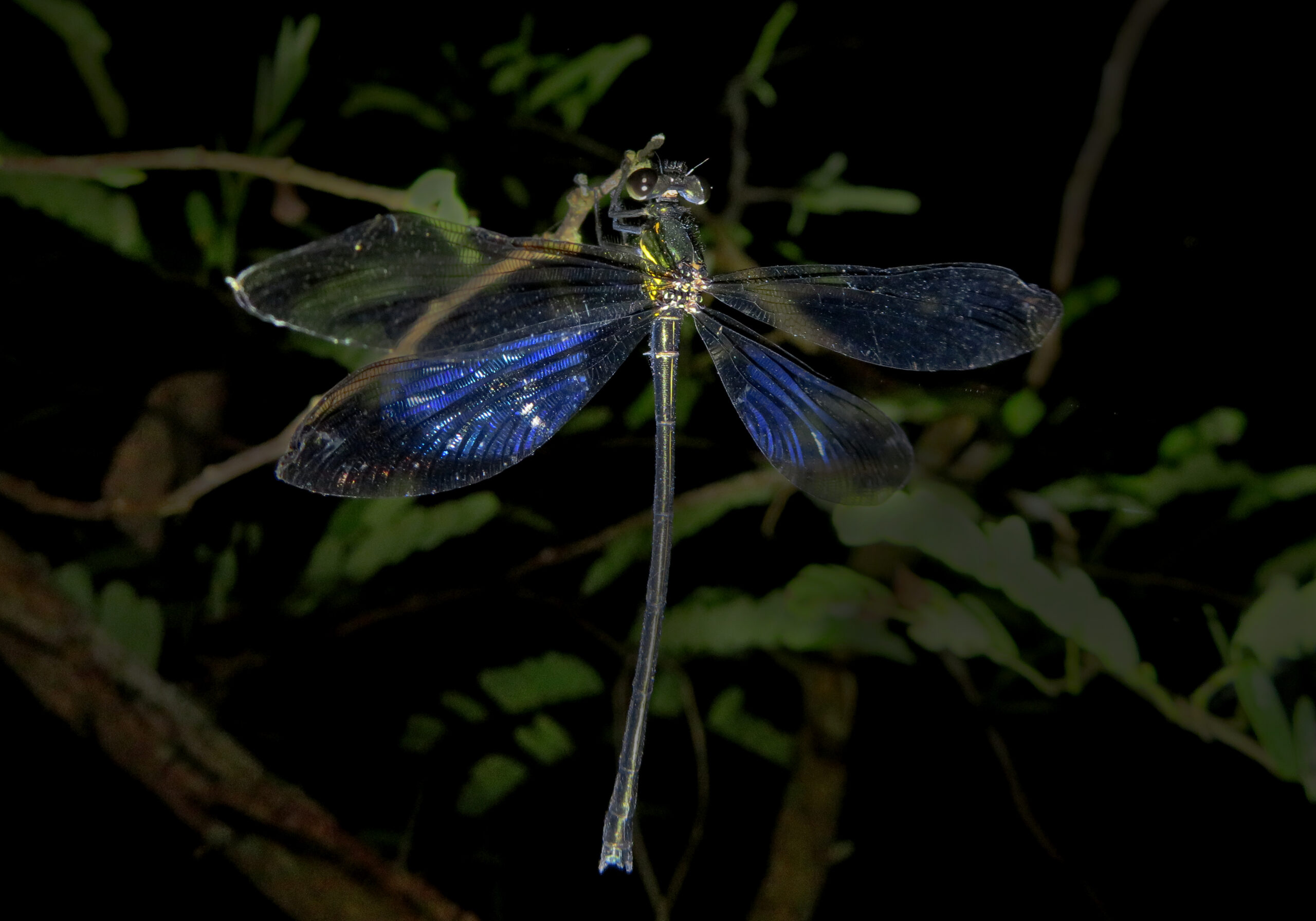
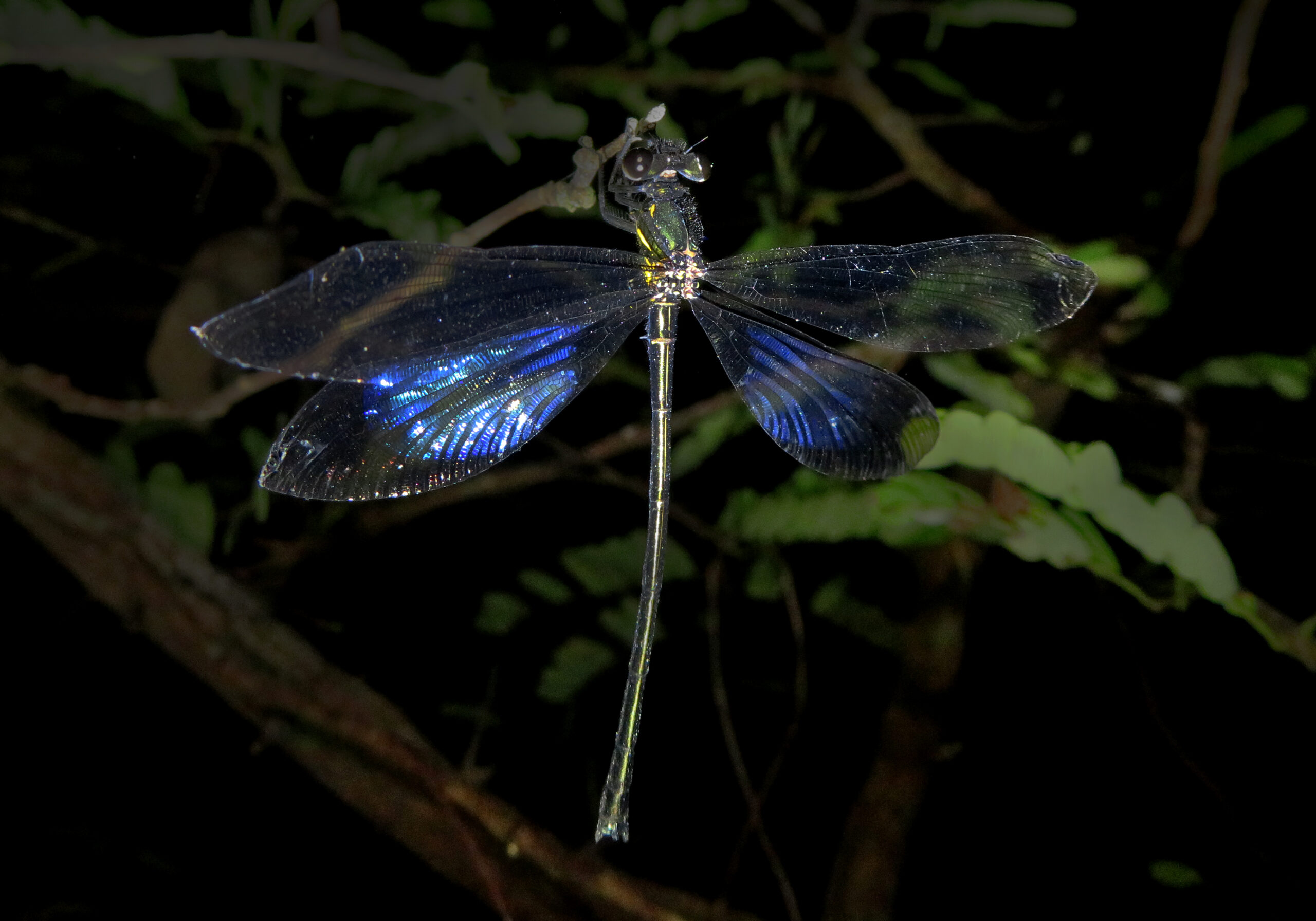
Calopterygidae is a family of damselflies within the superfamily Calopterygoidea (Suborder Zygoptera, Order Odonata), commonly known as broad-winged damselflies or jewel damselflies. The family comprises approximately 180 described species distributed throughout Europe, Asia, Africa, and the Americas, with the greatest diversity occurring in tropical and subtropical regions. Members are closely associated with clean, flowing freshwater habitats such as forest streams, rivers, springs, and shaded creeks.
Damselflies of the family Calopterygidae are generally medium to large in size and are distinguished by their broad wings, which are noticeably wider than those of most other damselflies. Many species possess brilliant metallic body coloration in shades of emerald green, blue, bronze, or copper. In numerous species, especially males, the wings are partially or completely pigmented with black, blue, brown, or amber coloration, producing a striking appearance that gives rise to the common name “jewel damselflies.”
The head bears large, widely separated compound eyes that provide excellent vision for locating prey and detecting rivals or potential mates. Adults are active during the day and are agile predators, capturing mosquitoes, flies, midges, and other small flying insects in flight or from perches along streamside vegetation.
The life cycle involves incomplete metamorphosis, consisting of egg, aquatic nymph (naiad), and adult stages. Females insert eggs into submerged or emergent aquatic plants using a well-developed ovipositor. The nymphs are aquatic predators equipped with an extendable labium for capturing prey and three leaf-like external caudal gills for respiration. Development usually occurs in clean, well-oxygenated running water before the mature nymph emerges to molt into the winged adult.
Males of many species are highly territorial and defend sections of streams where females lay eggs. Courtship often involves elaborate aerial displays, wing movements, and visual signaling, making Calopterygidae among the most behaviorally complex damselflies.
The family includes well-known genera such as Calopteryx, Neurobasis, Matrona, Echo, and Mnais, each exhibiting distinctive wing coloration and habitat preferences.
Ecologically, Calopterygidae species are important predators in both aquatic and terrestrial ecosystems. Their larvae regulate populations of aquatic invertebrates, while adults help control flying insect populations. They also serve as prey for fish, amphibians, birds, spiders, and larger insects. Because they require unpolluted, well-oxygenated freshwater habitats, broad-winged damselflies are widely regarded as excellent indicators of freshwater ecosystem health and biodiversity.