Bali Wildlife
Every Spices Matter


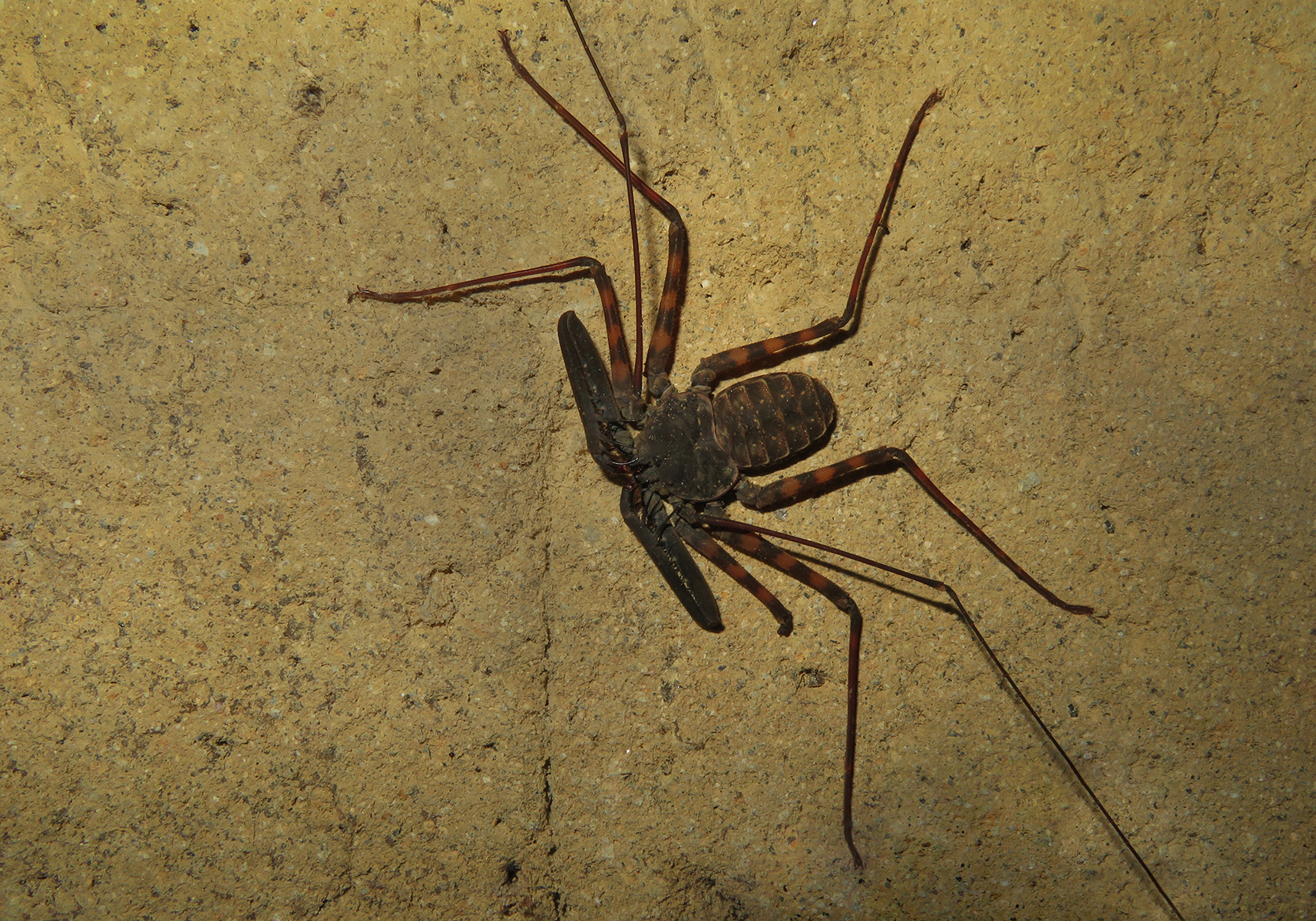
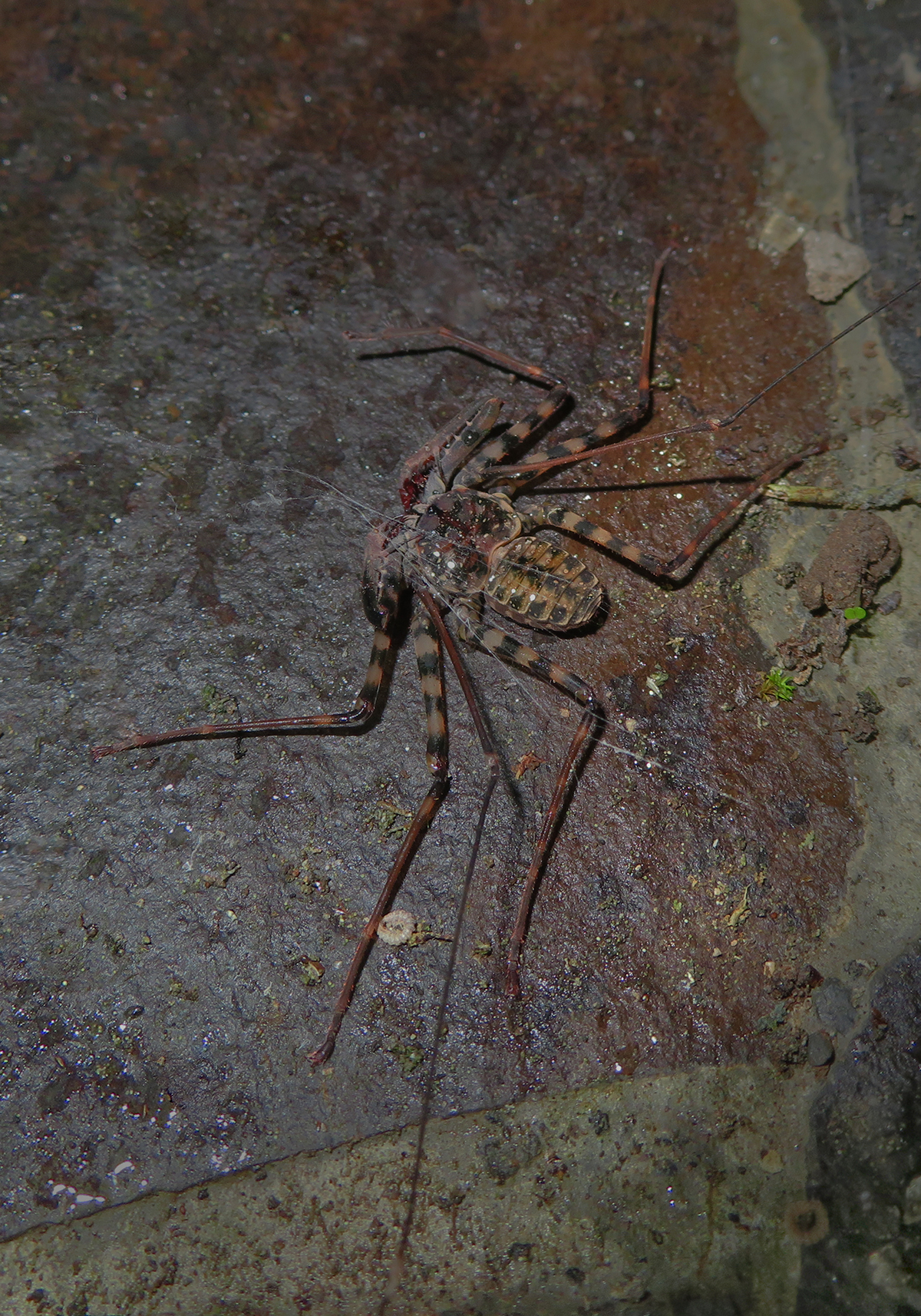
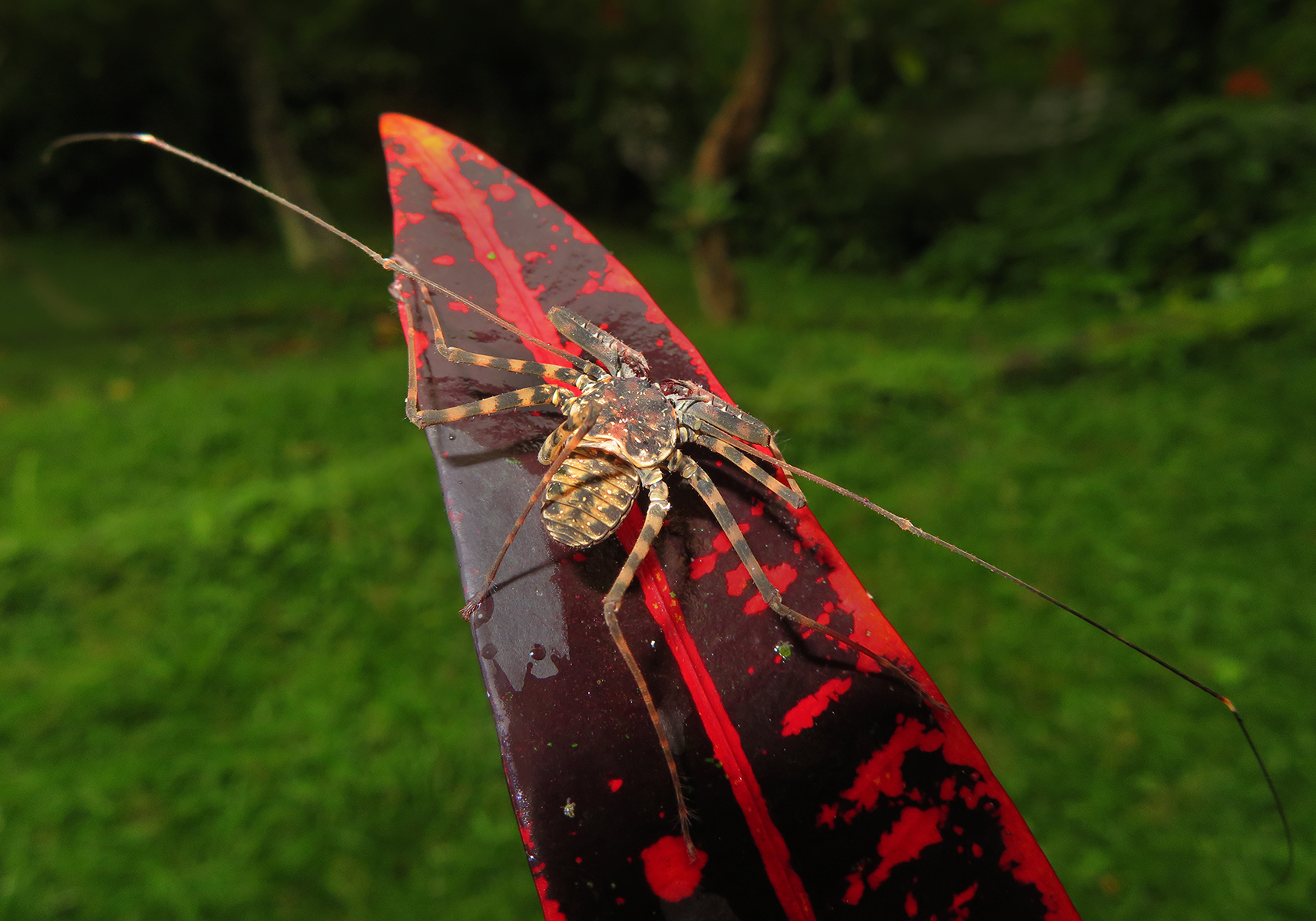
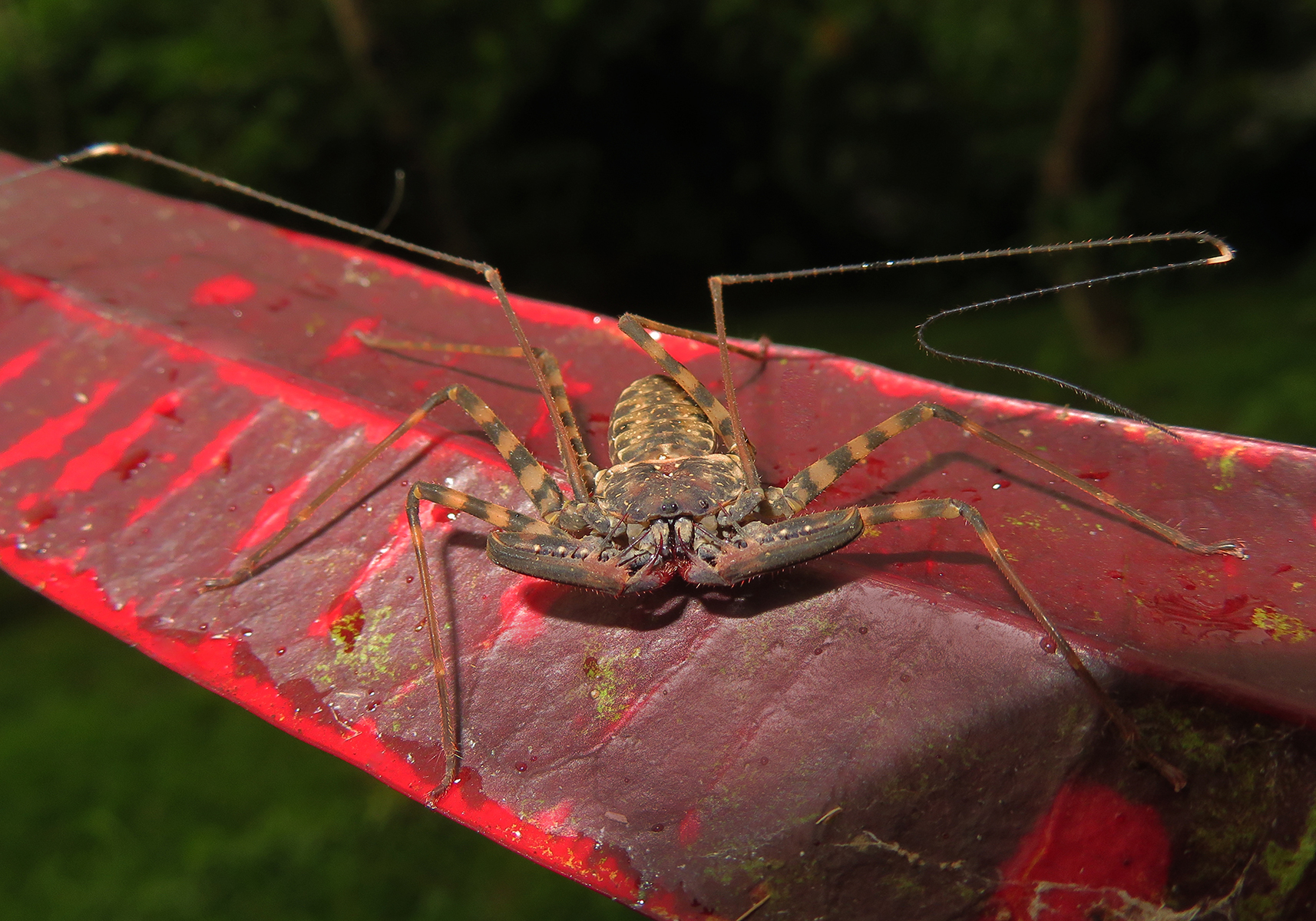
Amblypygi is an order of arachnids commonly known as whip spiders or tailless whip scorpions. Despite their intimidating appearance, they are harmless to humans, as they lack venom glands and a stinger. Amblypygids are primarily distributed in tropical and subtropical regions worldwide, where they inhabit forests, caves, and other humid environments.
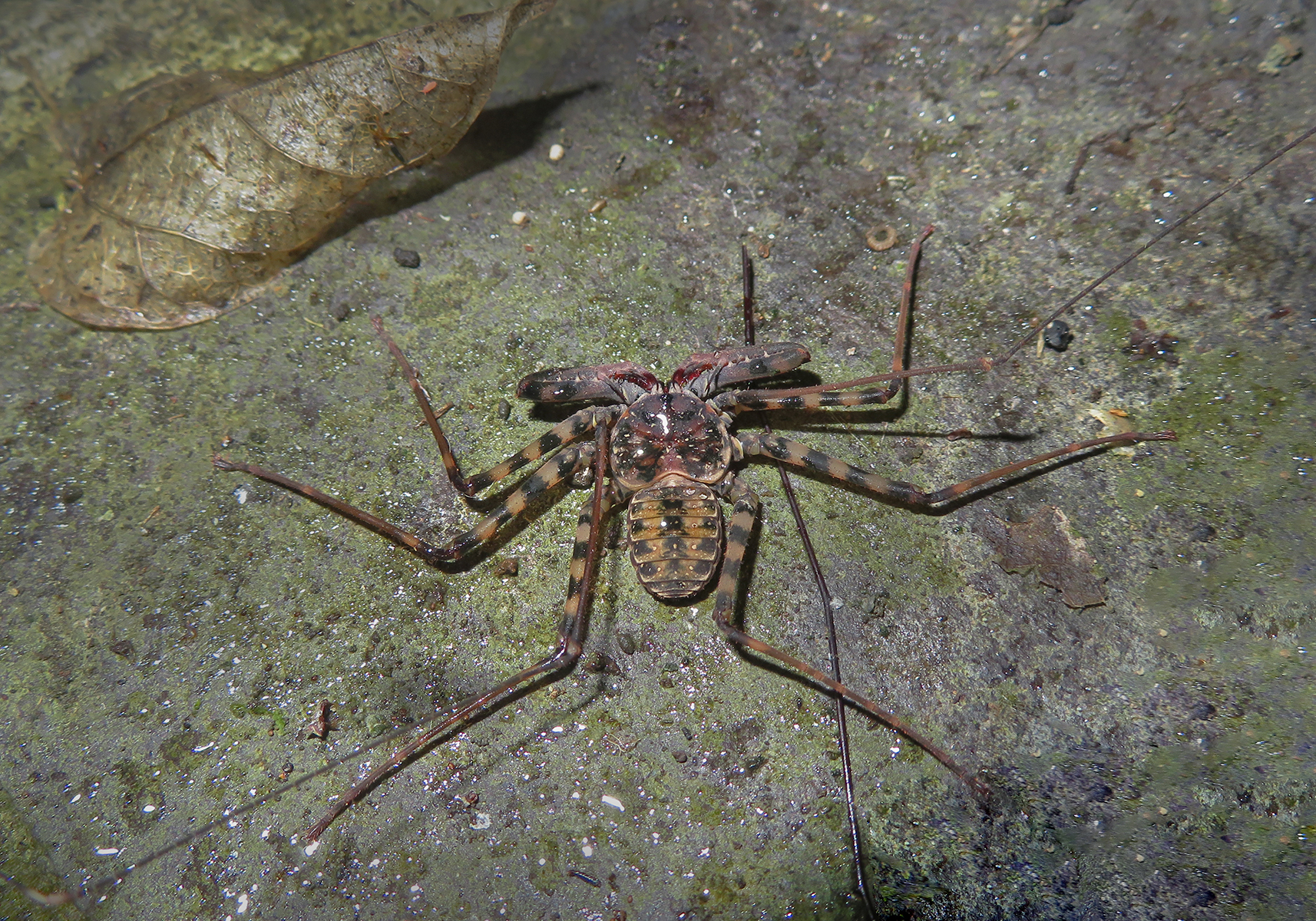
Members of Amblypygi are characterized by a flattened body and extremely elongated first pair of legs, which function as sensory appendages rather than for walking. These modified legs, often many times the body length, are covered with sensory hairs and are used to explore the surroundings, detect prey, and navigate in darkness.
The pedipalps are large, spined, and raptorial, forming powerful grasping structures used to capture prey. The remaining three pairs of legs are used for locomotion and allow sideways, crab-like movement. The abdomen is segmented but lacks a tail or stinger, distinguishing them from true scorpions.
Amblypygids are nocturnal predators, feeding mainly on insects and other small invertebrates. They ambush prey using their sensory legs to detect movement, then seize it with their spined pedipalps.
Reproduction involves a complex courtship in which the male deposits a spermatophore that the female picks up. Females carry eggs in a brood sac beneath the abdomen, and newly hatched young climb onto the mother’s back until after their first molt.
The life cycle consists of egg, multiple nymphal instars, and adult stages, with growth occurring through molting.
Order Amblypygi represents a distinctive group of ancient arachnids recognized for their flattened bodies, elongated sensory legs, raptorial pedipalps, and adaptation to nocturnal life in humid habitats.