Bali Wildlife
Every Spices Matter


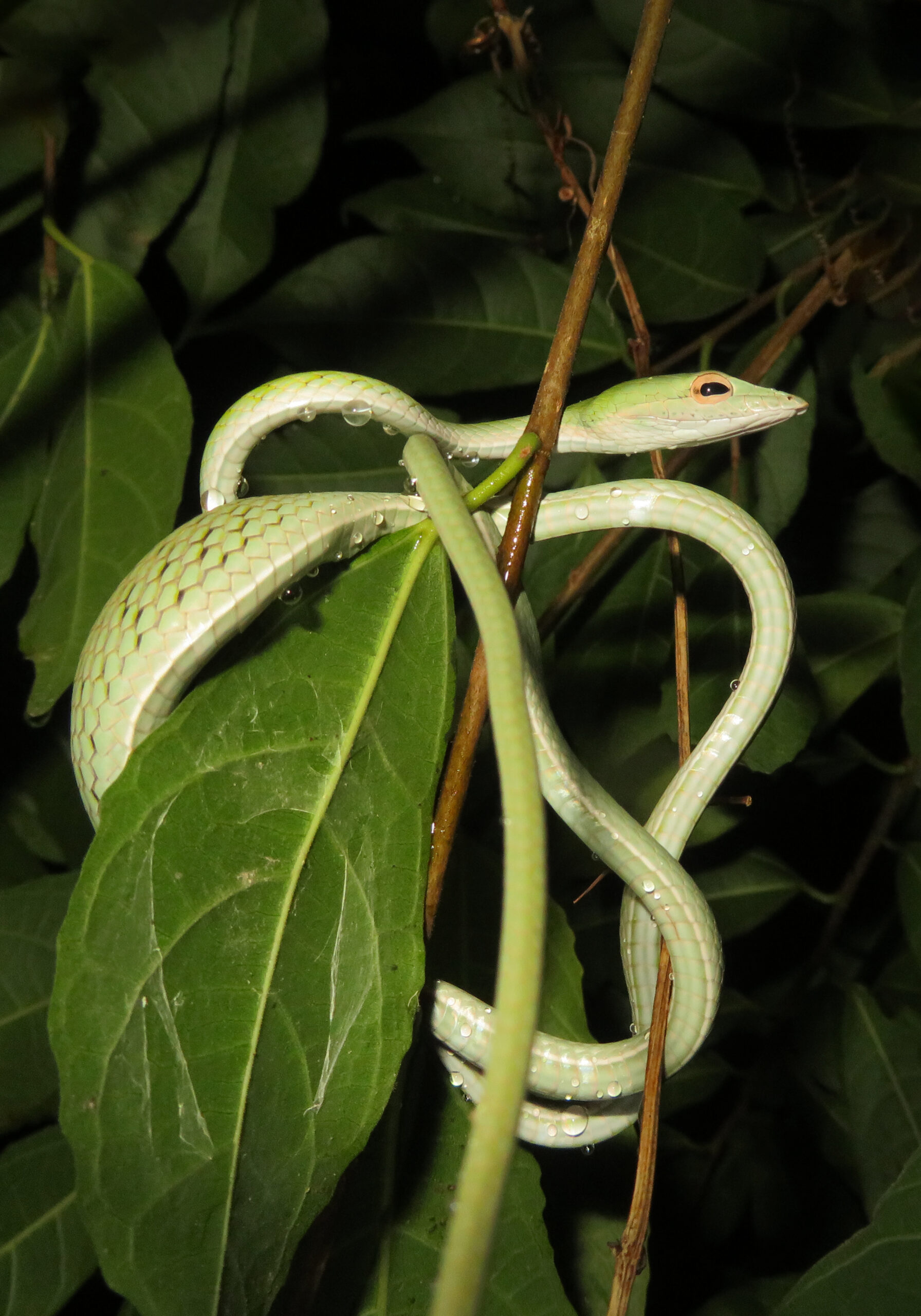
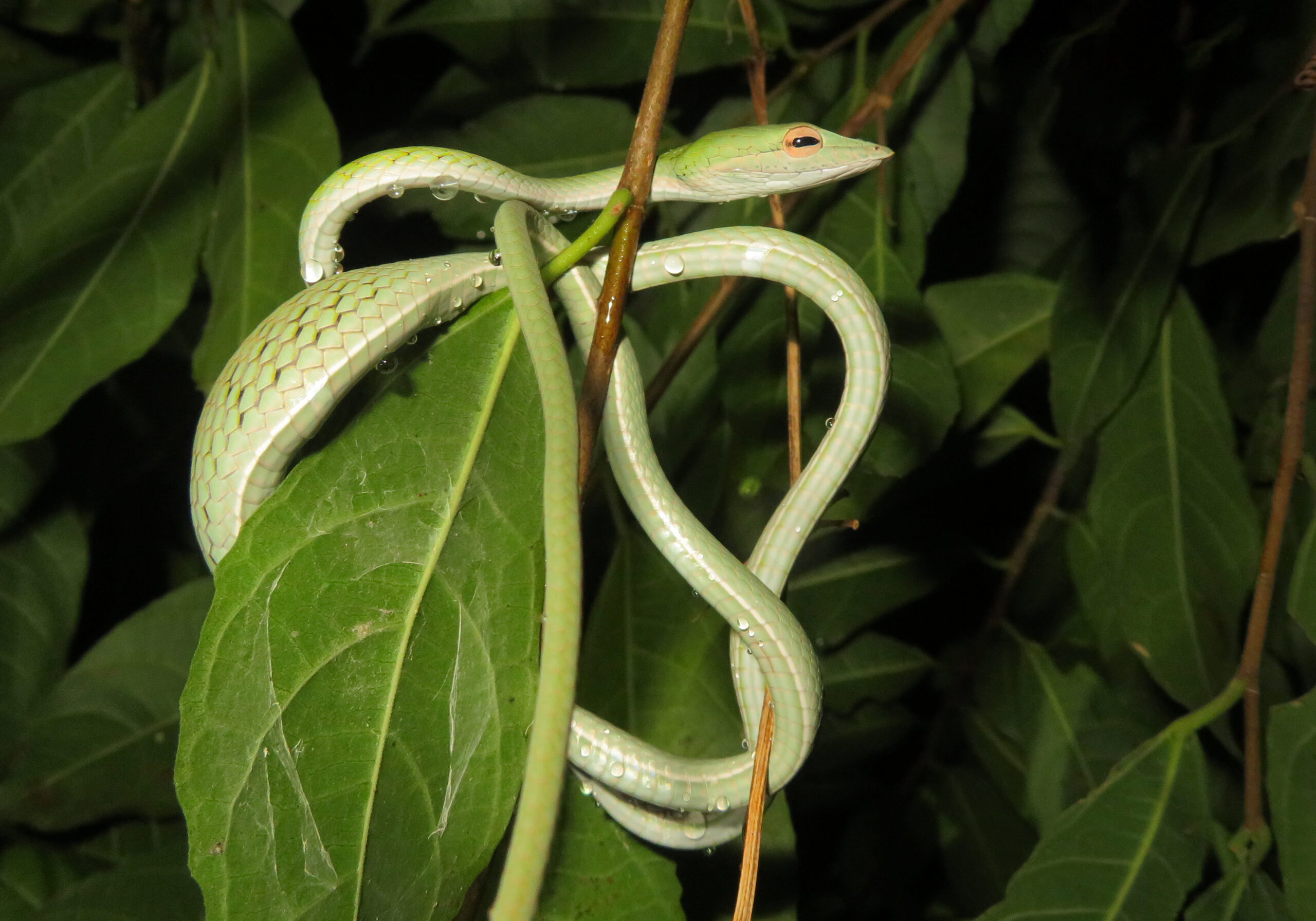
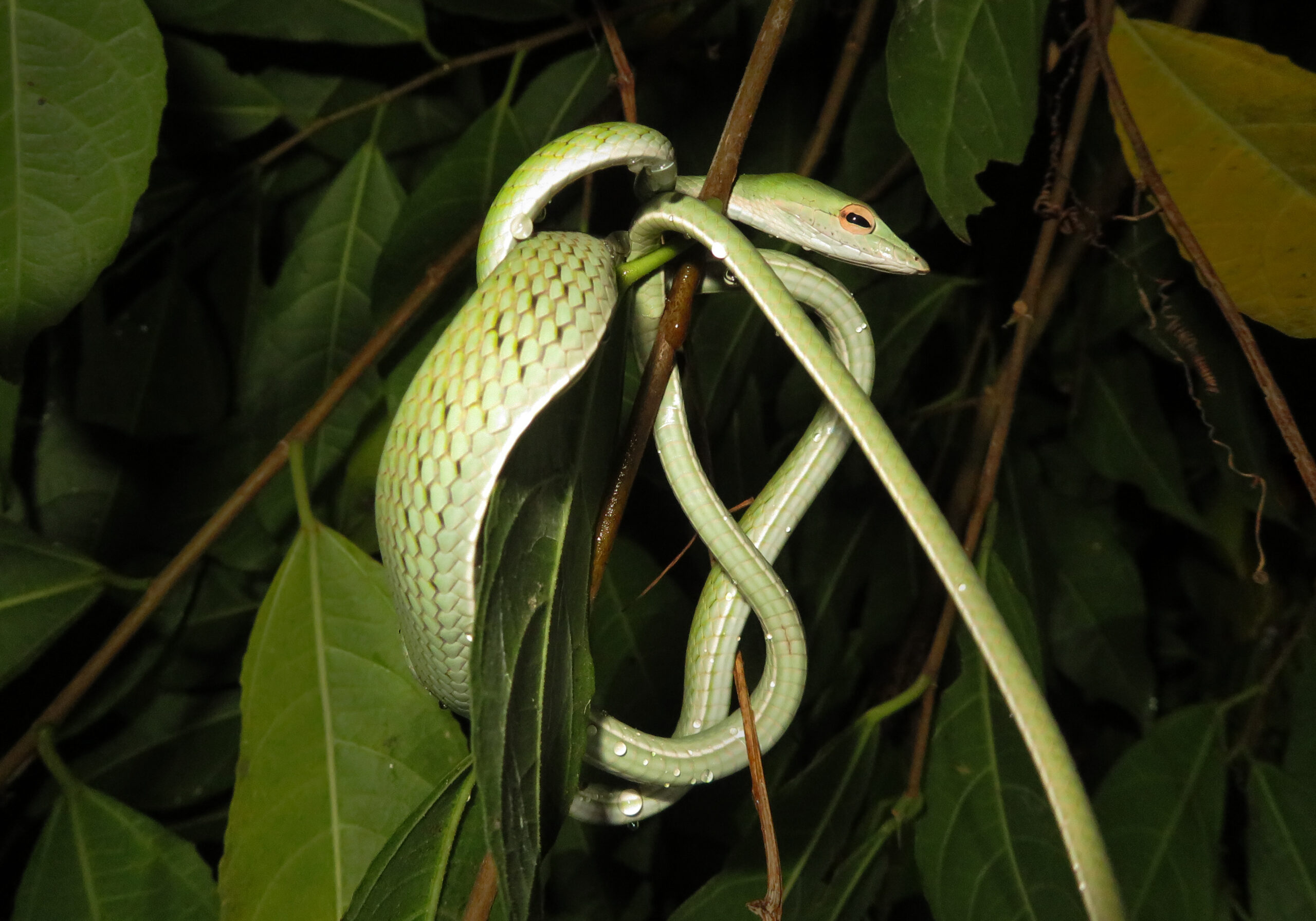
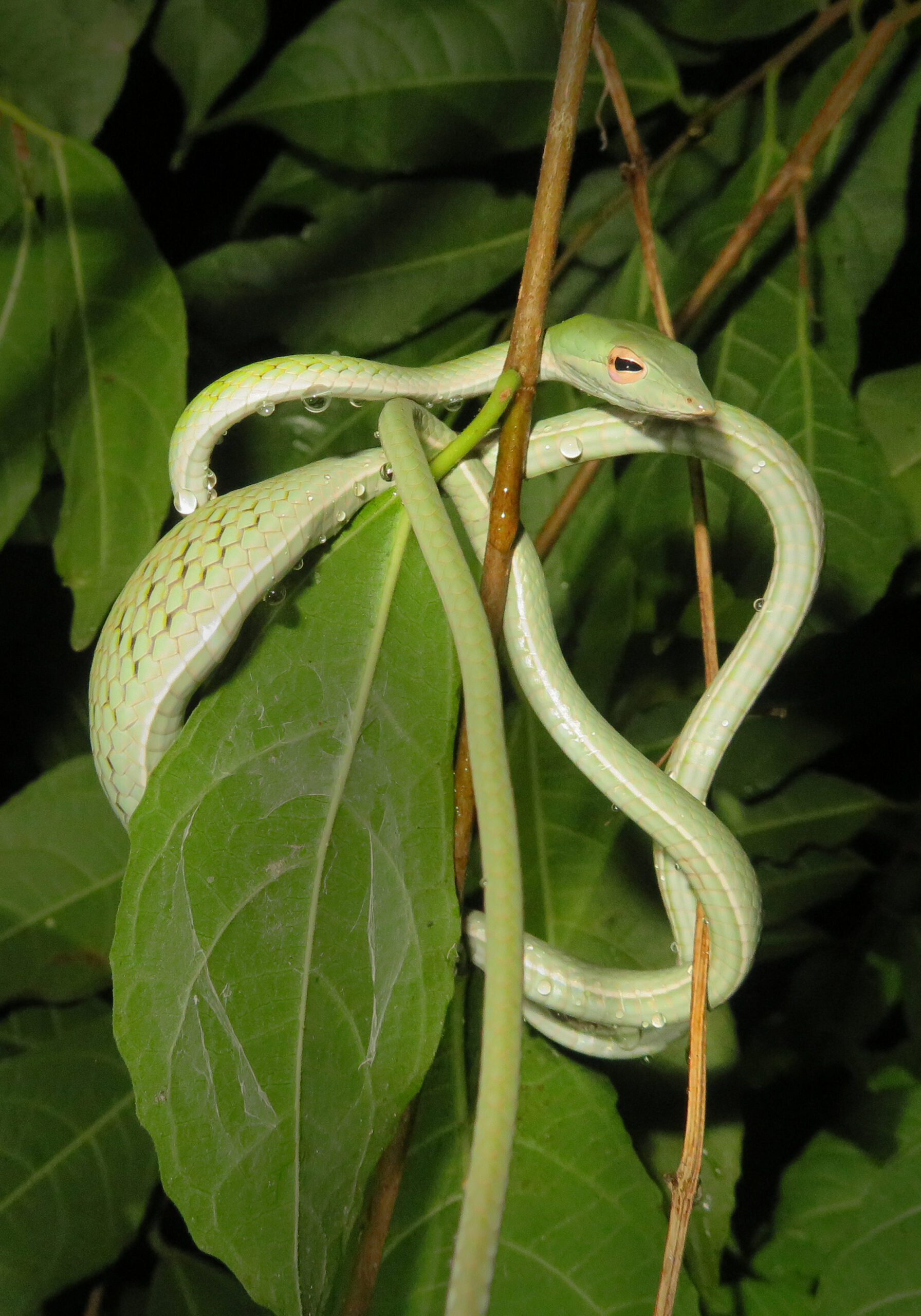
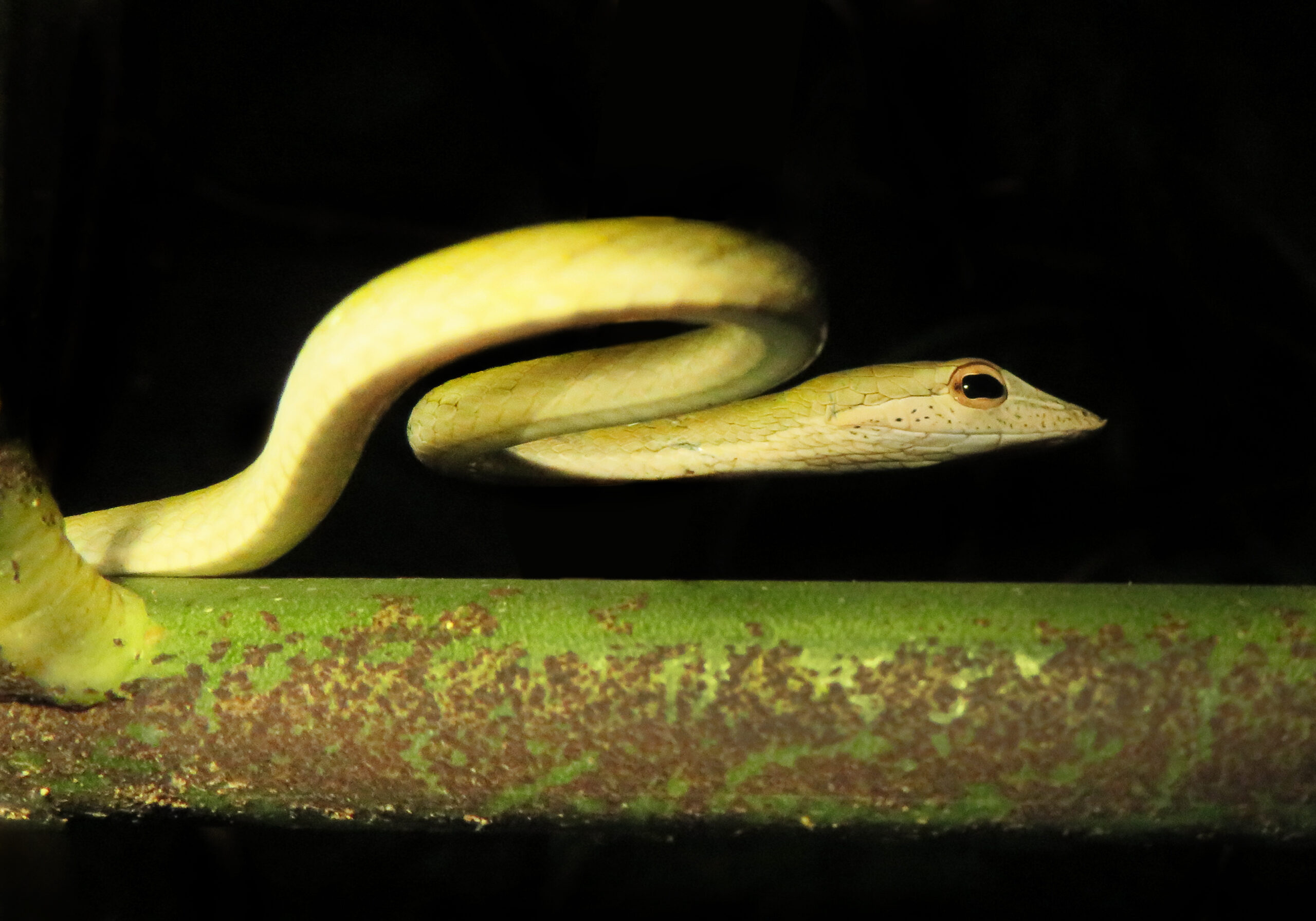
Ahaetulla prasina, commonly known as the Oriental whip snake or Asian vine snake, is an arboreal species within the genus Ahaetulla, family Colubridae, order Squamata, and suborder Serpentes.
This species is widely distributed across South and Southeast Asia, including Indonesia, Malaysia, Thailand, Singapore, and the Philippines. It inhabits tropical rainforests, secondary forests, plantations, mangroves, and even suburban gardens. As a highly arboreal snake, it spends most of its time in shrubs and trees, where it relies on camouflage to remain undetected.
Ahaetulla prasina is characterized by its extremely slender, elongated body and sharply pointed snout. Adults typically reach 1–1.5 meters in total length. The most common coloration is bright green, although brown or gray morphs also occur. The species has large eyes with distinctive horizontal pupils, providing excellent depth perception for hunting among branches.
It is a diurnal predator that feeds primarily on lizards, frogs, and occasionally small birds. Like other members of its genus, it is rear-fanged (opisthoglyphous) and possesses mild venom used to subdue prey. While it may display defensive behaviors such as gaping its mouth to reveal a contrasting interior coloration, it is generally not considered dangerous to humans.
Reproduction is viviparous, with females giving birth to live young. Ecologically, Ahaetulla prasina plays an important role as a mid-level arboreal predator, contributing to the balance of small vertebrate populations in forest ecosystems.