Bali Wildlife
Every Spices Matter


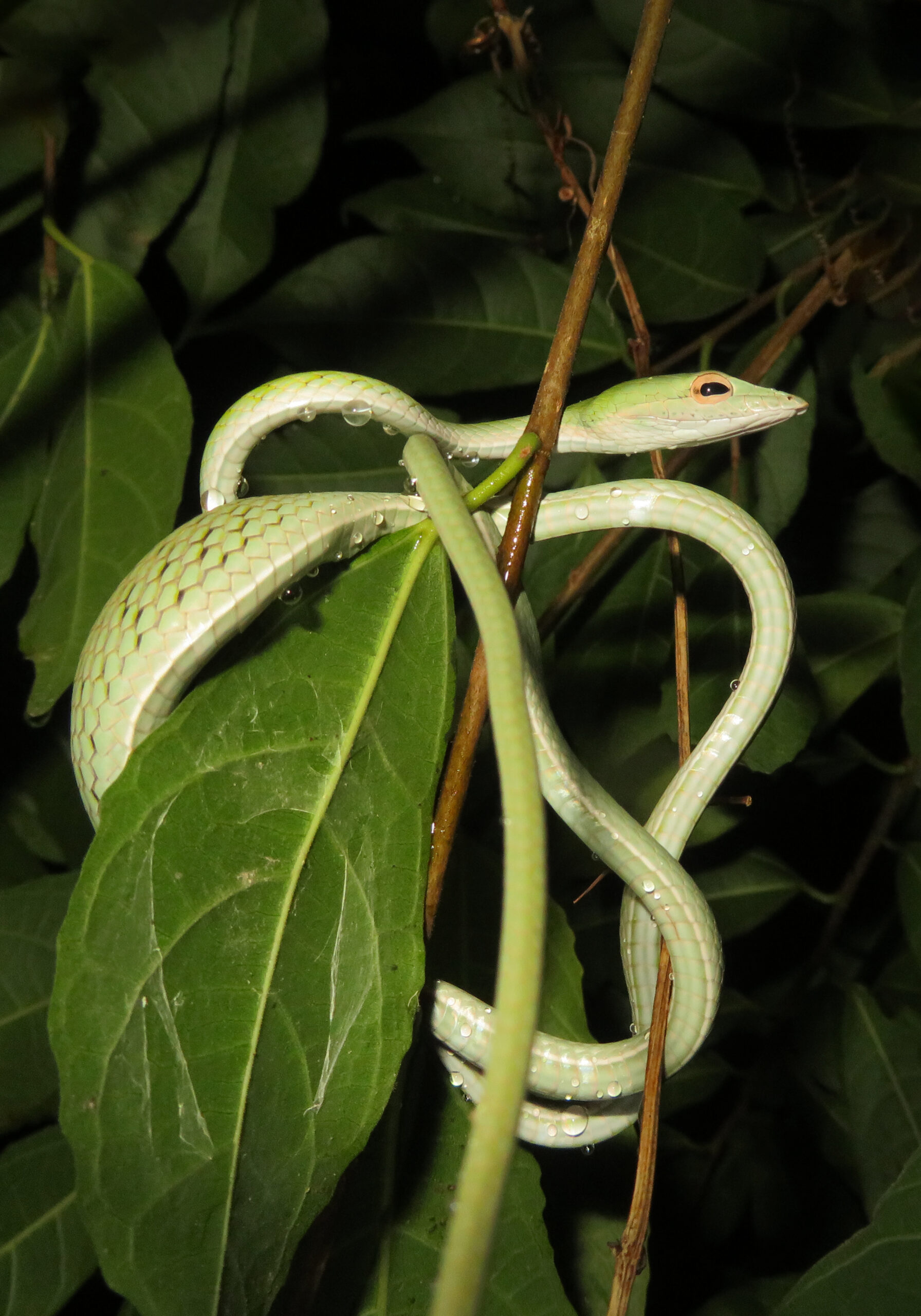
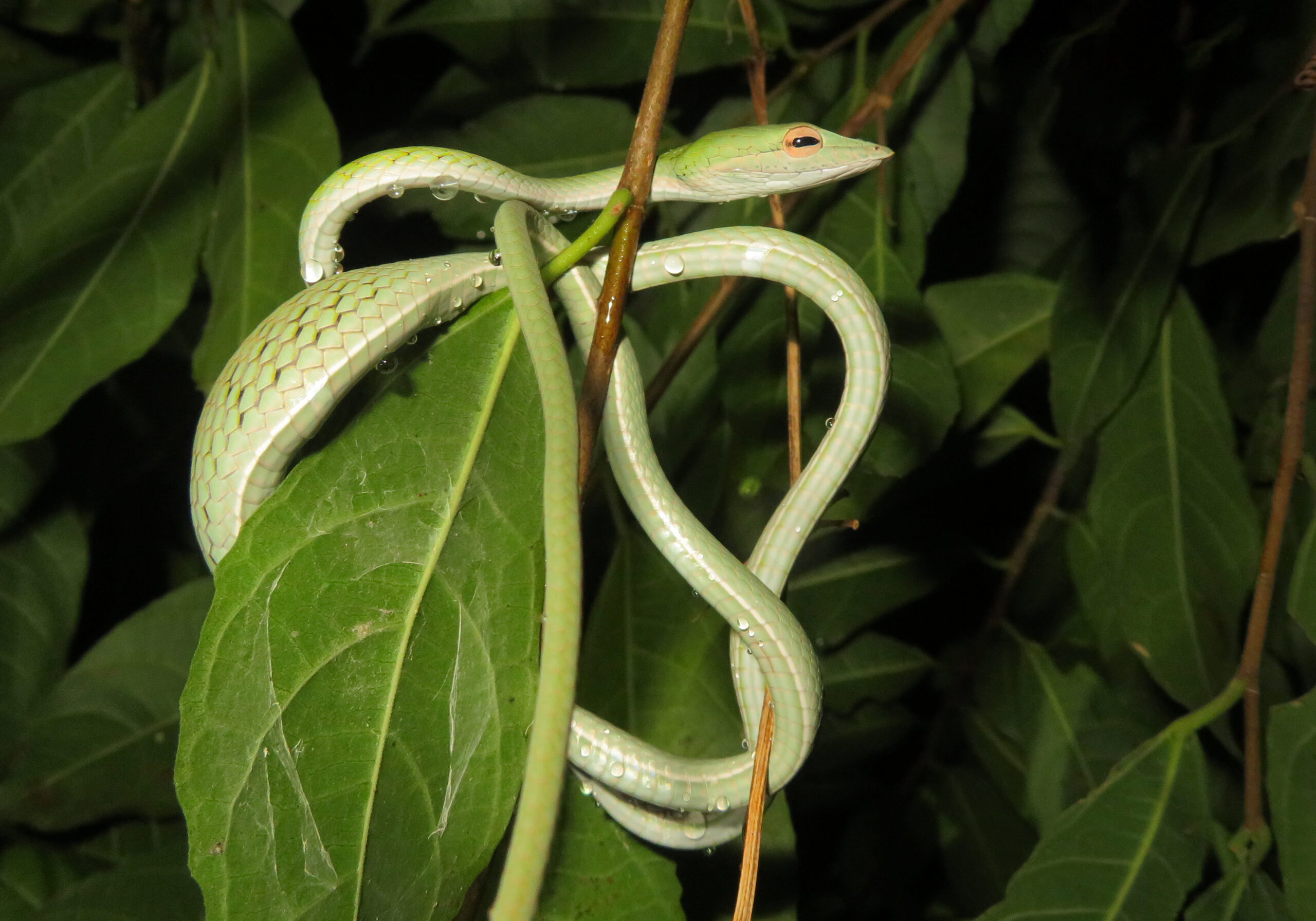
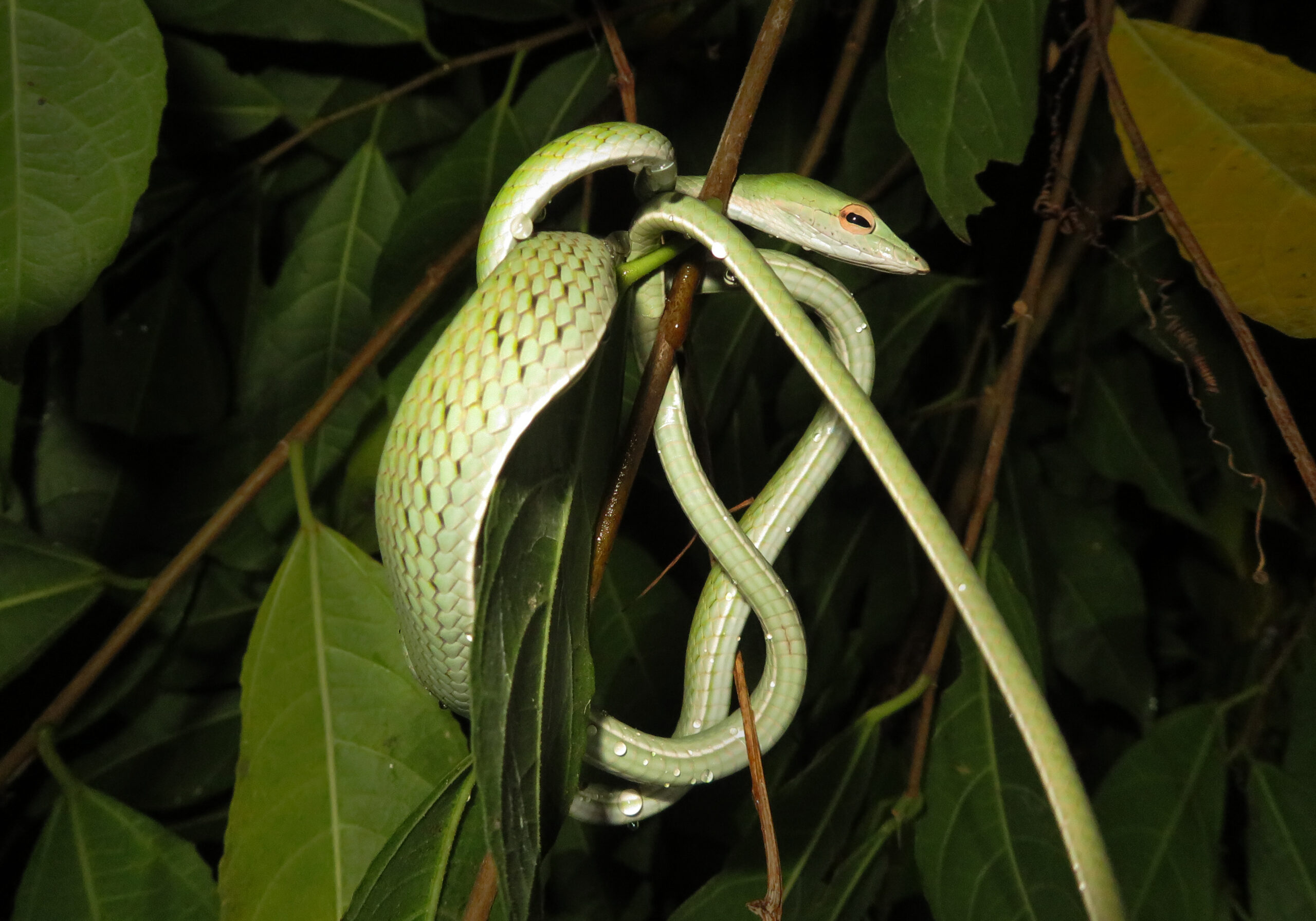
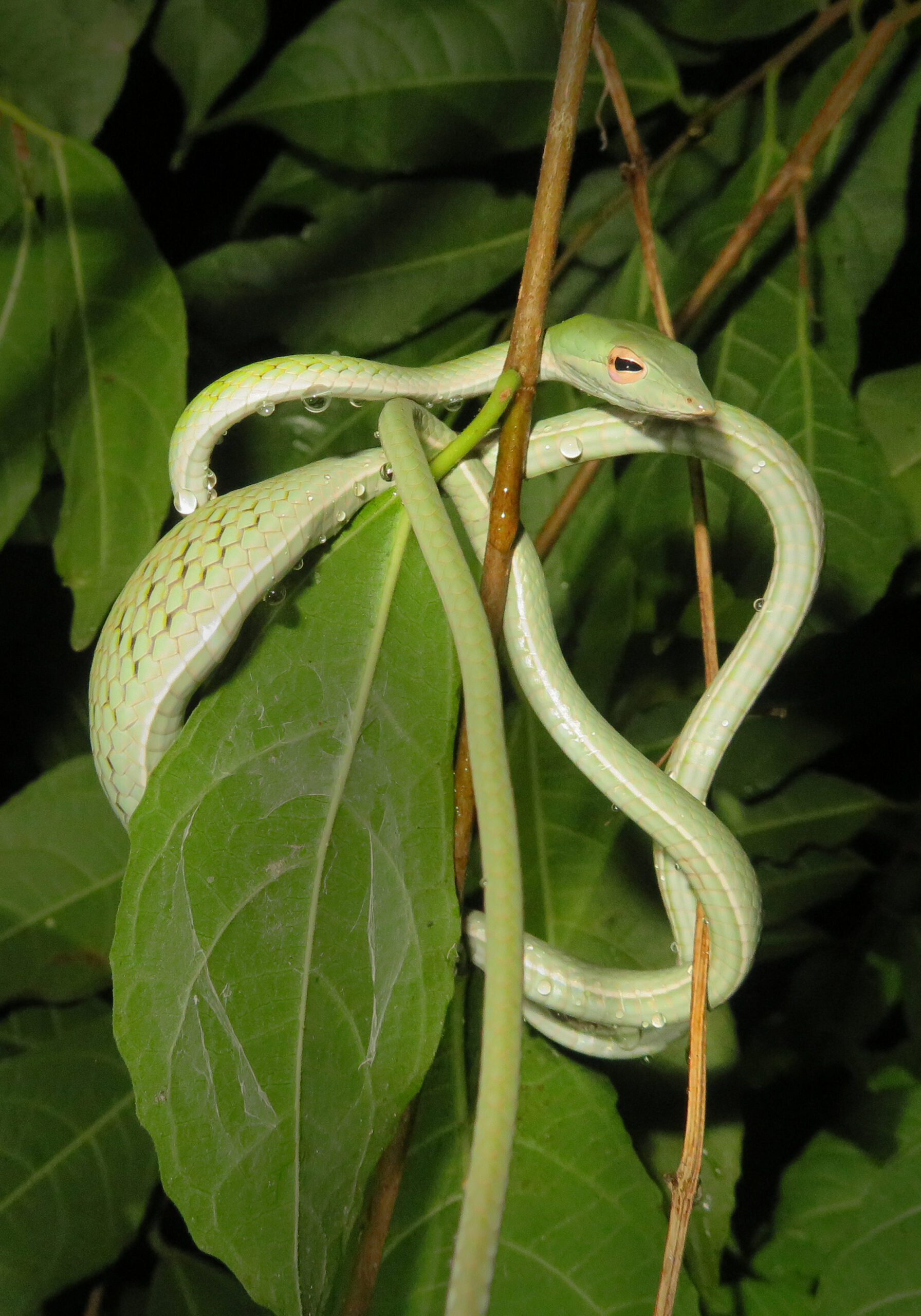
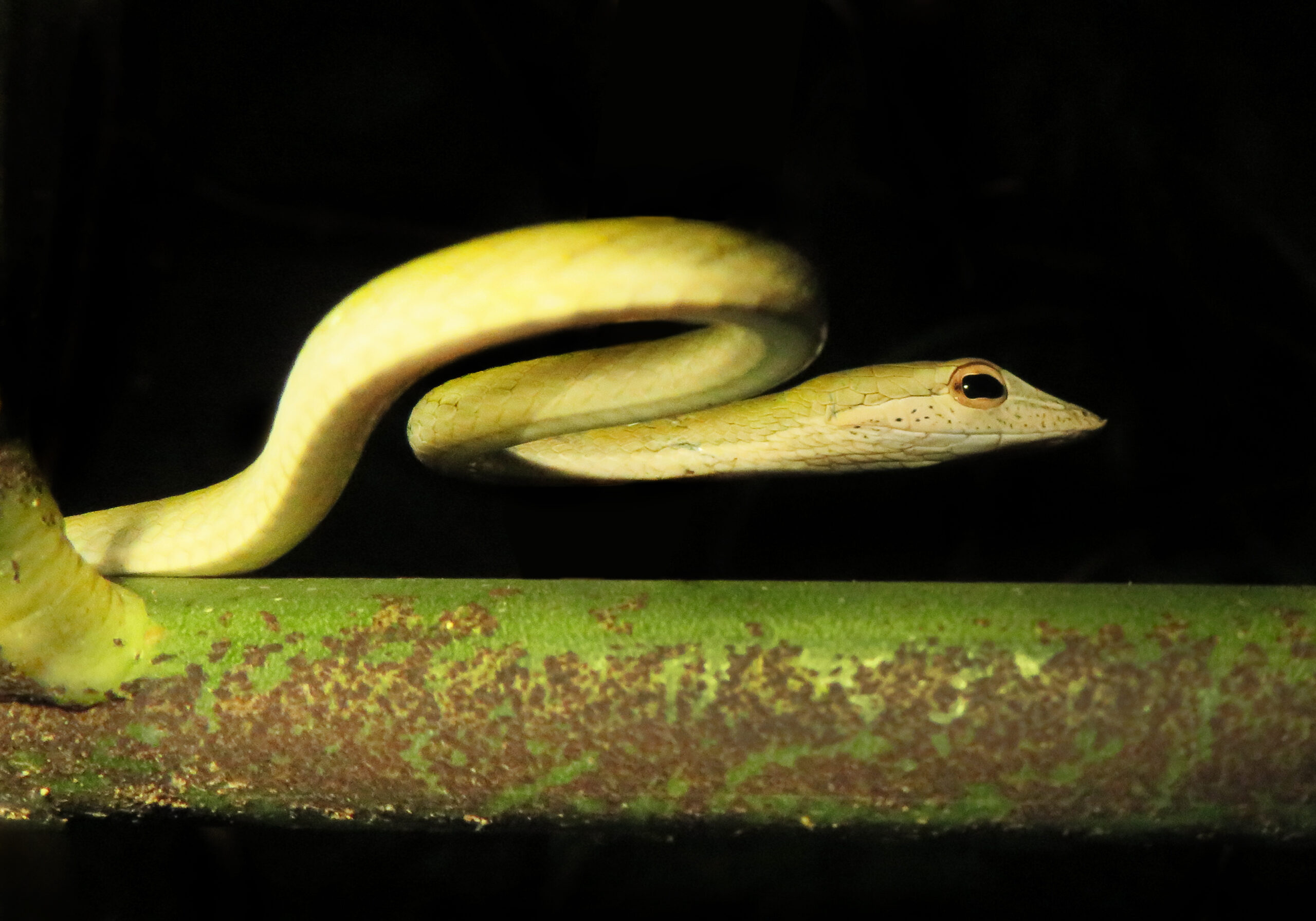
Ahaetulla is a genus of arboreal snakes within the family Colubridae, order Squamata, and suborder Serpentes. Members of this genus are commonly known as Asian vine snakes or whip snakes due to their slender bodies and elongated appearance.
Species of Ahaetulla are distributed throughout South and Southeast Asia, inhabiting tropical and subtropical forests, plantations, mangroves, and gardens. They are highly arboreal and are typically found in shrubs, bushes, and tree canopies, where their coloration provides excellent camouflage among foliage.
Morphologically, Ahaetulla snakes are characterized by extremely slender, elongated bodies and long, pointed snouts. Their eyes are relatively large with horizontal pupils, providing enhanced depth perception useful for hunting in trees. Coloration varies by species but often includes bright green, brown, or gray tones, sometimes with subtle patterns or lateral stripes.
These snakes are diurnal predators that primarily feed on lizards, frogs, and small birds. They are rear-fanged (opisthoglyphous) and possess mild venom used to immobilize prey. While they may bite if threatened, they are generally not considered medically significant to humans.
Reproduction in Ahaetulla varies among species, with many being viviparous (giving birth to live young). Ecologically, they play an important role as arboreal predators, helping to regulate small vertebrate populations within forest ecosystems.