

Sunbeam Snakes (Genus Xenopeltis)
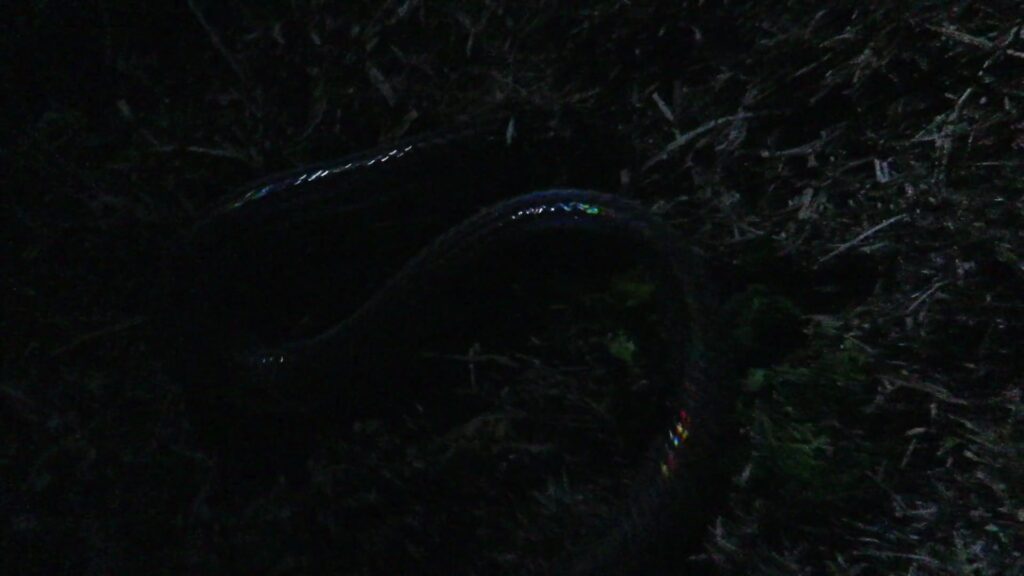
Xenopeltis is a genus of nonvenomous snakes belonging to the family Xenopeltidae within the order Squamata. Its members are commonly known as sunbeam snakes because their smooth, glossy scales produce striking rainbow-like iridescence when illuminated by sunlight. These snakes are native to South and Southeast Asia, where they inhabit warm, humid environments and spend much of their time concealed beneath the ground or within leaf litter. The genus is distinctive for its unusual scale structure, cylindrical body shape, and secretive, burrowing lifestyle.
Members of Xenopeltis have elongated, muscular bodies covered with smooth, tightly arranged scales. Their coloration is typically dark brown, blackish, or purplish, while the underside is usually paler, often grayish or cream-colored. The most remarkable feature is the iridescence of the scales, which reflects light in vivid shades of blue, green, violet, and rainbow-like colors depending on the viewing angle. This effect results from the physical structure of the scales rather than from bright pigments alone.
The head of a Xenopeltis snake is relatively small and only slightly distinct from the neck. Its streamlined shape helps the animal move through loose soil, beneath vegetation, and into narrow spaces. The eyes are relatively small, reflecting its secretive lifestyle, while the body is strong enough to push through soil and other ground materials. Unlike highly specialized aquatic or arboreal snakes, Xenopeltis is primarily adapted to life on or beneath the ground.
The genus occurs across parts of South and Southeast Asia, including northeastern India, Bangladesh, Myanmar, Thailand, Cambodia, Laos, Vietnam, Malaysia, and Indonesia. Its distribution varies among species, and individual populations occupy different combinations of forest, agricultural, and residential habitats. Sunbeam snakes are often associated with moist soil, tropical forests, forest edges, plantations, gardens, and areas with abundant leaf litter. Such environments provide suitable hiding places, burrowing opportunities, and access to prey.
The genus includes the common sunbeam snake (Xenopeltis unicolor) and the Hainan sunbeam snake (Xenopeltis hainanensis). Xenopeltis unicolor is the more widely known species and has an extensive distribution across Southeast Asia and nearby regions. It is recognized by its dark, glossy body and brilliant iridescent scales. Xenopeltis hainanensis is associated with Hainan Island in southern China and is distinguished as a geographically more restricted species. Their differences in distribution and other characteristics contribute to the diversity within the genus.
Species of Xenopeltis are carnivorous and feed on a variety of small vertebrates, including frogs, lizards, other snakes, and small mammals. They search for prey among leaf litter, beneath logs, within soil, and in other sheltered locations. As nonvenomous snakes, they rely on their muscular bodies and jaws to restrain prey before swallowing it whole. Their flexible bodies and secretive hunting behavior enable them to exploit prey in spaces that may be inaccessible to larger or more surface-oriented predators.
Sunbeam snakes are generally elusive and may be encountered at the surface during humid weather or after rainfall. During the day, they often remain hidden beneath stones, fallen logs, leaf litter, or underground. When threatened, they usually attempt to escape into cover. If captured or handled, they may bite defensively or release unpleasant-smelling secretions. Despite their unusual appearance, they are not considered medically dangerous to humans because they lack venom-delivery adaptations.
Reproduction in Xenopeltis is oviparous, meaning that females lay eggs. The eggs are deposited in sheltered locations where temperature and humidity support embryonic development. Hatchlings emerge as small, independent snakes with the same characteristic iridescent scales as adults. Although the general reproductive pattern is known, detailed information about breeding seasons, clutch sizes, and incubation periods remains limited for some populations.
Ecologically, Xenopeltis contributes to the regulation of small vertebrate populations and forms part of the food web in tropical and subtropical environments. These snakes may themselves be preyed upon by larger snakes, birds of prey, and other predators. Their burrowing habits and preference for concealed habitats make them relatively difficult to observe, so their abundance and local distribution may be underestimated.
Overall, Xenopeltis is a distinctive genus of Asian snakes recognized for its cylindrical body, smooth iridescent scales, nonvenomous nature, and largely subterranean lifestyle. Its members are well adapted to warm, humid habitats and play a role as predators of small vertebrates. Although secretive and rarely seen, sunbeam snakes are notable representatives of Asian reptile diversity and illustrate the remarkable structural adaptations found among snakes.