

Deer (Family Cervidae)
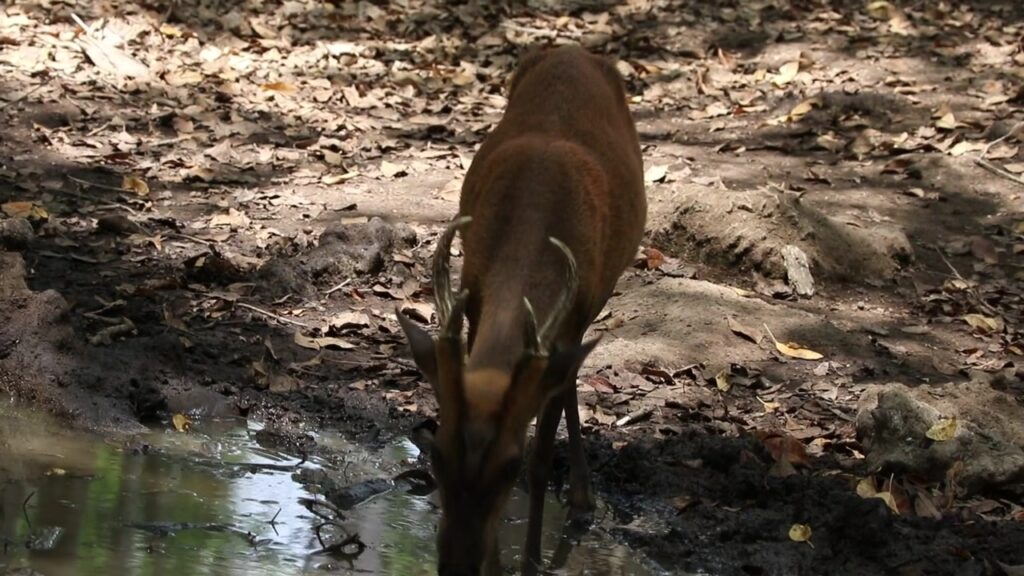
The family Cervidae comprises deer, a diverse group of hoofed mammals belonging to the order Artiodactyla, within the class Mammalia. Deer are widely distributed across the Americas, Europe, Asia, and parts of North Africa, with introduced populations occurring in other regions, including Australia and New Zealand. They occupy a broad range of habitats, from tropical rainforests and temperate woodlands to grasslands, wetlands, mountainous regions, and tundra. Cervids are recognized by their slender legs, cloven hooves, elongated muzzles, and, in most species, the presence of antlers in adult males. They play important ecological roles as herbivores, influencing vegetation structure, nutrient cycling, and the dynamics of many terrestrial ecosystems.
Members of Cervidae vary considerably in size, appearance, and ecological adaptations. The family includes small species, such as pudus, as well as large species such as moose and elk. Their body proportions reflect their respective habitats and lifestyles. Forest-dwelling deer often possess relatively compact bodies and manoeuvrable limbs that allow them to move through dense vegetation, while species inhabiting open landscapes may have longer legs suited to running across grasslands and plains. Their coats range from reddish brown and chestnut to grey, dark brown, or nearly black, often becoming paler during certain seasons. Many species have white markings on the throat, belly, rump, or tail, while fawns commonly possess white spots that provide camouflage among patches of sunlight and vegetation.
One of the most distinctive characteristics of deer is the presence of antlers, which are bony structures that usually grow from the frontal bones of the skull. Unlike the permanent horns of bovids, antlers are generally shed and regrown annually by most cervid species. During growth, antlers are covered by a vascular skin known as velvet, which supplies oxygen and nutrients to the developing bone. Once growth is complete, the velvet dries and is rubbed away. Antlers vary greatly in form, ranging from the simple spikes of some young or small-bodied deer to the broad, branching structures of mature stags. In most species, antlers occur primarily in males, although female reindeer, also known as caribou, commonly grow them as well. Antlers function mainly in sexual competition and social display, helping males establish dominance and access to mates.
The skull and sensory organs of cervids are adapted to detecting predators, locating food, and communicating with other members of their species. Deer generally possess large eyes positioned on the sides of the head, providing a wide field of vision that helps them detect movement around them. Their ears are mobile and sensitive to sounds, while their sense of smell is highly developed. Scent glands in different parts of the body produce chemical signals that can convey information about identity, reproductive condition, and territorial activity. Deer also communicate through vocalizations, body postures, and physical displays. Alarm calls, snorts, grunts, and other sounds vary among species and may be used during courtship, aggression, or interactions between mothers and offspring.
Cervids are native to a wide variety of environments throughout the Northern Hemisphere and parts of the Southern Hemisphere. Their natural distributions include boreal forests, temperate deciduous forests, tropical forests, shrublands, savannas, alpine meadows, and Arctic tundra. Different species exhibit specialized habitat preferences, with some relying on dense forest cover for shelter and others depending on open grasslands for feeding and predator detection. Many deer are adaptable and can also inhabit agricultural areas, plantations, suburban landscapes, and the edges of expanding settlements. Their abundance is influenced by vegetation availability, climate, predation, hunting pressure, disease, and competition with other herbivores.
The diet of Cervidae consists mainly of plant material, although feeding preferences differ considerably among species. Most deer consume leaves, grasses, shoots, herbs, fruits, flowers, buds, and young branches. Some species browse primarily on woody vegetation, while others graze more extensively on grasses and sedges. Many are intermediate feeders that adjust their diets according to seasonal food availability. Like other ruminants, deer possess a multi-chambered stomach containing microorganisms that help break down plant material and ferment cellulose. Food is initially swallowed and later regurgitated as cud, which is chewed again before further digestion. This process allows cervids to extract nutrients from vegetation that would be difficult for many other mammals to digest efficiently.
Deer have evolved a range of behaviours that help them avoid predators and exploit seasonal resources. Many species are most active during dawn and dusk, although activity patterns vary with habitat, temperature, human disturbance, and predator presence. They commonly move between feeding areas and sheltered resting sites, sometimes following established trails. Some species are solitary or form small family groups, while others gather in larger herds, particularly during migration or periods of abundant food. Group living can improve predator detection, although it may also increase competition for resources. Certain cervids undertake seasonal migrations between summer and winter ranges, travelling long distances to access suitable forage and avoid harsh environmental conditions.
Reproduction in Cervidae is strongly influenced by seasonal changes in temperature, food availability, and day length. In many species, the breeding period, known as the rut, occurs during a particular season of the year. Males compete for access to females through displays, vocalizations, scent marking, and, in antlered species, physical contests. Dominant males may defend groups of females or control access to breeding territories. Following mating, gestation typically lasts several months, with duration varying by species. Most deer give birth to one offspring at a time, although twins occur in some species. Newborn fawns are generally able to stand and move shortly after birth, and many possess spotted coats that help conceal them from predators. Mothers nurse their young and may hide them in vegetation during the early stages of life.
The family Cervidae includes several major evolutionary lineages, traditionally divided into the subfamilies Cervinae and Capreolinae. Cervinae includes species such as red deer, elk in the European sense, sika deer, fallow deer, and muntjacs. Capreolinae includes roe deer, reindeer, moose, and many New World deer, including white-tailed deer and mule deer. The precise classification of some groups has changed with advances in molecular phylogenetics. Although the family is broadly united by shared anatomical and evolutionary characteristics, its members exhibit substantial variation in antler structure, body size, social organization, and habitat preference. This diversity reflects a long evolutionary history of adaptation to different environments and ecological conditions.
Ecologically, deer are influential herbivores that affect the structure and composition of plant communities. By browsing seedlings, grazing grasses, and consuming shrubs, they can alter vegetation growth and influence forest regeneration. Their movements redistribute nutrients through dung and urine, while their carcasses provide food for scavengers and decomposers. Deer also serve as important prey for large carnivores, including wolves, bears, cougars, and tigers in parts of their respective ranges. However, where deer populations become unusually dense because of reduced predation, habitat changes, or human management, excessive browsing can damage forests, reduce plant diversity, and affect other wildlife. Their ecological influence therefore depends on population density, habitat conditions, and the presence of predators and competing herbivores.
Several cervid species have considerable cultural, economic, and conservation significance. Deer have long been hunted for meat, hides, antlers, and other materials, and some species are managed for wildlife tourism or maintained in parks and deer farms. At the same time, habitat loss, fragmentation, illegal hunting, road collisions, and disease threaten many populations. Some species have declined sharply because of restricted distributions and intense human pressure, whereas others have expanded substantially in modified landscapes. Conservation measures include habitat protection, restoration of migration corridors, regulation of hunting, population monitoring, and management of human–wildlife conflicts. The conservation status of individual species varies widely, so the family as a whole cannot be assigned a single level of risk.
Overall, Cervidae represents a highly diverse family of hoofed mammals distinguished by antler development in most species, specialized herbivorous digestion, and a wide range of behavioural and ecological adaptations. From the small deer of tropical forests to the large cervids of northern forests and tundra, members of the family occupy important positions in terrestrial food webs. Their feeding, reproduction, migration, and interactions with predators help shape the ecosystems they inhabit, making them valuable subjects for studies of mammalian evolution, wildlife ecology, and biodiversity conservation.