

Hammerhead Worms (Subfamily Bipaliinae)
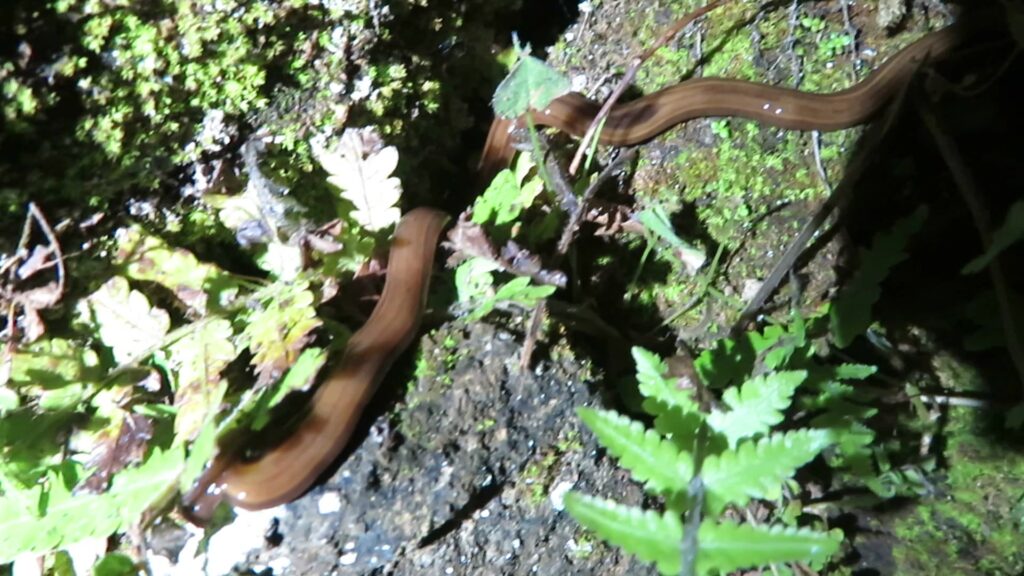
Subfamily Bipaliinae is a group of terrestrial flatworms belonging to the family Geoplanidae within the order Tricladida and the phylum Platyhelminthes. Commonly known as hammerhead worms, members of this subfamily are distinguished by their elongated, flattened bodies and characteristically expanded, hammer-shaped or crescent-shaped heads. They occur primarily in tropical and subtropical regions, especially in moist terrestrial environments such as forests, gardens, agricultural land, and shaded areas beneath leaf litter, logs, and stones. Their bodies vary in length and coloration, with some species displaying dark brown, black, yellow, orange, or pale longitudinal stripes. The distinctive head shape bears sensory structures that assist in detecting chemical cues and locating prey. Bipaliinae species are carnivorous predators that commonly feed on earthworms and other small soil-dwelling invertebrates. They capture prey using muscular movements and adhesive secretions, while their muscular pharynx helps ingest food. Like other planarians, they lack specialized circulatory and respiratory systems, relying on diffusion across their moist body surfaces for gas exchange. Locomotion occurs primarily through ciliary movement along a layer of mucus, supplemented by muscular contractions that allow them to glide across soil and other surfaces. Many members possess remarkable regenerative abilities, enabling them to restore lost body parts under suitable conditions. Reproduction may occur sexually through egg capsules or asexually through fragmentation in certain species. Although native species inhabit parts of Asia and surrounding regions, some bipaliines have been introduced to other continents through the transport of soil, nursery plants, and horticultural materials. In introduced areas, they may affect soil ecosystems by preying on earthworms and other invertebrates that contribute to soil structure and nutrient cycling. Their spread can therefore raise ecological concerns, particularly where native soil fauna are vulnerable. Through their unusual morphology, predatory behavior, and regenerative capacity, members of Bipaliinae represent a distinctive group of terrestrial flatworms with important ecological implications.