

Achatininan Snails (Suborder Achatinina)
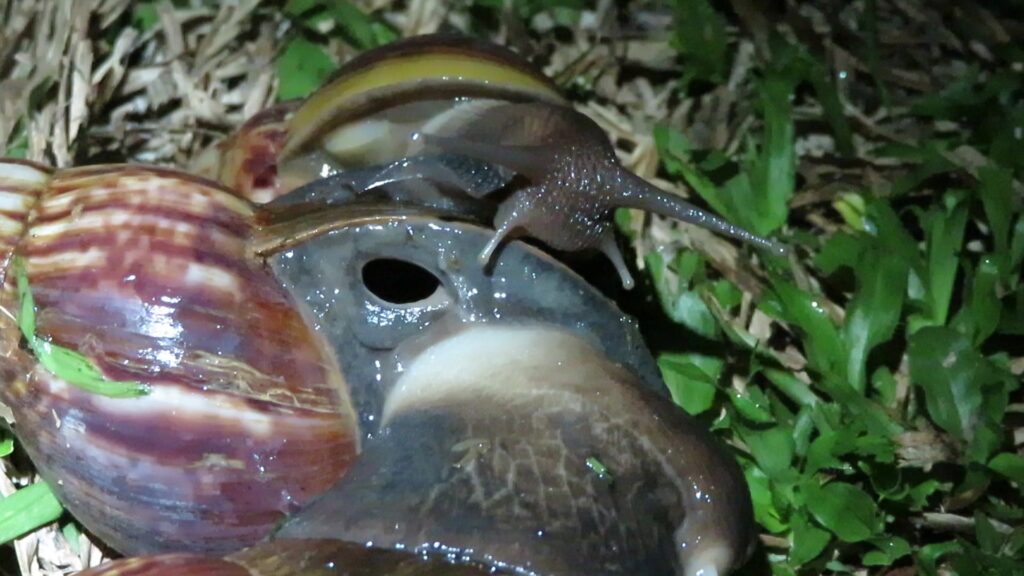
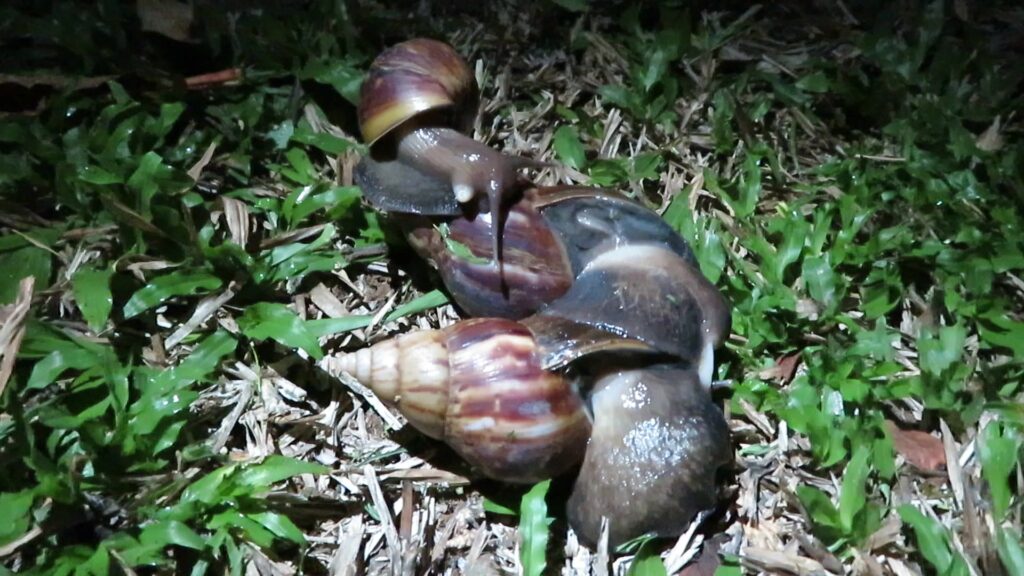
Achatinina is a taxonomic grouping of land snails within the class Gastropoda, phylum Mollusca. The name is associated with terrestrial gastropods and is particularly relevant to classifications of the diverse group of pulmonate snails, which breathe air using a vascularized mantle cavity functioning as a lung. The exact rank and boundaries of Achatinina vary among taxonomic systems, so its constituent families and evolutionary relationships should be interpreted according to the classification being followed. Members of the broader group are adapted to life on land and occur in environments ranging from humid tropical forests to seasonally dry habitats.
Land snails associated with this group generally possess a muscular foot, a distinct head bearing sensory tentacles, and a coiled external shell composed primarily of calcium carbonate. The shell protects the soft body against physical injury, predators, and water loss. Its shape, thickness, coloration, and degree of coiling vary among species. Many terrestrial snails have two pairs of tentacles, with the eyes located near the tips of the longer upper pair in familiar stylommatophoran forms. A mucus-producing gland on the foot allows them to glide over soil, rocks, leaves, and tree trunks while reducing friction and helping protect the body from abrasion.
The classification of Achatinina requires care because gastropod taxonomy has changed considerably with advances in anatomical and molecular research. Similar-looking land snails may belong to different evolutionary lineages, while species once grouped together on the basis of shell shape may be more distantly related than previously assumed. The name Achatinina is therefore not universally used at the same rank or with the same composition in every modern classification. It should not automatically be treated as synonymous with all land snails or with the family Achatinidae, which is a separate and more specific taxonomic unit.
Terrestrial snails occupy a wide range of habitats, including tropical rainforests, woodland, grassland, shrubland, plantations, gardens, and agricultural fields. Many species are most abundant in moist environments where decaying leaves, fungi, and other food sources are plentiful. Others can survive pronounced dry periods by withdrawing into their shells and sealing the aperture with a temporary protective layer of dried mucus known as an epiphragm. This behavior, often associated with aestivation, reduces water loss and allows the animal to remain inactive until environmental conditions improve.
Moisture is one of the most important factors governing the activity of land snails. Many species become active after rain or during humid nights, when the risk of desiccation is lower. During dry or hot periods, they may hide beneath stones, fallen logs, leaf litter, bark, or within soil crevices. Their soft bodies are vulnerable to water loss, so shelter selection and activity timing are central to survival. Some species climb vegetation or tree trunks to avoid flooded ground, escape certain predators, or locate food, while others remain largely associated with the forest floor.
Feeding habits among terrestrial gastropods are diverse. Many are herbivores or detritivores that consume leaves, algae, fungi, decaying plant material, and organic deposits on soil and rocks. Others may feed on lichens or consume animal matter, including carrion and other small invertebrates. A specialized feeding structure called the radula, a ribbon-like organ bearing rows of microscopic teeth, scrapes or cuts food into manageable particles. The number, shape, and arrangement of radular teeth vary among species and can help researchers understand their feeding ecology. By processing plant debris and organic matter, many land snails contribute to decomposition and nutrient cycling.
Reproduction in land snails varies by species, but many are hermaphrodites, possessing both male and female reproductive organs. Individuals may exchange sperm during courtship and subsequently lay eggs in moist soil, beneath leaf litter, or in protected cavities. Depending on the species, eggs may be deposited singly or in clusters. Hatchlings emerge with small shells and grow through successive periods of shell expansion as they feed and develop. Growth rates and reproductive output are strongly influenced by temperature, humidity, food availability, and the calcium needed for shell formation. Some species can reproduce rapidly under favorable conditions, while others have slower life cycles and more restricted habitat requirements.
Terrestrial snails play important ecological roles as consumers, decomposers, and prey animals. Their feeding helps break down organic material, and their waste returns nutrients to the soil. Their shells and bodies provide food for birds, mammals, reptiles, amphibians, beetles, and other predators. Calcium from snail shells may also contribute to nutrient transfer within ecosystems, particularly in habitats where calcium availability limits the growth or reproduction of other animals. Because snails respond to moisture, vegetation, soil chemistry, and habitat disturbance, some species are useful subjects for research into environmental change and terrestrial biodiversity.
Human activities affect land-snail populations in contrasting ways. Habitat destruction, deforestation, soil disturbance, pollution, and the removal of decaying vegetation can threaten species with specialized habitat requirements. Introduced predators and competition from non-native snails can also affect native communities, particularly on islands. Conversely, certain introduced land snails can become agricultural pests by feeding on cultivated plants, while some species may act as intermediate hosts for parasites of medical or veterinary importance. These concerns apply to particular species rather than to all land snails within a broad taxonomic grouping.
Conservation of terrestrial gastropods requires attention to their often small geographical ranges and specific environmental needs. Preserving humid forest microhabitats, maintaining native vegetation, protecting limestone outcrops where specialized species occur, and avoiding unnecessary disturbance of leaf litter can benefit many land snails. Accurate identification is essential because some rare native species resemble widespread or introduced forms. Taxonomic revisions, ecological surveys, and genetic research are also important for determining the actual diversity and conservation status of poorly studied populations.
Overall, Achatinina is a name used in the classification of terrestrial gastropods, but its precise taxonomic rank and membership depend on the system adopted. The land snails associated with these classifications illustrate the adaptations required for life outside aquatic environments, including mucus-assisted movement, protective shells, moisture-sensitive behavior, and specialized feeding structures. Their contributions to decomposition, nutrient cycling, and terrestrial food webs make them important components of many ecosystems. Understanding their diversity and evolutionary relationships requires careful use of current gastropod taxonomy and attention to the distinct biology of individual species.