

Pythons (Family Pythonidae)
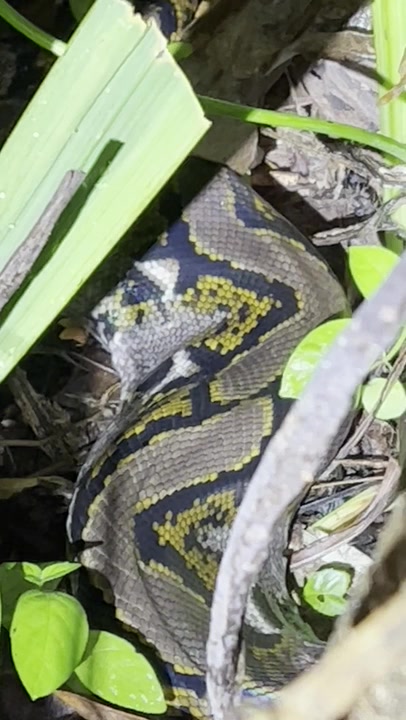
Pythonidae, commonly known as the python family, is a family of large to medium-sized nonvenomous constricting snakes in the order Squamata. Pythons are primarily distributed across Africa, Asia, and Australasia, with their greatest diversity in tropical and subtropical regions. They occupy an exceptionally broad range of habitats, including rainforests, woodlands, savannas, wetlands, rocky areas, and human-modified landscapes.
Pythonids are generally characterized by elongate, muscular bodies and relatively broad heads. Their coloration varies enormously among species, ranging from subdued browns and grays to brilliant greens, yellows, oranges, and intricate geometric patterns. Many species possess camouflage patterns that closely match leaf litter, bark, rocks, or vegetation.
Like other snakes, pythons lack external limbs, but they retain several anatomical features associated with their evolutionary history. Most notably, many pythonids possess small pelvic remnants and external hind-limb spurs on either side of the cloaca. These paired spurs are more conspicuous in males and are involved in courtship and mating interactions.
Pythons are nonvenomous predators. Instead of injecting venom, they capture prey with their teeth and muscular bodies. A python typically strikes rapidly, seizes its prey with numerous recurved teeth, and coils around it. The constricting coils prevent effective breathing and circulation, allowing the snake to subdue prey before swallowing it whole.
Their diet is highly variable and generally reflects body size and habitat. Smaller species may feed on lizards, frogs, rodents, birds, and small mammals, whereas large pythons can consume substantial mammals and birds. Some species are capable of taking prey approaching or even exceeding their own body mass, although such events are energetically demanding and relatively infrequent.
Pythons possess several adaptations for locating prey. Many species have heat-sensitive labial pits along the margins of the mouth, which detect infrared radiation from warm-bodied animals. Combined with an excellent sense of smell and the ability to sample airborne chemicals using the forked tongue and vomeronasal organ, these sensory systems allow pythons to locate prey under low-light conditions.
The family includes both terrestrial and arboreal species. Some, such as reticulated and Burmese pythons, are powerful terrestrial or semi-aquatic snakes that can also climb. Others, such as green tree pythons, are strongly arboreal and possess adaptations for life in the canopy. Several species are excellent swimmers and frequently occur near rivers, swamps, ponds, and other bodies of water.
Pythons are generally ambush predators, although some actively search for prey. They may remain motionless for extended periods before striking, relying on camouflage and patience. Large individuals can move surprisingly well on land and through vegetation, while arboreal species use muscular bodies and prehensile tails to maintain secure positions among branches.
Reproduction is particularly notable because female pythons lay eggs and many species provide substantial maternal care. After laying a clutch, the female may coil around the eggs and remain with them throughout incubation. Some species can raise their body temperature through muscular activity, helping maintain suitable incubation temperatures. After hatching, however, parental care generally ends and young snakes become independent.
Python eggs are relatively large and contain substantial yolk reserves. Hatchlings emerge as fully formed miniature versions of the adults, capable of hunting independently soon after birth or hatching. Growth can be rapid when food is abundant, although maturation rate varies greatly among species and environmental conditions.
The family includes several well-known genera, including Python, Malayopython, Simalia, Morelia, Antaresia, Aspidites, and Apodora, although the precise generic arrangement has changed as molecular and morphological studies have refined pythonid relationships. Familiar species include the reticulated python (Malayopython reticulatus), Burmese python (Python bivittatus), green tree python (Morelia viridis), and Children’s python (Antaresia childreni).
Pythonidae occupies a broad geographic range extending from sub-Saharan Africa through South and Southeast Asia to Australia and several Pacific-associated regions. Southeast Asia and Australasia are particularly important centers of diversity. Individual species may have highly restricted island distributions, while others occupy extensive continental ranges.
Large pythons can be apex or near-apex predators within their ecosystems. By consuming mammals, birds, and other vertebrates, they influence prey populations and participate in the transfer of energy between trophic levels. Smaller pythonids similarly regulate populations of rodents, lizards, amphibians, and other small vertebrates.
Some python species have adapted successfully to human-modified landscapes, including agricultural areas, plantations, villages, and urban fringes. This adaptability can bring them into conflict with people, particularly where large snakes prey upon poultry or domestic animals. Conversely, their consumption of rats and other agricultural pests can provide ecological benefits.
Several species face conservation pressures from habitat loss, hunting, persecution, collection for the wildlife trade, and accidental mortality on roads. Island-restricted species can be particularly vulnerable because their populations may occupy small geographic areas. The conservation status of individual python species varies substantially, from relatively widespread and adaptable species to highly localized taxa.
Overall, Pythonidae is a diverse family of nonvenomous constricting snakes distinguished by powerful musculature, specialized prey-detection systems, egg-laying reproduction, and remarkable ecological diversity. From massive semi-aquatic predators to slender arboreal specialists, pythons occupy an extraordinary range of habitats and represent some of the most impressive predators among modern snakes.