

Dog-toothed Cat Snake (Boiga cynodon)
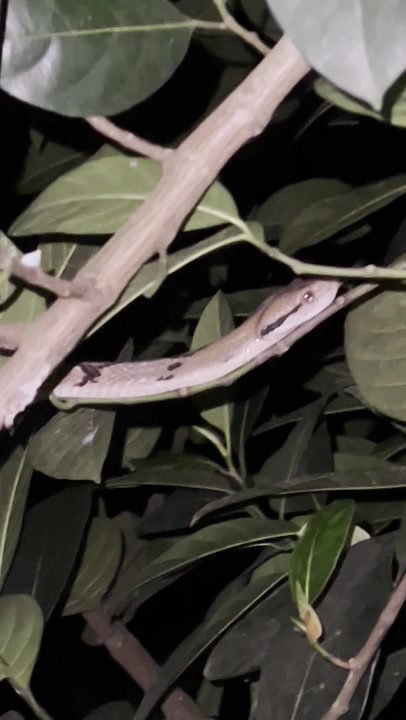
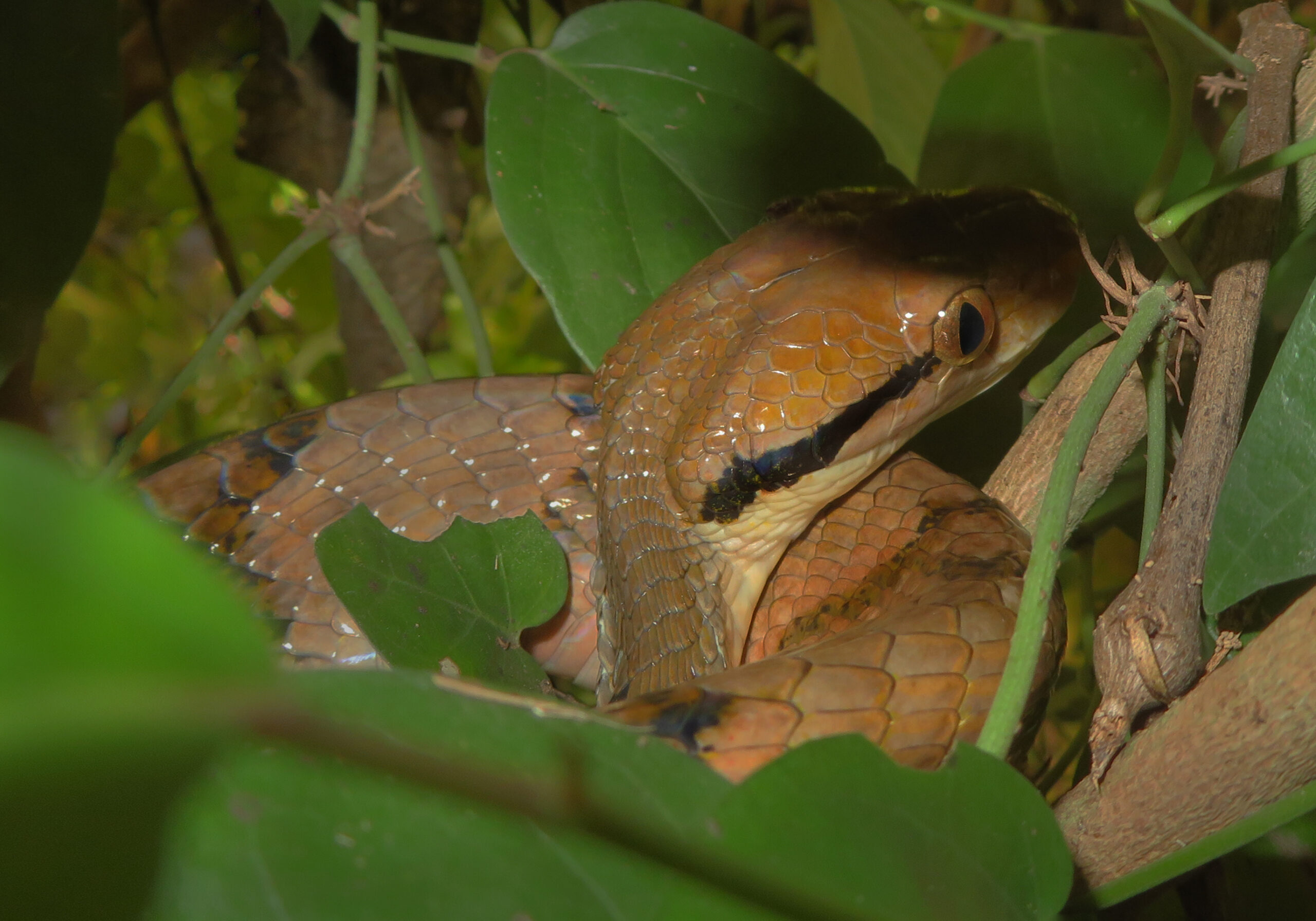
Boiga cynodon is a species of rear-fanged snake belonging to the genus Boiga (Subfamily Colubrinae, Family Colubridae, Order Squamata). Commonly known as the Dog-toothed Cat Snake, it is widely distributed throughout South and Southeast Asia, including southern Thailand, Peninsular Malaysia, Singapore, Indonesia, Brunei, and parts of the Philippines. It inhabits tropical rainforests, secondary forests, mangroves, swamp forests, woodland edges, plantations, and occasionally well-vegetated suburban areas, where it is closely associated with trees and dense vegetation.
Boiga cynodon is a large, slender, and highly arboreal snake, typically measuring 1.5–2.5 m in total length, although exceptionally large individuals may exceed this size. It has a long, laterally compressed body, a distinct broad head separated from the neck, and very large eyes with vertical elliptical pupils, adaptations for nocturnal hunting. The body is generally light brown, grayish-brown, or olive-brown, crossed by broad dark brown to black bands that extend across the back and sides. The underside is pale cream or yellowish, while juveniles often display more sharply contrasting markings than adults. The enlarged anterior teeth of the upper jaw, which inspire the common name “dog-toothed,” assist in gripping agile prey.
Adults are primarily nocturnal, remaining concealed among branches, vines, or tree hollows during the day and becoming active after dusk. They are agile climbers, moving effortlessly through the forest canopy in search of prey. Although predominantly arboreal, they occasionally descend to the ground to hunt or travel between trees. When threatened, they may flatten the front of the body, form an S-shaped striking posture, gape widely, hiss, and deliver repeated defensive strikes.
Boiga cynodon is a carnivorous predator, feeding mainly on birds, bird eggs, lizards, bats, frogs, and small mammals. It is rear-fanged (opisthoglyphous) and possesses mildly venomous saliva delivered through enlarged rear teeth. The venom is primarily adapted for subduing prey and is generally not considered medically significant to healthy humans, although bites may cause localized pain, swelling, and mild systemic symptoms. Larger prey may be briefly restrained by the snake’s body before being swallowed whole.
The life cycle includes egg, juvenile, and adult stages. The species is oviparous, with females laying clutches of eggs in tree hollows, rotting logs, leaf litter, or other sheltered locations. After an incubation period of several weeks, hatchlings emerge fully independent and begin feeding on small lizards, frogs, and other suitable prey.
Ecologically, Boiga cynodon is an important arboreal predator that helps regulate populations of birds, reptiles, amphibians, and small mammals within tropical forest ecosystems. It also serves as prey for large birds of prey, monitor lizards, pythons, and carnivorous mammals. Because of its close association with mature forests and structurally complex habitats, the Dog-toothed Cat Snake is considered a useful indicator of forest integrity, habitat quality, and regional biodiversity.