

Primates (Order Primates)
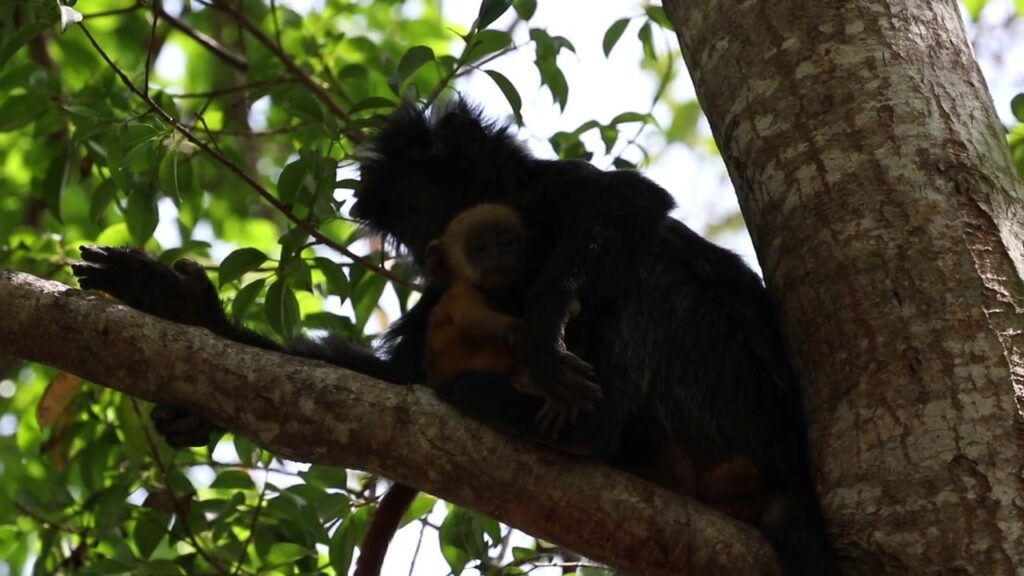
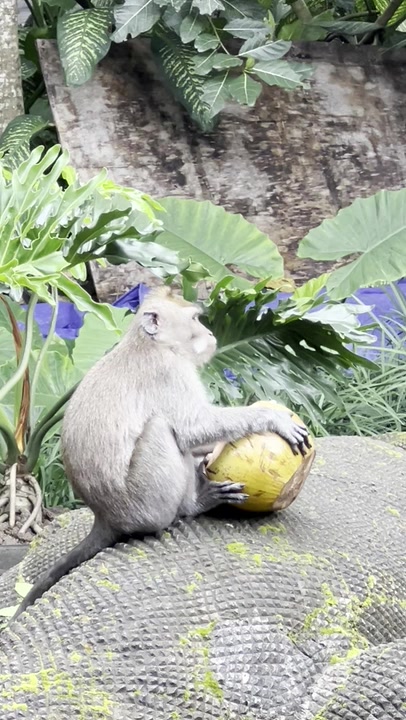
Primates are a diverse order of mammals that includes lemurs, lorises, galagos, tarsiers, monkeys, apes, and humans. They are characterized by a suite of adaptations associated with life in complex three-dimensional environments, especially trees, although many species are now terrestrial. Primates occur naturally in tropical and subtropical regions of Africa, Madagascar, Asia, and the Americas, with humans having a worldwide distribution.
Primates vary enormously in size and appearance. The smallest living primates are tiny mouse lemurs and dwarf lemurs, while gorillas are among the largest living primates. Their bodies generally have grasping hands and feet, flexible shoulder and hip joints, and nails rather than claws on at least some digits. These features provide precise control when climbing, grasping branches, manipulating food, and interacting with their surroundings.
A particularly important primate characteristic is the development of forward-facing eyes. Overlapping visual fields provide substantial binocular vision and improved depth perception, an advantage for animals moving through branches and judging distances. Many primates also possess relatively large brains for their body size, supporting complex sensory processing, learning, memory, and social behavior.
The hands and feet are highly versatile. Many species have an opposable first digit, although its development varies considerably among primate groups. Tarsiers, monkeys, and apes generally have highly dexterous hands, while some lemurs have specialized grasping adaptations. Nails instead of claws are widespread, although claws are retained on particular digits in several strepsirrhine primates.
Primates exhibit diverse locomotor strategies. Arboreal species may climb, leap, cling vertically to trunks, swing between branches, or move quadrupedally through the canopy. Some monkeys are adapted for powerful leaping, while gibbons are specialized for brachiation. Great apes often combine climbing with terrestrial knuckle-walking or other forms of ground locomotion, and humans are highly specialized for habitual bipedal walking.
Their diets are equally diverse. Depending on the species, primates consume fruits, leaves, flowers, nectar, seeds, fungi, insects, small vertebrates, eggs, and other animal foods. Many are opportunistic feeders, while others have strong dietary specialization. Fruit-eating is particularly important in numerous tropical species, making primates significant agents of seed dispersal.
Primates are generally highly social mammals, although the organization of their societies varies widely. Species may live alone, in pairs, in small family groups, or in large multi-level communities containing dozens or even hundreds of individuals. Social interactions can involve grooming, play, cooperation, aggression, alliance formation, communication, and parental care.
Communication is complex and can involve vocalizations, facial expressions, body postures, gestures, scent marking, and physical contact. Some species possess elaborate repertoires of calls used to maintain group cohesion, advertise territory, warn of predators, or coordinate movements. Apes and some monkeys are capable of sophisticated learned communication and problem-solving.
Reproduction also varies considerably. Many primates produce a single offspring at a time, although twins occur in some species. Infants generally receive substantial parental care and may remain dependent on their mothers for extended periods. In many social species, other group members also interact with or help care for infants. Slow development allows young primates extended periods for learning social and ecological skills.
The order is traditionally divided into two major evolutionary groups: Strepsirrhini, including lemurs, lorises, and galagos, and Haplorrhini, including tarsiers, monkeys, apes, and humans. This distinction reflects deep evolutionary differences in anatomy and sensory biology. Within Haplorrhini, monkeys and apes belong to the group Simiiformes, or anthropoids.
The strepsirrhine primates are especially diverse in Madagascar, where lemurs underwent a major evolutionary radiation. Lemurs occupy habitats ranging from rainforests to dry forests and spiny scrublands. Lorises and galagos are primarily found in Africa and Asia and include both nocturnal and diurnal species.
Monkeys occur in Africa, Asia, and the Americas. Old World monkeys include guenons, macaques, baboons, colobus monkeys, and many others, while New World monkeys include marmosets, tamarins, capuchins, howler monkeys, spider monkeys, and others. Their ecological diversity ranges from small canopy-dwelling insectivores to large terrestrial omnivores.
Apes include gibbons, siamangs, orangutans, gorillas, chimpanzees, bonobos, and humans. Compared with most monkeys, apes generally lack external tails and possess highly mobile shoulders, relatively large brains, and complex social and cognitive abilities. Humans are distinguished by habitual bipedal locomotion, exceptional technological dependence, language, and extensive cultural transmission.
Primates occupy important positions in forest ecosystems. Fruit-eating species can disperse seeds over considerable distances, while leaf-eaters influence vegetation and nutrient flow. Insectivorous and omnivorous species regulate populations of smaller organisms, and primates themselves provide prey for large carnivores and other predators where such predators occur.
Many primates are threatened by habitat destruction, hunting, illegal wildlife trade, disease, climate change, and human–wildlife conflict. Tropical forest loss is particularly important because many species have restricted geographic ranges and specialized habitat requirements. Madagascar and Southeast Asia, for example, contain numerous endemic primates whose survival is closely tied to remaining forest habitat.
Primates are also of exceptional importance to evolutionary and biological research. Their anatomy, behavior, cognition, social systems, development, and genetics provide insights into mammalian evolution and, in particular, the evolutionary history of humans. Comparative studies across living primates help illuminate how traits such as vision, dexterity, sociality, communication, and complex learning evolved.
Overall, Primates is a highly diverse order of mammals distinguished by grasping adaptations, forward-facing eyes, refined vision, relatively large brains, flexible locomotion, prolonged development, and complex social behavior. From Madagascar’s lemurs and Southeast Asia’s tarsiers to African apes and humans, primates occupy a remarkable range of ecological and behavioral niches and represent one of the most evolutionarily diverse groups of mammals.