

Genus Hypolycaena
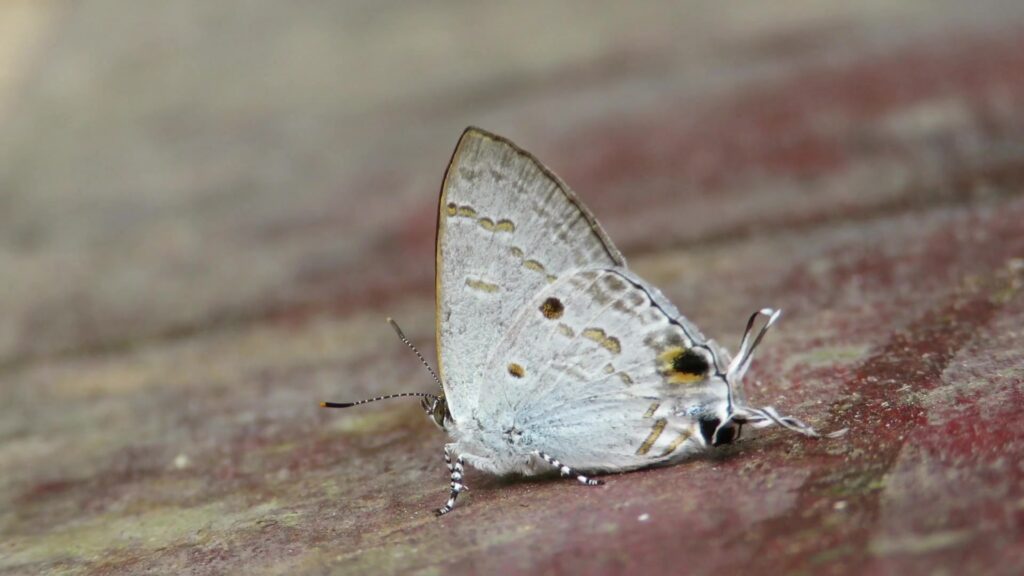

Hypolycaena is a genus of small lycaenid butterflies in the family Lycaenidae, subfamily Theclinae, and tribe Hypolycaenini. Species of the genus are commonly known as tits or tit hairstreaks and are distributed mainly across tropical Africa, South and Southeast Asia, and parts of the Australasian region. They are characteristic inhabitants of forests, woodland, forest edges, clearings, scrub, and other warm habitats with suitable larval host plants.
Species of Hypolycaena are generally small and delicately built, with relatively broad wings and a characteristic hairstreak-like appearance. Their upper wings are often brown, grayish brown, or bluish, while the hindwings may bear conspicuous orange, red, white, or blue markings. Males and females can differ substantially in coloration, and several species show geographic variation in wing pattern.
A distinctive feature of many Hypolycaena species is the presence of slender tails on the hindwings, accompanied by contrasting spots near the wing margins. When the butterfly is resting, it may hold the hindwings in a way that makes the tails and spots resemble the head and antennae of a small insect. The butterfly can also move its hindwings continuously, potentially directing predator attacks toward the less vulnerable rear portion of the body.
The butterflies are primarily diurnal, becoming active in warm sunlight. Their flight is usually quick and somewhat erratic, particularly when disturbed, although individuals often remain close to vegetation. Males may patrol small territories and investigate other butterflies or potential mates. Adults frequently rest beneath leaves or on vegetation when inactive, where their subdued dorsal coloration provides camouflage.
Adult Hypolycaena feed principally on flower nectar, but they may also visit damp ground, animal droppings, or decaying organic material to obtain minerals and other nutrients. Their small size and ability to move between scattered flowers allow them to exploit diverse resources along forest margins and clearings.
The larvae are herbivorous, feeding on the leaves, shoots, flowers, or other tissues of a range of tropical plants. Host associations vary among species, and some Hypolycaena have been recorded using woody plants and other vegetation belonging to several plant families. Female butterflies carefully select appropriate host plants for oviposition, ensuring that newly hatched caterpillars have access to suitable food.
Like many lycaenid butterflies, Hypolycaena larvae can participate in associations with ants. Caterpillars may produce sugary secretions that attract ants, which in turn can provide protection against parasitoids and other predators. The strength and nature of these relationships vary between species and developmental stages, but such interactions illustrate the complex ecological relationships surrounding lycaenid larvae.
Caterpillars are generally small, flattened, and cryptically colored, helping them blend with leaves and stems. They pass through several larval stages before forming a pupa in a concealed location. The complete life cycle proceeds through egg, caterpillar, pupa, and adult stages, with development influenced by temperature, rainfall, host-plant availability, and local seasonality.
The genus contains numerous species, including Hypolycaena erylus, Hypolycaena thecloides, Hypolycaena amasa, and Hypolycaena othona. H. erylus is particularly widespread in South and Southeast Asia, whereas other species have more restricted distributions. The genus exhibits considerable geographic diversity, and taxonomy has been refined as differences in morphology, distribution, and evolutionary relationships have become better understood.
Hypolycaena species occur in tropical and subtropical forests, secondary woodland, forest edges, scrub, plantations, gardens, and clearings. Many are particularly common in habitats where flowering plants and larval host plants occur together. Species associated with specialized host plants or particular ant communities may be more sensitive to habitat alteration than generalist species.
Ecologically, Hypolycaena occupies several roles within tropical ecosystems. Caterpillars are plant herbivores, while adults are nectar-feeding insects and occasional participants in pollination. Both larvae and adults provide food for birds, spiders, parasitoid wasps, and other predators. Their interactions with ants add an additional layer of complexity to forest food webs.
Overall, Hypolycaena is a distinctive genus of tropical hairstreak butterflies characterized by small size, hindwing tails and deceptive markings, rapid flight, plant-feeding caterpillars, and frequent interactions with ants. Its combination of visual mimicry, specialized larval ecology, and diverse relationships with tropical vegetation makes Hypolycaena an especially interesting lineage within the Lycaenidae.