

Genus Spirama
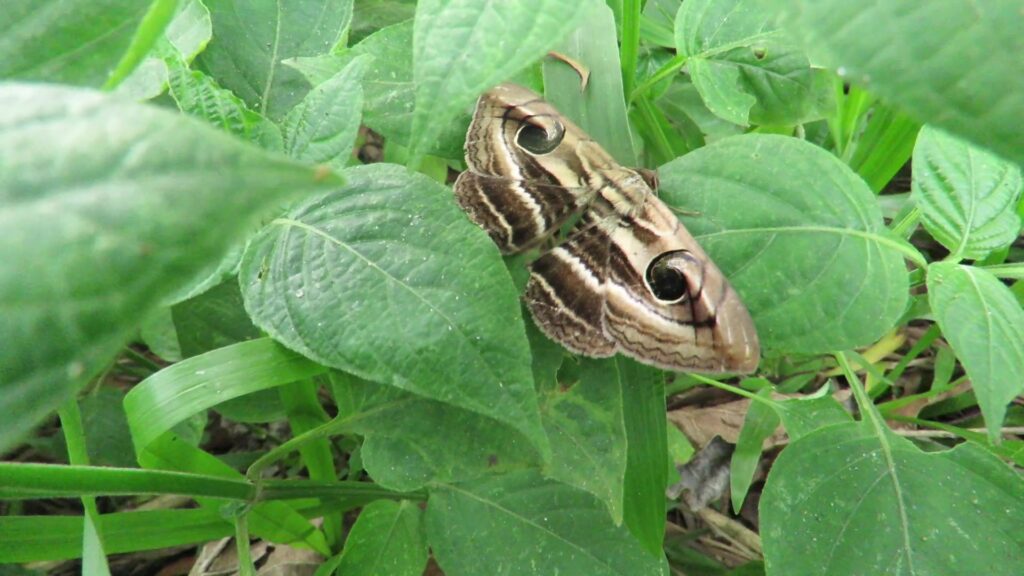
Genus Spirama is a genus of moths belonging to the family Erebidae, subfamily Erebinae, and tribe Hypopyrini. Its members are distributed mainly across tropical and subtropical regions of Asia, where they inhabit forests, woodland edges, plantations, gardens, and other environments with suitable host plants. Species of Spirama are particularly notable for the distinctive patterns on their wings, which often include curved lines, concentric markings, and eye-like designs that resemble facial features. These patterns are especially conspicuous in some species, where the combined markings on the forewings and hindwings can create the impression of a pair of eyes or a face. This unusual appearance may help confuse predators or provide camouflage when the moth rests with its wings folded or spread. Adults generally have broad wings and robust bodies, with coloration ranging from shades of brown and gray to reddish or darker tones. Like other moths, members of Spirama undergo complete metamorphosis, progressing through egg, larval, pupal, and adult stages. Their caterpillars feed on the leaves of suitable host plants, while adults may obtain nutrients from sugary resources such as fruit juices or plant exudates, depending on the species. Adult moths are generally nocturnal and may be attracted to artificial lights. Their larvae and adults serve as food for birds, bats, parasitoids, and other predators, contributing to terrestrial food webs. Although the biology and host-plant associations of individual species vary, members of Spirama are adapted to vegetated habitats where food resources and suitable conditions for reproduction are available. Habitat loss, vegetation changes, and pesticide exposure may affect local populations. Through their distinctive wing patterns and ecological interactions, Spirama represents an interesting genus of moths within the diverse nocturnal insect fauna of tropical and subtropical Asia.