Bali Wildlife
Every Spices Matter


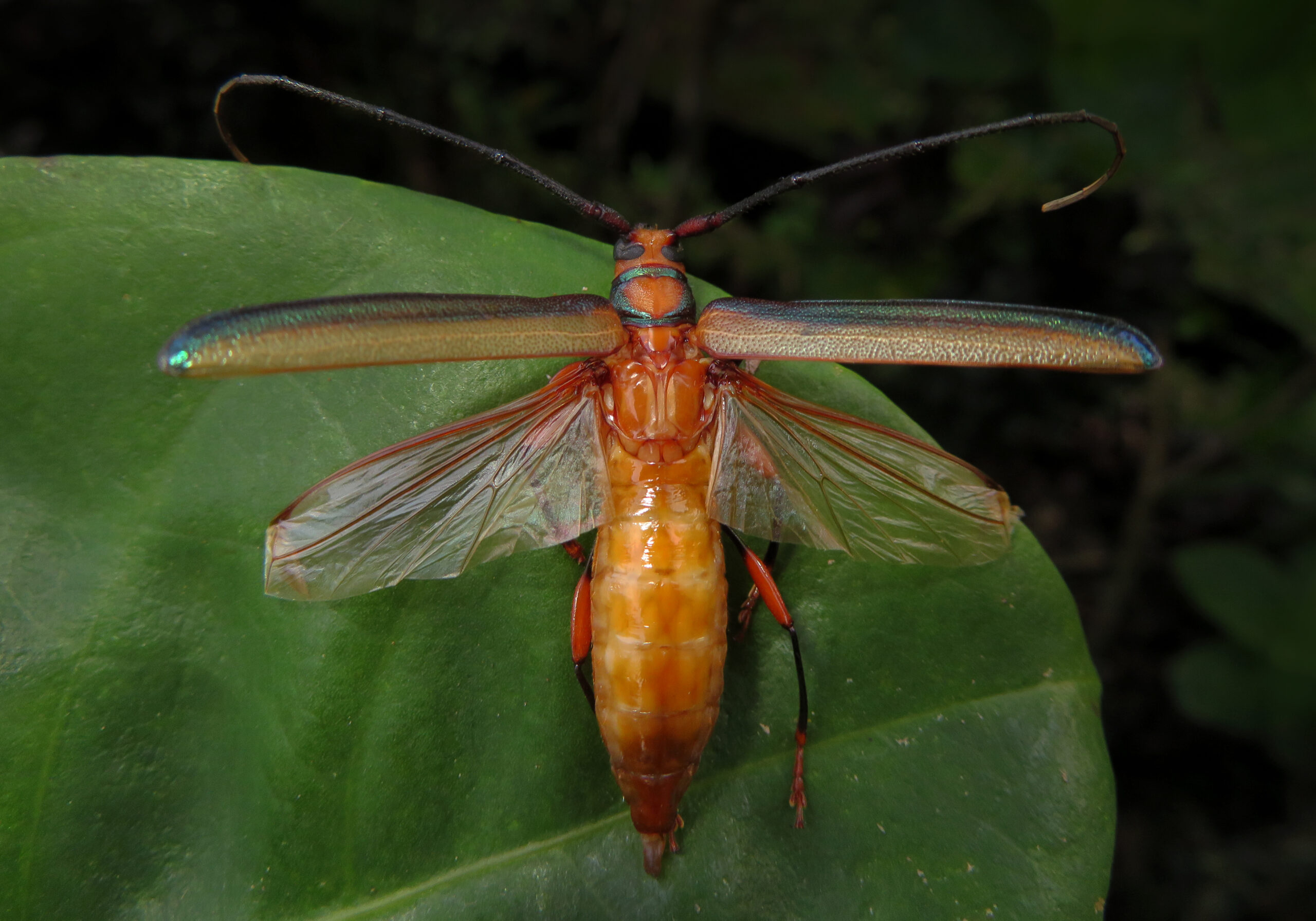
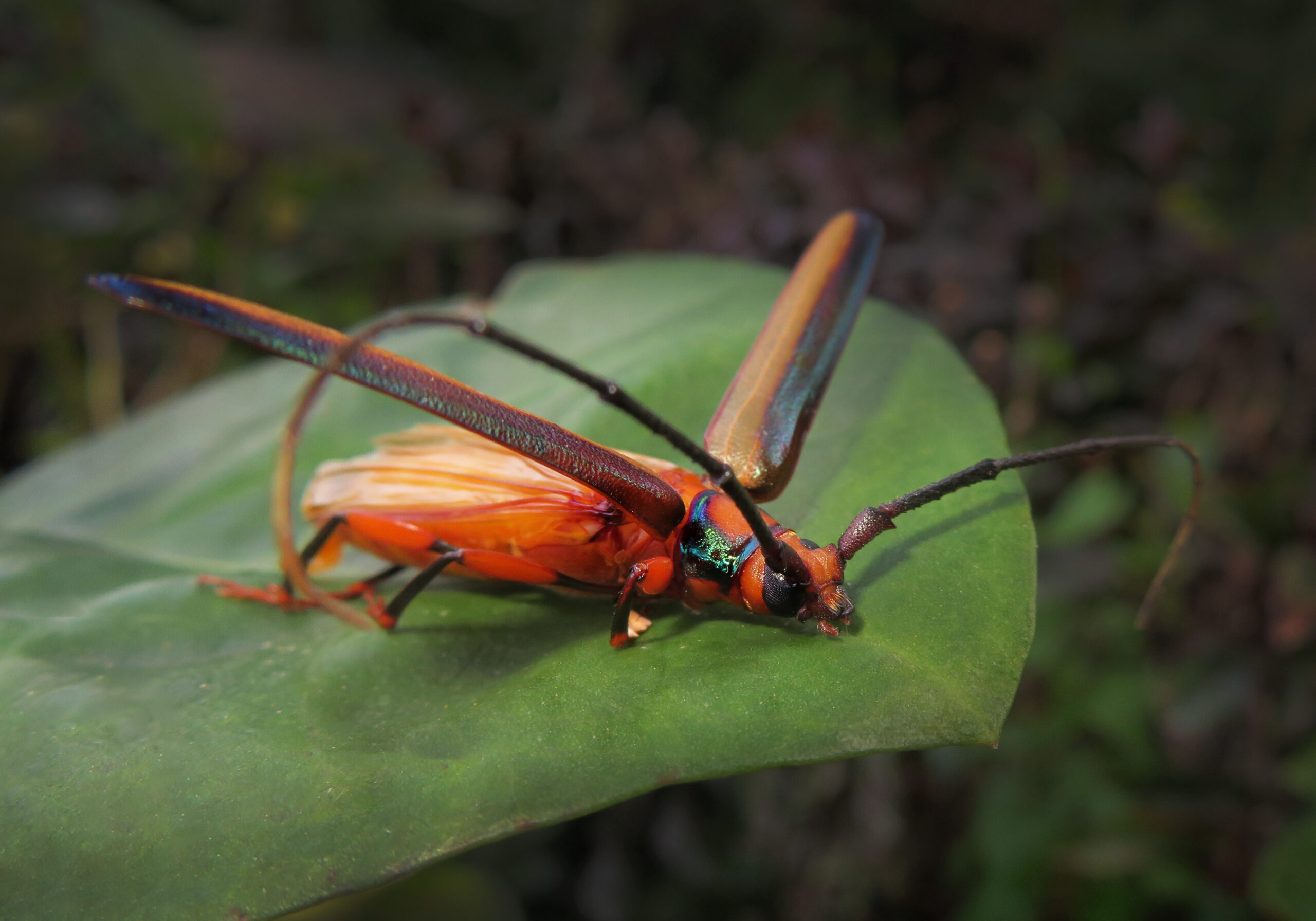
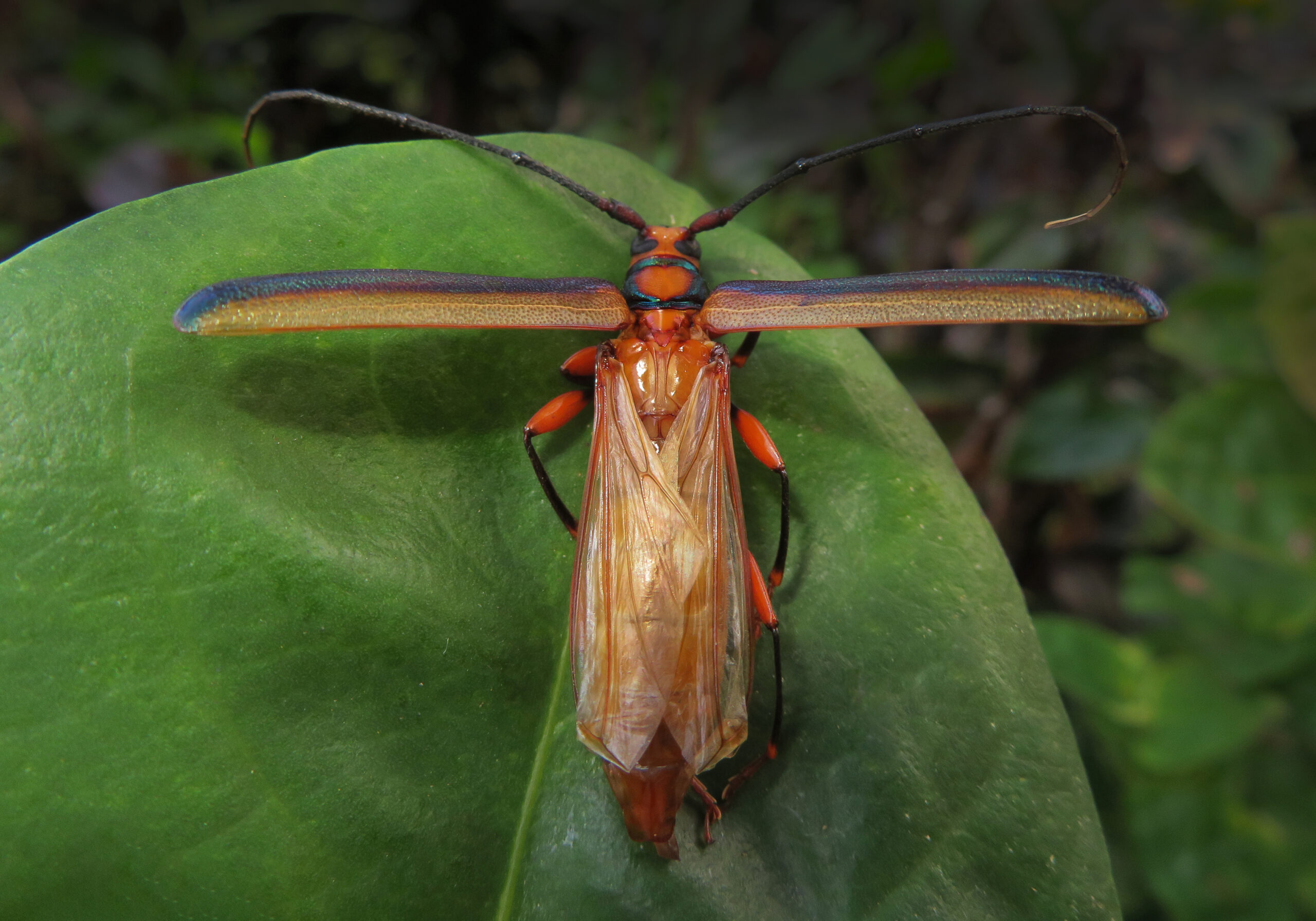
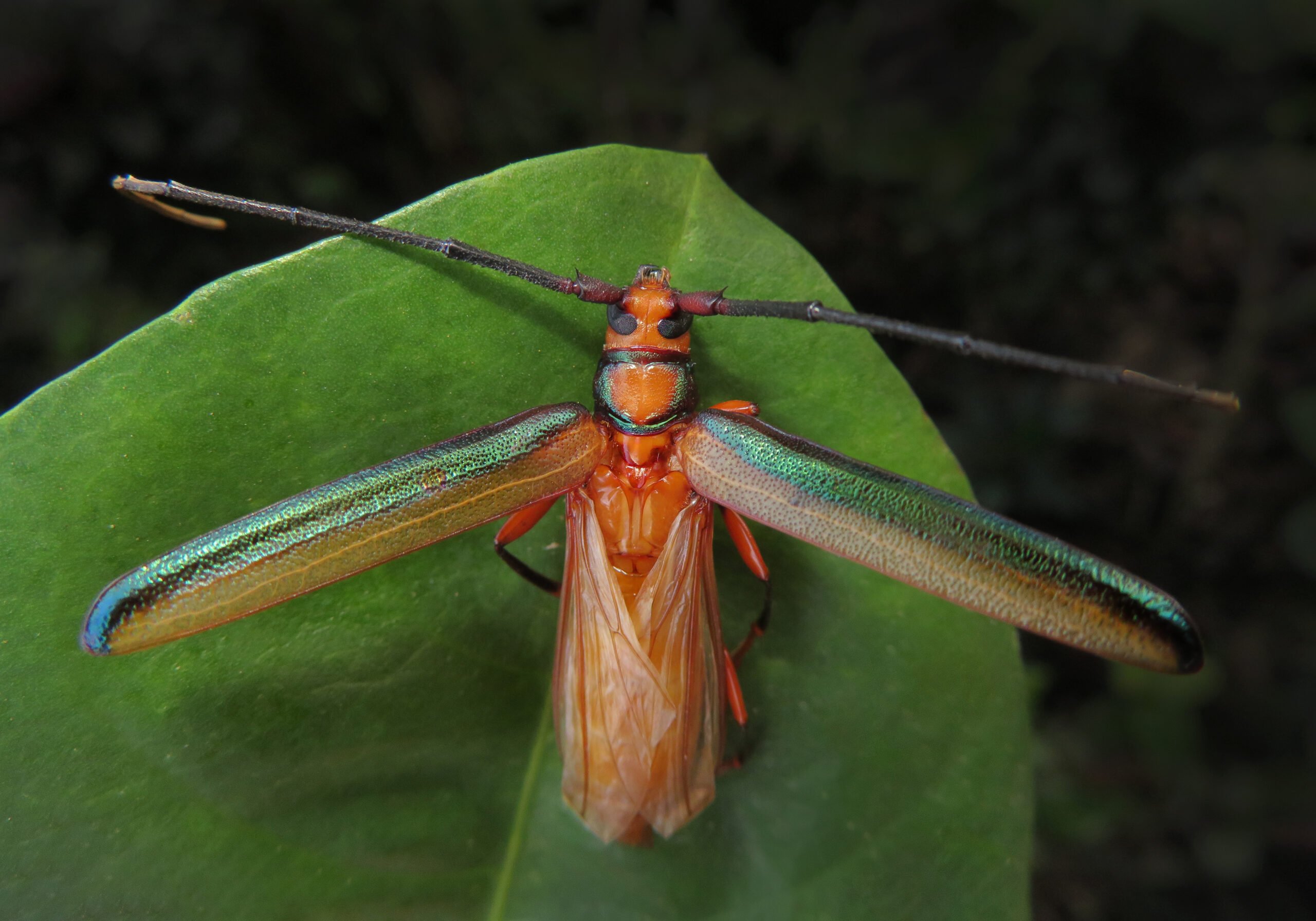
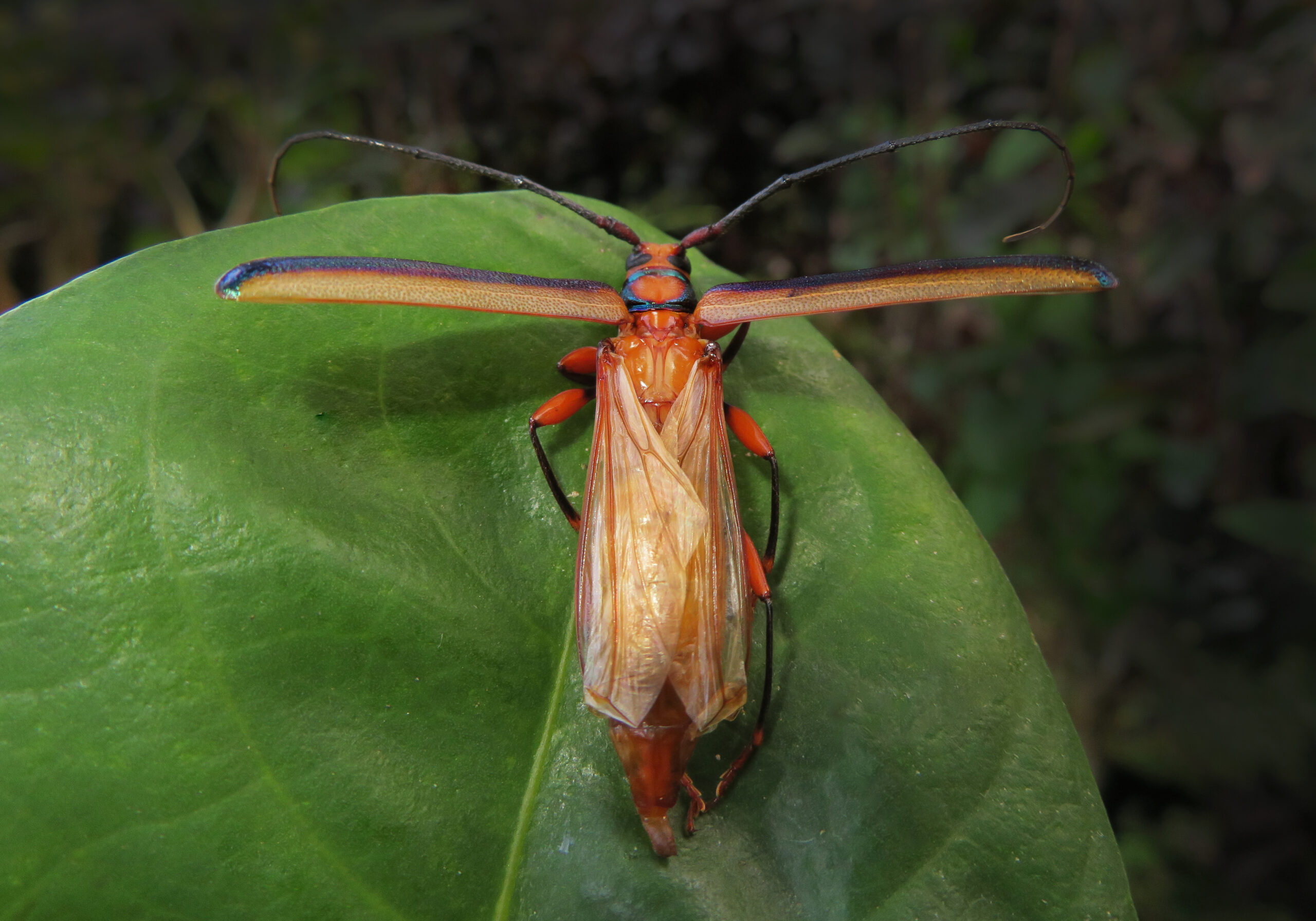
Xystrocera festiva is a species of longhorn beetle belonging to the genus Xystrocera (Tribe Xystrocerini, Subfamily Cerambycinae, Family Cerambycidae, Order Coleoptera). It is distributed across parts of South and Southeast Asia, where it inhabits tropical and subtropical forests, plantations, orchards, parks, and other habitats containing broad-leaved trees. Like other members of its genus, it is closely associated with woody plants during its larval development.
Xystrocera festiva is a medium to large-sized longhorn beetle with an elongated, cylindrical body and long, segmented antennae. In males, the antennae are usually as long as or longer than the body, while females generally possess slightly shorter antennae. The body is predominantly dark brown to black, often marked with pale gray or yellowish pubescent bands and patches that provide effective camouflage against tree bark.
Adults are mainly active during the warmer months and are often encountered resting on tree trunks, fallen logs, or branches. They are primarily nocturnal or crepuscular and may be attracted to artificial lights at night. Adult beetles may feed on tree sap, bark, flowers, or other plant exudates, although their principal role is reproduction.
The life cycle follows complete metamorphosis, consisting of egg, larva, pupa, and adult stages. Females lay eggs in cracks, wounds, or beneath the bark of suitable host trees. After hatching, the creamy-white, legless larvae bore into the wood, feeding on the inner bark and sapwood while constructing galleries. Pupation occurs within the wood, and newly emerged adults exit through characteristic circular holes.
Larvae are associated with a variety of hardwood trees, particularly members of the family Fabaceae, although host plant preferences may vary geographically. In some situations, larval tunneling can weaken branches and stems, reducing timber quality and occasionally causing damage to plantation or ornamental trees.
Ecologically, Xystrocera festiva contributes to the decomposition of weakened and dead woody material, promoting nutrient recycling within forest ecosystems. It also serves as prey for birds, reptiles, mammals, spiders, and parasitoid insects. Although it may occasionally affect economically important trees, the species forms an integral part of forest biodiversity and the ecological processes associated with wood decomposition and forest regeneration.