Bali Wildlife
Every Spices Matter


Xylocopinae is a subfamily within the family Apidae (Epifamily Anthophila, Superfamily Apoidea, Order Hymenoptera), comprising a group of bees commonly known as carpenter bees and their close relatives. Members of this subfamily are widely distributed, particularly in tropical and subtropical regions, though some species also occur in temperate areas. They are typically associated with habitats that provide suitable nesting substrates such as wood, plant stems, or dry branches.
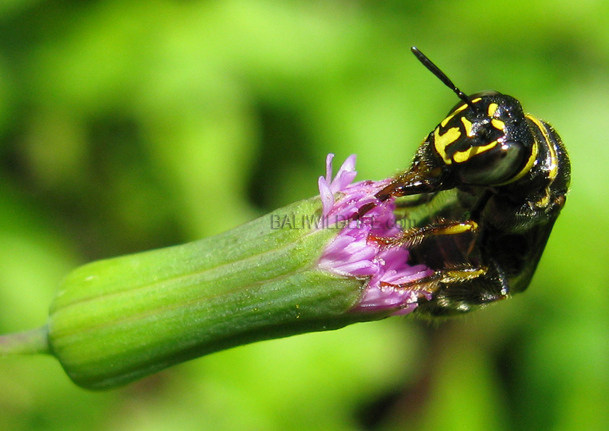
Bees of the subfamily Xylocopinae range from small to very large in size. Many species, especially in the genus Xylocopa, are large and robust with a smooth, often shiny black body, sometimes with metallic reflections. Others, such as Ceratina (small carpenter bees), are smaller and may exhibit metallic green or blue coloration. The body is typically less densely hairy than in some other bees, but still adapted for pollen collection.
A defining characteristic of Xylocopinae is their nesting behavior. Most species excavate nests in wood, plant stems, or similar materials, creating tunnels where they lay eggs. These nests are often partitioned into cells, each provisioned with pollen and nectar for developing larvae. Some species exhibit solitary behavior, while others show varying degrees of social organization, from solitary to primitively social.
The life cycle involves complete metamorphosis. Larvae develop within the nest cells, feeding on stored pollen and nectar. Adults emerge after pupation and may reuse or expand existing nests.
Adults feed primarily on nectar and pollen and are important pollinators of many flowering plants. Their size and strength allow them to access a wide range of flowers, and some species are capable of “buzz pollination,” which helps release pollen from certain plants.
The subfamily includes genera such as Xylocopa (large carpenter bees), Ceratina (small carpenter bees), and related groups.
Ecologically, Xylocopinae plays a significant role in pollination, particularly in tropical ecosystems. While some species may be considered minor pests due to their wood-boring habits, their contribution to plant reproduction and ecosystem functioning is substantial.