

Sunbeam Snakes (Family Xenopeltidae)
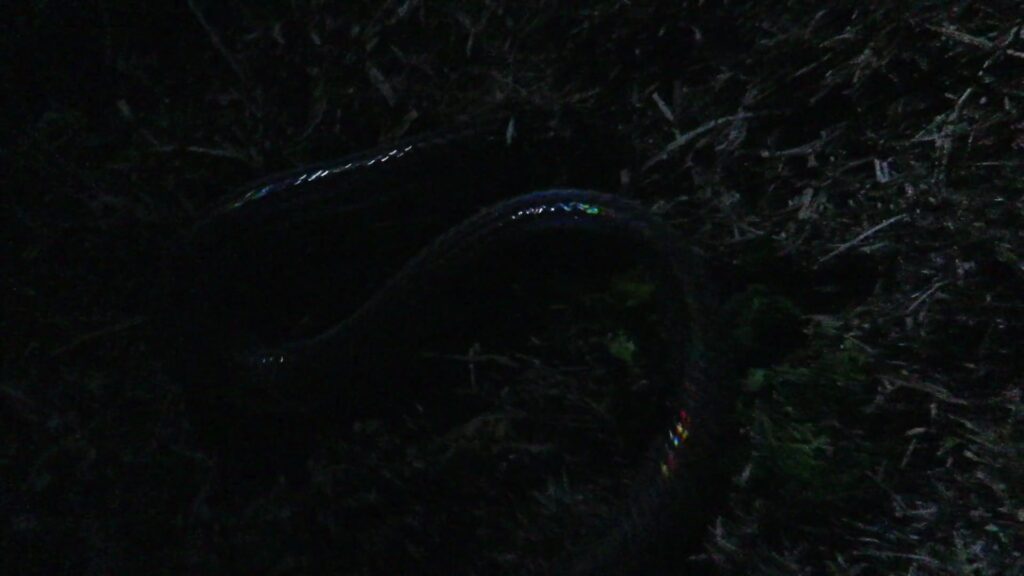
Xenopeltidae is a small family of nonvenomous snakes belonging to the order Squamata and the suborder Serpentes. Its members are commonly known as sunbeam snakes because of the striking, rainbow-like iridescence of their scales when exposed to sunlight. The family is native to South and Southeast Asia, where its representatives inhabit tropical forests, plantations, grasslands, and other environments with loose soil and suitable hiding places. Xenopeltidae is notable for its distinctive scale structure, burrowing habits, and relatively simple but highly specialized body form.
The family is best known for the genus Xenopeltis, which includes the common sunbeam snake (Xenopeltis unicolor) and the Hainan sunbeam snake (Xenopeltis hainanensis). These snakes have elongated, cylindrical bodies, smooth scales, and small heads that are not strongly differentiated from the neck. Their bodies are generally dark brown, blackish, or purplish, while the underside is usually paler. The most distinctive feature is the glossy surface of the scales, which produces brilliant iridescent colors when light strikes them at particular angles.
Sunbeam snakes are adapted to a largely subterranean lifestyle. Their smooth, compact bodies allow them to move through loose soil, leaf litter, and narrow spaces beneath logs and stones. Their heads are relatively small and streamlined, making it easier to push through soil and vegetation. Although they can move effectively on the surface, they are frequently concealed underground or beneath ground cover, where they remain protected from predators and extreme environmental conditions.
Xenopeltidae occurs across parts of South Asia and Southeast Asia, including regions of northeastern India, Bangladesh, Myanmar, Thailand, Cambodia, Laos, Vietnam, Malaysia, Indonesia, and surrounding areas. The distribution varies by species. Sunbeam snakes are associated with warm, humid environments and may be found in tropical forests, forest edges, agricultural landscapes, gardens, and plantations. Loose, moist soil is particularly useful because it allows them to burrow and provides shelter during periods of unfavorable weather.
These snakes are primarily carnivorous and feed on a variety of small vertebrates. Their prey may include frogs, lizards, other snakes, and small mammals, depending on local availability and the size of the individual. They rely on their muscular bodies to restrain prey and swallow it whole. As nonvenomous snakes, they do not depend on venom to subdue their food. Their hunting behavior often involves searching through soil, leaf litter, and concealed spaces where prey animals shelter.
Sunbeam snakes are generally secretive and are often most active during humid conditions or after rainfall, when prey may be more accessible near the surface. During the day, they commonly remain hidden beneath rocks, logs, vegetation, or underground. When disturbed, they may attempt to escape by burrowing or moving into nearby cover. If captured, they may defend themselves by striking or biting, but they are not considered dangerous to humans because they lack specialized venom-delivery adaptations.
Reproduction in Xenopeltidae is oviparous, meaning that females lay eggs. The eggs are deposited in sheltered locations with suitable temperature and humidity for embryonic development. The young hatch as small, independently living snakes and possess the characteristic glossy scales of adults. Details of breeding behavior and reproductive timing are not equally well documented for every species, and conditions may vary across the family’s geographic range.
The family occupies an important role in terrestrial food webs by helping regulate populations of amphibians, reptiles, and small mammals. Sunbeam snakes may themselves be preyed upon by larger snakes, birds of prey, and other predators. Their burrowing habits also allow them to exploit prey and shelter resources that are less accessible to many surface-dwelling snakes.
Although sunbeam snakes can tolerate some modified habitats, they may be affected by deforestation, soil disturbance, agricultural intensification, road mortality, and collection for the exotic pet trade. Their secretive lifestyle makes population monitoring difficult, and local declines may go unnoticed. Maintaining suitable ground cover, preserving natural vegetation, and reducing unnecessary killing of snakes can help protect their populations.
Overall, Xenopeltidae is a distinctive family of Asian snakes recognized for its smooth, iridescent scales, cylindrical bodies, burrowing habits, and nonvenomous nature. Its members are specialized predators of small vertebrates and are well adapted to warm environments with suitable soil and ground cover. Despite their unusual appearance, sunbeam snakes are generally secretive animals that play a useful role in the ecosystems they inhabit.